 English
 Español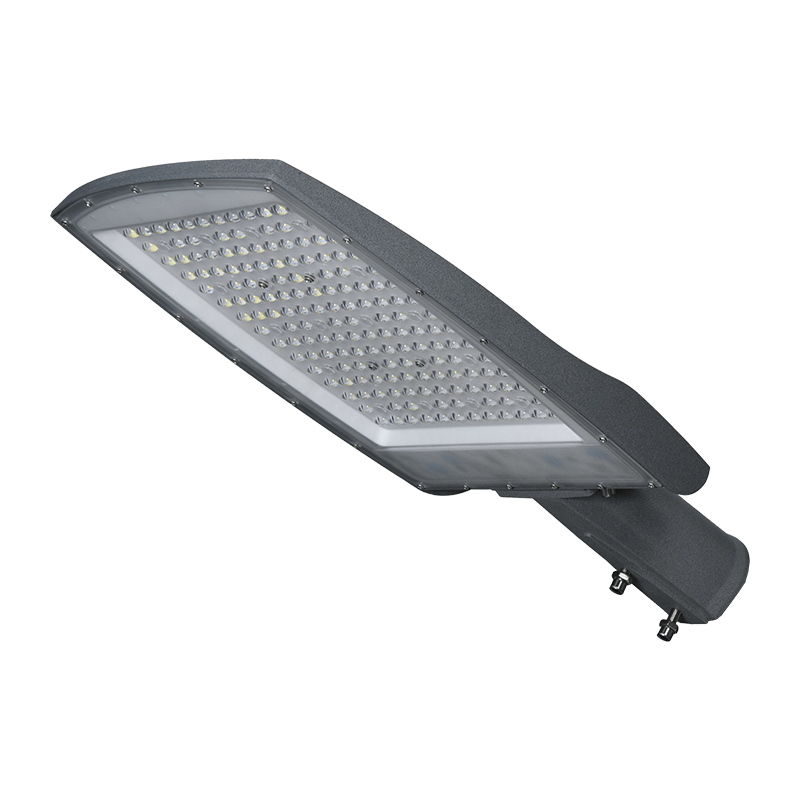
+86-13777012108
(WhatsApp/WeChat)
Home / News / Industry News / Commercial Parking Lot Lighting: How to Spec LED Area Lights That Last
Commercial Parking Lot Lighting: How to Spec LED Area Lights That Last
Walk most large retail or office lots after dark and the same pattern shows up: bright pools directly beneath the poles, dark bands between them, and a wall of glare for anyone driving toward the building.
Those complaints rarely trace back to a brand name. Commercial parking lot lighting is a layout problem before it is a product problem. Pole spacing, mounting height, lens optics, and the illuminance target decide whether a lot feels safe at eleven at night. The luminaire bolted to the pole only decides how long that performance holds and what it costs to maintain. Fix the plan first, then buy hardware that matches the plan.
Content
- 1 Set the Illuminance Target Before You Compare Fixtures
- 2 LED vs Metal Halide: Where the Operating Budget Actually Goes
- 3 Match Wattage to Pole Height and Lot Geometry
- 4 Why Watt-for-Watt Comparisons Fail
- 5 Depreciation and Maintenance Over a Ten-Year Hold
- 6 Optics, Glare, and Dark Sky Compliance
- 7 Solar Fixtures for Remote or Unmetered Lots
- 8 Fixture Types Side by Side
- 9 Certifications and Procurement Risk
- 10 A Repeatable Way to Buy
Set the Illuminance Target Before You Compare Fixtures
A wattage number tells you almost nothing about how a finished lot will look. The measurable targets are maintained average illuminance, expressed in footcandles or lux, and uniformity, expressed as a maximum-to-minimum ratio across the lot surface.
For planning purposes, most commercial sites fall into one of three bands:
- Basic parking with low night activity: roughly 0.5 footcandle average, uniformity no worse than 20 to 1.
- Standard retail, office, and mixed-use lots: 1.0 to 1.5 footcandles average, uniformity around 15 to 1.
- High-end retail, hospital, and transit lots: 2.0 footcandles and above, with tighter uniformity and stronger vertical illuminance so faces and vehicle plates stay readable.
Ask for the photometric file rather than a summary sheet. An IES or LDT file lets you model the real layout before purchase and exposes suppliers who quote wattage without knowing the pole spacing. If a supplier cannot send one, the quote is unfinished.
LED vs Metal Halide: Where the Operating Budget Actually Goes
Hardware cost is paid once. Electricity and maintenance repeat every year for as long as the lot operates. The comparison below is usually the number that justifies an upgrade, and it is also the number that most quotes leave out.
Annual energy cost per fixture, 12 hours per night at 0.12 USD per kWh
The chart prices a single fixture running twelve hours a night at 0.12 USD per kilowatt hour. A 1000 W metal halide head with its ballast pulls roughly 1,080 W, which lands near 568 USD of electricity every year. The 400 W metal halide still sitting on thousands of poles costs about 242 USD per head per year. A 300 W LED that replaces the 1000 W unit in most layouts drops to about 158 USD, and a 150 W LED comes in near 79 USD. On a thirty pole lot, the gap between the first bar and the third bar is roughly 12,300 USD per year, and that gap repeats annually while the LED hardware is paid for once.
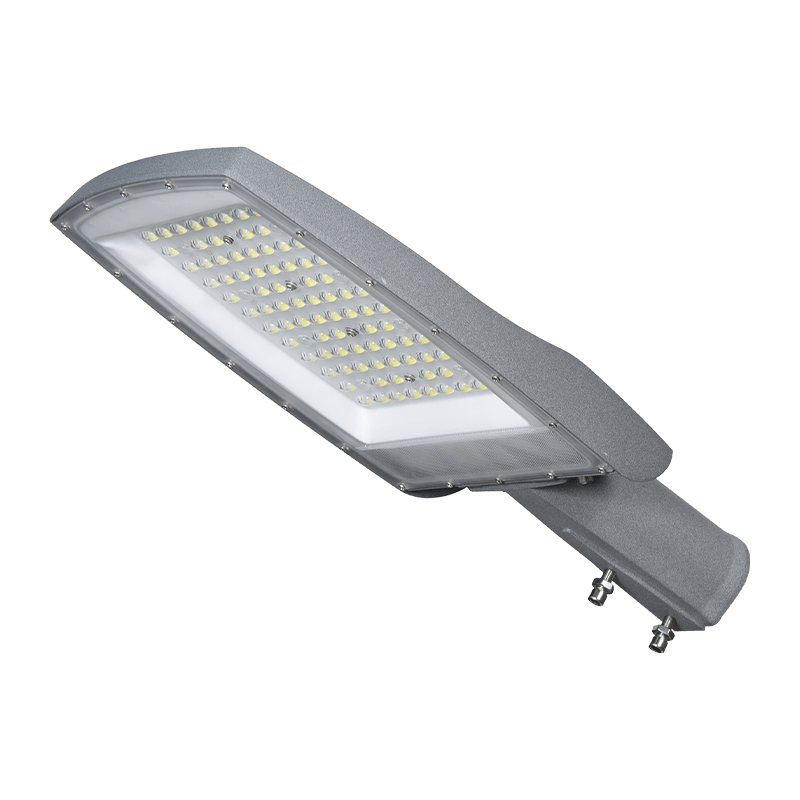
 PY-LED666-240W Smart Street LightThe smart LED666-240W street light is a modern road lighting solution that integrates energy efficiency, intelligent control, and stable performance. Utilizing high-qu...View Product →
Match Wattage to Pole Height and Lot Geometry
Mounting height and pole spacing drive wattage far more than lot area does. Two lots of the same size need very different fixtures if one has fifteen foot poles and the other has thirty foot poles.
| Mounting height | Typical LED wattage | Rough coverage per fixture | Where it fits |
|---|---|---|---|
| 12 ft (3.7 m) | 60 to 100 W | 3 to 5 spaces | Perimeter rows, drive aisles, narrow lots |
| 15 ft (4.6 m) | 100 to 150 W | 5 to 7 spaces | Small retail lots, interior rows |
| 20 ft (6.1 m) | 150 to 200 W | 6 to 9 spaces | Mid-size retail and office lots |
| 25 ft (7.6 m) | 200 to 300 W | 8 to 12 spaces | Grocery and shopping center lots |
| 30 ft (9.1 m) | 300 to 400 W | 10 to 14 spaces | Big box stores, distribution yards |
| 40 ft (12.2 m) | 400 to 600 W | 14 to 20 spaces | High mast areas, truck courts, event edges |
Read the table as a starting point, not a specification. When poles are spaced wider than one and a half times the mounting height, uniformity suffers and you either add fixtures or accept dark bands between them. A common mistake is buying higher wattage to compensate for wide spacing, which raises glare and energy cost while leaving the dark bands untouched. Checking spacing against height before ordering wattage saves more money than any single fixture choice.
Why Watt-for-Watt Comparisons Fail
Legacy lamp wattage and LED wattage are different measurements of different things, so a direct substitution table misleads buyers during tendering.
Metal halide rating compared with LED wattage for comparable delivered lumens
Each pair places a metal halide rating beside the LED fixture that produces a similar amount of light. A 400 W metal halide lamp delivers roughly 36,000 initial lumens, and a well-built 150 W LED reaches the same figure with better optical control. The 1000 W unit on the far right is matched by a 400 W LED, not by a 1000 W LED. Sales sheets that market an equivalent LED at the same wattage are usually trading efficiency for heat, shorter driver life, and larger heat sinks. When you compare tenders, compare delivered lumens per watt, the L70 rating, and the warranty on the driver rather than the wattage printed on the carton.
Depreciation and Maintenance Over a Ten-Year Hold
Light output falls long before a lamp stops glowing, which means the lot that met its target on day one may be underlit well before anyone replaces a fixture.
Light output as a percentage of initial value across 30,000 operating hours
The two lines track remaining light output as a percentage of the day one value. A quality LED keeps more than ninety percent of its output at 30,000 hours, which is still a fraction of its rated life. A typical metal halide lamp loses roughly thirty percent of its output by 10,000 hours even when nothing has failed outright. Because output falls, a lot designed to meet 1.0 footcandle can drop below the target long before the lamps visibly stop working. The chart also excludes lamp and ballast replacement cycles, bucket truck time, and disposal, all of which sit on the metal halide side of the ledger. Specify fixtures with a published L70 or L80 figure and a warranty that covers both the driver and the LED module.
Optics, Glare, and Dark Sky Compliance
Optics decide where the light lands, and that determines whether a lot is comfortable or hostile. Area lights are classified by distribution: Type II for narrow aisles, Type III for standard lots, Type IV for wide areas with low mounting, and Type V for circular coverage from high masts.
Glare control matters more than raw output. A sharp cutoff optic paired with a backlight, uplight, and glare rating keeps light on the pavement instead of in windshields and bedroom windows. Many jurisdictions now cap uplight at a low percentage and require full cutoff housings, so an unlisted fixture can fail inspection after installation. If your layout relies on building-mounted units along the facade, it helps to understand what a floodlight is and where it fits before mixing fixture types on one plan.
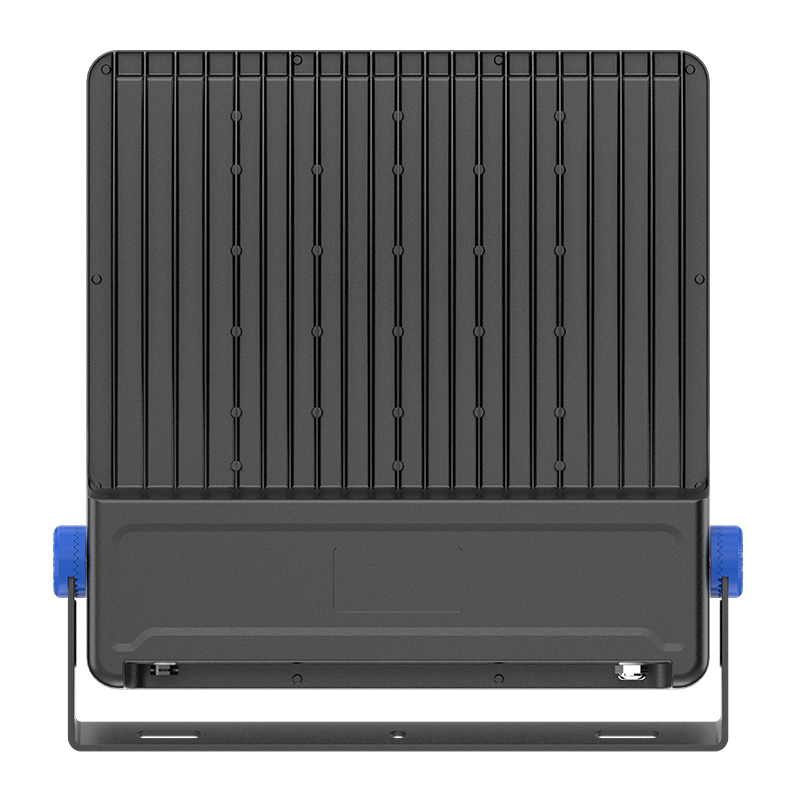 PY-FL05-300W High Quality Outdoor Flood LightThe FL05-300W floodlight is manufactured to industrial-grade standards and designed specifically for large outdoor spaces, providing exceptional brightness and long-la...View Product →
Solar Fixtures for Remote or Unmetered Lots
Overflow lots, trailheads, and satellite employee parking often have no conduit and no easy way to add one. Trenching a single pole run can cost more than the fixtures themselves, which is where solar becomes an engineering answer rather than a green gesture.
Sizing is the whole game. You need enough panel wattage to recharge after a short winter day, a battery chemistry that tolerates daily deep cycling, and an autonomy buffer for two or three cloudy days. Lithium iron phosphate packs handle that duty better than older chemistries, and integrated units avoid extra wiring between panel, battery, and head. Expect lower output than a mains-powered fixture of similar size, so solar works best on 20 W to 100 W classes with moderate uniformity targets.
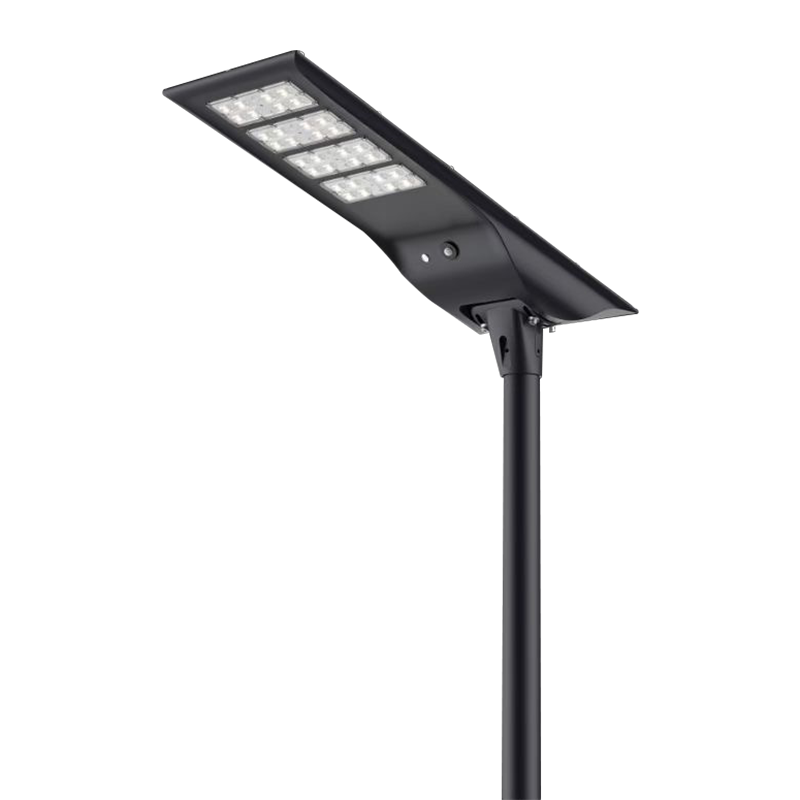 PY-SLST06-80W High-Brightness Solar Street LightThe 80W high-brightness solar street light is a high-performance, energy-saving product designed for medium to large-scale road and public lighting projects. This seri...View Product →
Fixture Types Side by Side
Most commercial lots end up mixing two or three fixture types, so it helps to see how they trade off against each other before the bill of materials is fixed.
Comparing four common parking lot lighting approaches across five criteria
The radar scores four common approaches from one to five against five criteria that show up in almost every parking lot tender. Cobra head and shoebox area lights score highest on coverage and glare control because their lenses are designed for pole-mounted, wide-area work. Flood lights score lower on glare control but hold high marks on installation simplicity and upfront cost value when the building wall already has power and a mounting point. Integrated solar units lead on energy efficiency because they draw nothing from the grid, yet their upfront cost value is the weakest of the four once battery and panel are included. These scores are not a quality ranking; they are a reminder that one lot usually needs more than one fixture type to reach its illuminance and uniformity targets.
Certifications and Procurement Risk
Once the layout is settled, compliance paperwork decides whether the project clears inspection and whether the owner can claim a utility rebate. Check these items on every quote:
- DLC listing, which is usually the gate for utility rebates and for some commercial energy codes.
- UL or ETL listing for the complete luminaire, not just the driver.
- IP65 or IP66 sealing for wet locations, plus an impact rating such as IK08 for pole-mounted heads.
- LM-79 and LM-80 reports so the lumen and depreciation claims can be traced to a test.
- Available IES photometric files for every wattage and distribution offered.
- Dimming or control compatibility, whether 0 to 10 V, photocell, or networked control.
- Written warranty terms covering driver, module, and finish, with the replacement process stated.
Missing paperwork is a cost, not a formality. A fixture without a listing can be rejected at inspection, and a rebate that fails can erase the payback gap between two competing bids.
A Repeatable Way to Buy
Set the illuminance and uniformity target, model the layout with real photometric files, match wattage to pole height and spacing, then confirm depreciation, certifications, and warranty before signing. That sequence keeps the conversation about measured performance instead of marketing claims.
If your project needs modified beam angles, custom housings, or a specific wattage and color temperature combination, it is worth working directly with a manufacturer that controls its own tooling and assembly. You can send your layout and specification to the team and ask for luminaire recommendations, IES files, and lead times before the tender closes.
Previous Post
No previous article
Next Post
Commercial Exterior Light Fixtures: A Complete Buyer's Selection Guide
Related Products

Our Products
Keep In Touch
export@polaryang.cn
+86-574-65167530
Xue'ao Qiangjiao Town, Ninghai County, Ningbo, Zhejiang, China
Contact Us
Copyright © Ninghai Poda Electrical Appliance Co., Ltd. Rights Reserved.
Wholesale LED Lighting Manufacturer
OEM Solar Lighting Factory
