 English
 Español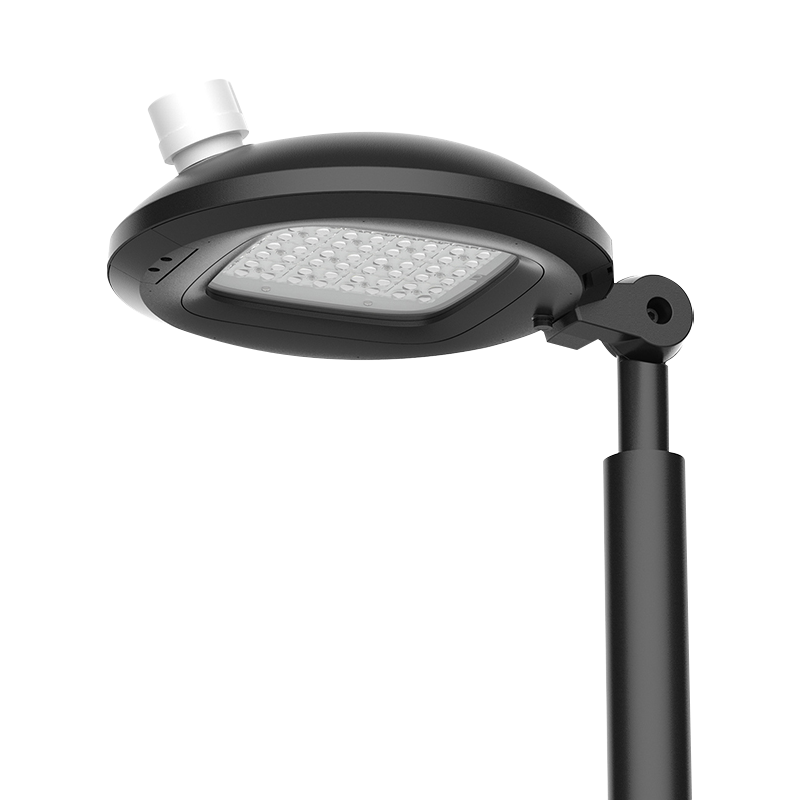
+86-13777012108
(WhatsApp/WeChat)
Home / News / Industry News / Commercial Exterior Light Fixtures: A Complete Buyer's Selection Guide
Commercial Exterior Light Fixtures: A Complete Buyer's Selection Guide
A facilities team in a coastal city replaces forty wall packs along a loading dock roughly every eighteen months. The LEDs themselves rarely fail. The die-cast housing corrodes at the mounting flange, water reaches the driver through a gasket that was never rated for permanent outdoor service, and the electronics give out during the second winter. The original purchase price looked competitive. The five-year cost did not.
Here is the short version before the detail. When you specify commercial exterior light fixtures, housing material and sealing quality matter more than the wattage printed on the carton. Watts only describe how much energy a fixture draws. Lumens per watt, ingress protection, impact rating, driver quality and thermal design decide whether the installation still performs in year five. Everything below explains how those factors connect, and where buyers most often lose money.
Content
- 1 What Separates a Commercial Exterior Fixture From a Consumer One
- 2 Matching the Fixture Family to the Site
- 3 Reading Wattage, Lumens and Efficacy Without Getting Misled
- 4 Beam Angle, Spacing and Uniformity
- 5 Five-Year Cost by Wattage Band
- 6 Solar or Mains: Choosing the Power Source
- 7 Ingress Protection, Corrosion and Certification Checks
- 8 Sourcing, Customisation and Lead Times
What Separates a Commercial Exterior Fixture From a Consumer One
The dividing line is not brightness. It is the ability to survive years of rain, salt air, ultraviolet exposure and temperature cycling without opening a path for water. A residential flood light sold in a home improvement store often uses stamped steel, a single silicone bead around the lens and a driver mounted directly against the housing. That construction can work under a porch. It rarely survives a parking lot.
Commercial-grade exterior fixtures usually share a set of traits that buyers can verify on a datasheet:
- Die-cast aluminium housing rather than stamped steel, with a powder coating tested for salt spray resistance.
- A separate driver compartment or a thermally isolated driver, so LED heat does not shorten capacitor life.
- Ingress protection of IP65 or higher, with a gasket that is compressed by screws rather than clipped in place.
- Impact resistance of IK08 or above, which protects the lens from hail, tools and accidental contact.
- Surge protection, commonly 6 kV to 10 kV, to absorb grid spikes and nearby lightning strikes.
- Photometric files measured to LM-79 and, for longer projects, LM-80 data that supports the lumen maintenance claim.
None of these items appear in the headline wattage. That is exactly why they are the first thing a serious buyer checks and the first thing a low-cost supplier removes.
Matching the Fixture Family to the Site
Most outdoor lighting projects fail at the selection stage, not the installation stage. A 200 W flood light aimed from a 5 m wall produces harsh pools of light and deep shadows. The same budget spent on a properly distributed street light at 8 m produces even coverage with less glare. The table below shows the practical ranges that outdoor LED families normally cover.
| Fixture family | Typical wattage | Usual mounting height | Recommended ingress protection | Common applications |
|---|---|---|---|---|
| LED flood light | 30 W to 1200 W | 3 m to 12 m | IP65 or IP66 | Facades, sports courts, yards, signage |
| LED street light | 50 W to 240 W | 6 m to 12 m | IP65 or IP66 | Roads, car parks, plazas, stadium perimeter |
| Wall pack | 20 W to 60 W | 2.5 m to 4 m | IP65 | Loading docks, corridors, entrances |
| LED garden light | 8 W to 80 W | 0.8 m to 3 m | IP65 | Pathways, estates, courtyards |
| Solar area light | 20 W to 400 W | 3 m to 8 m | IP66 | Off-grid roads, remote yards, temporary sites |
Flood lights carry the widest power range because they are used for everything from lighting a shop sign to illuminating a stadium apron. A 300 W unit with an asymmetric reflector can cover a facade wall from 8 m away, while a 1200 W model belongs on a pole aimed at a large yard. Buyers who understand what a floodlight is actually designed to do will avoid the classic mistake of choosing a narrow beam unit for a wide area.
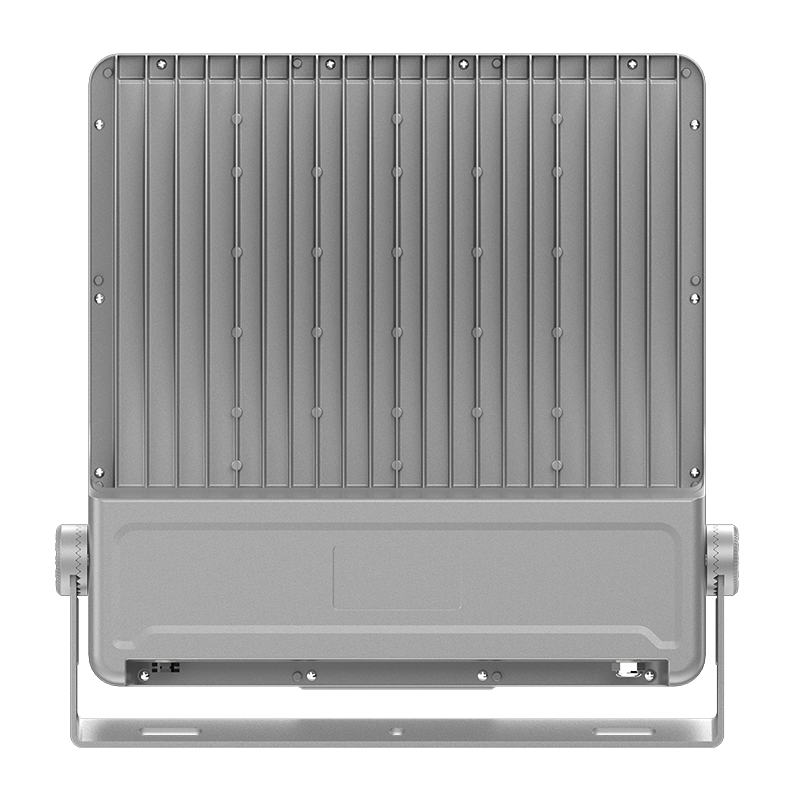 PY-FL02-300W Low Energy LED Flood LightThe FL02-300W low-energy LED floodlight maintains stable output in extreme environments ranging from -40°C to 60°C. Its IP66-rated protection effectively resists wind ...View Product →
For projects that combine several families, ordering from a single manufacturer keeps photometric data, colour temperature and connector standards consistent, which simplifies commissioning and future spare parts.
Reading Wattage, Lumens and Efficacy Without Getting Misled
Efficacy is the number that turns electricity into usable light. It is measured in lumens per watt and it varies noticeably between fixture families because of optical design, thermal headroom and driver efficiency. The chart below shows the ranges that well-designed outdoor LED products normally reach.
Typical LED efficacy by exterior fixture family, in lumens per watt
High bay fixtures reach the highest numbers because their large heat sinks and open mounting positions keep the LED junction cool. Street lights follow closely, helped by mature optical systems and drivers tuned for constant current operation. Flood lights sit slightly lower because their housings are often sealed tightly and the optics sacrifice some efficiency for beam control. Wall packs and garden lights lose a few percent to compact enclosures and decorative diffusers, which is normal and rarely a problem in practice. Solar fixtures trail the group because battery charging and discharging adds a conversion loss that mains-powered products never see. The practical lesson is simple: when comparing two fixtures at the same wattage, the one with higher efficacy delivers more light for the same electricity bill and usually indicates better thermal design overall.
Beam Angle, Spacing and Uniformity
Beam angle decides how far light travels and how evenly it lands. A narrow 30 degree beam throws light a long distance but creates a bright circle with dark edges. A 120 degree beam spreads light widely but loses reach. Most outdoor projects sit between 60 and 90 degrees, with asymmetric distributions reserved for roadway work.
- Type II distribution pushes light along one side of a pole, suited to narrow paths and single lane roads.
- Type III distribution is the general purpose roadway pattern for typical street widths.
- Type IV distribution reaches wider areas and suits car parks and loading zones.
- Type V distribution is fully symmetrical and suits open plazas and central poles.
Uniformity matters as much as average illuminance. A car park that averages 30 lux but swings between 5 lux and 60 lux feels unsafe because the human eye adapts slowly between bright and dark zones. Designers usually target a uniformity ratio of at least 0.4, meaning the darkest point on the surface should never fall below 40 percent of the average. Achieving that ratio is a matter of spacing rather than wattage, so widening the pole spacing and raising the power is almost always the wrong trade.
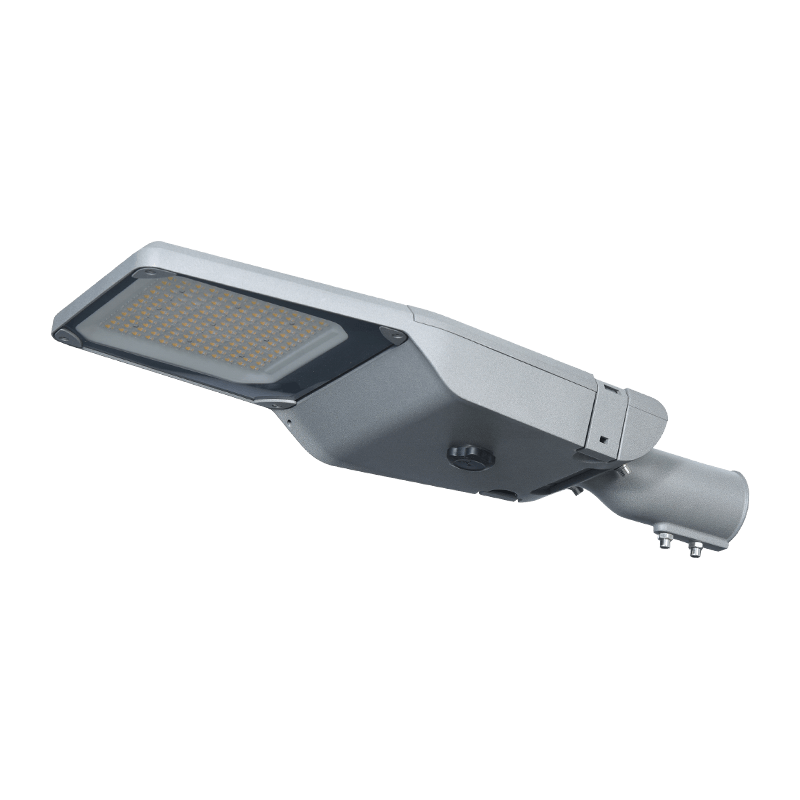
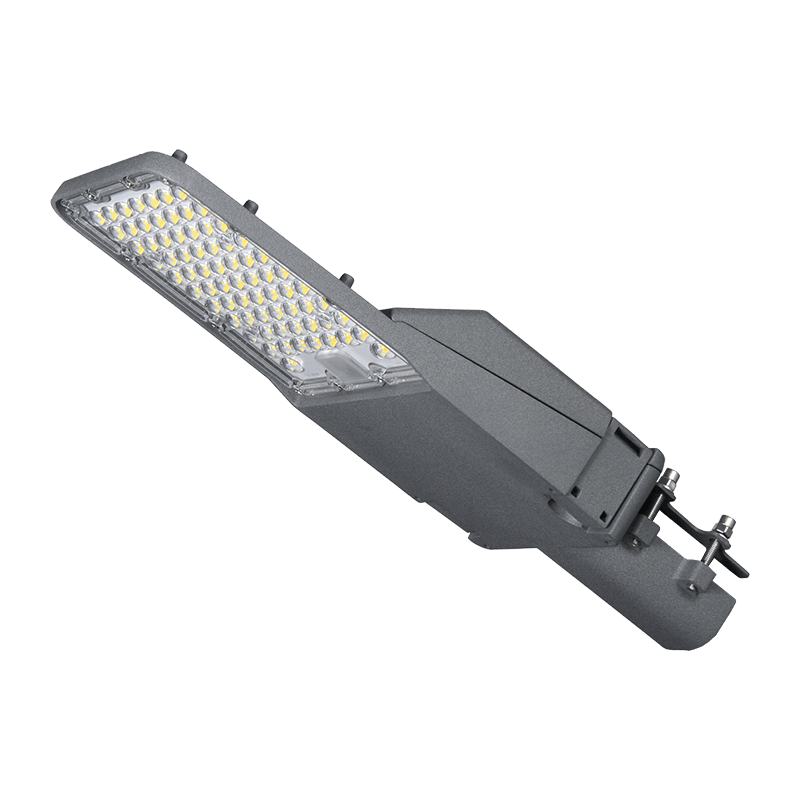
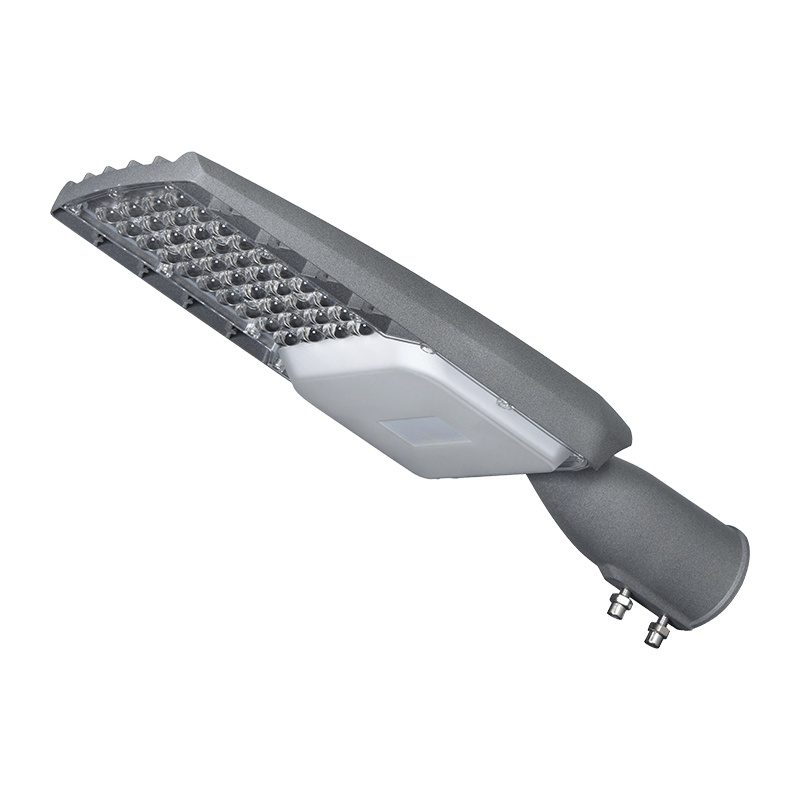
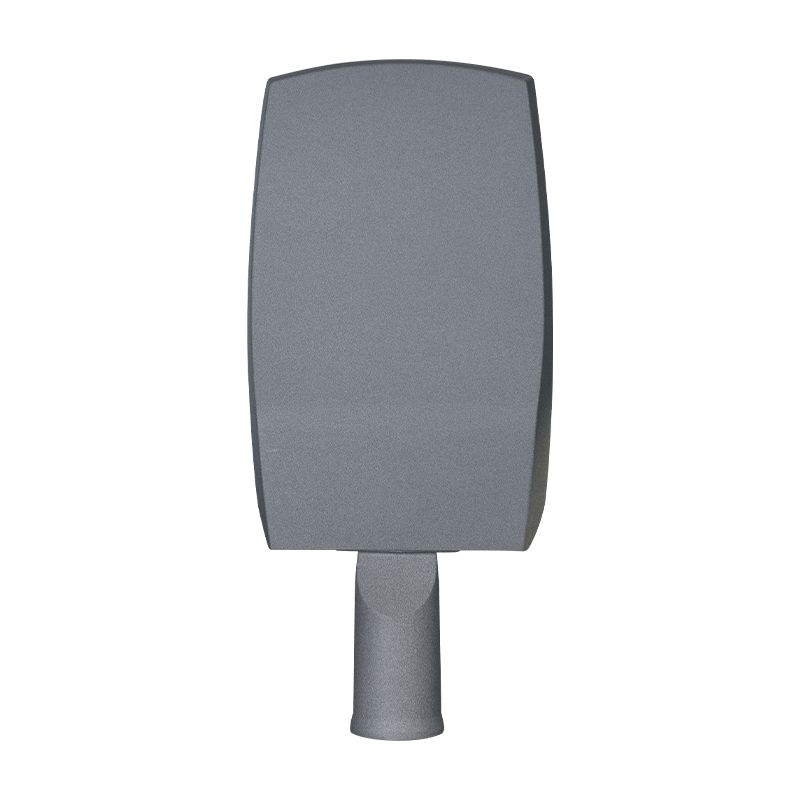 PY-LED612L-120W Outdoor Stadium Lighting Street LightThe 120W outdoor stadium LED street light is a high-performance, professional lighting solution designed specifically for stadiums and athletic fields. The light body ...View Product →
Five-Year Cost by Wattage Band
Purchase price is the smallest part of the total. Energy, cleaning, driver replacement and labour for access equipment dominate the real cost, and they scale roughly with wattage. The chart below shows an estimated five-year cost per fixture across common wattage bands, assuming eight hours of nightly operation and average commercial electricity rates.
Estimated five-year energy and maintenance cost per fixture, by wattage band, in US dollars
The curve climbs faster than wattage itself because higher power fixtures are usually mounted higher, which means reaching them costs more in labour and equipment. A failed 400 W fixture at 10 m may cost more to replace than the replacement unit itself, so driver quality has a direct financial value. Buyers should treat any quoted saving at the purchase stage as a fraction of the total, because a fixture that fails once in five years can erase the entire price advantage of a cheaper alternative. Conversely, paying twenty percent more for a fixture that runs ten years without service is usually the better decision on paper and in practice. The bands above also explain why solar fixtures make economic sense in remote locations, where the cost of running cable can exceed the cost of the fixtures many times over.
Solar or Mains: Choosing the Power Source
Solar outdoor lighting has moved well past the small decorative panels sold for garden paths. Integrated solar street lights with lithium iron phosphate batteries now deliver 40 W to 100 W for full night operation in many climate zones. The trade is straightforward: a higher upfront cost in exchange for no trenching, no cabling and no electricity meter.
Cumulative cost per fixture over five years, mains-powered LED compared with solar LED, in US dollars
Mains-powered LED Solar LED
The two lines behave very differently. The mains line starts low because the fixture and the cabling are relatively cheap, then climbs steadily as electricity and maintenance accumulate. The solar line starts high because the panel, battery and controller are all part of the same unit, then flattens out because there is no energy bill to pay. The crossing point falls near the end of year five in this model, which is the number that matters for most commercial decisions. Any project with a longer horizon tips further toward solar, while a short term installation favours mains power. Trenching cost is the variable that shifts this chart the most, because a single cable run across a paved yard can exceed the price of every fixture on the site.
Multi-criteria comparison of mains LED and solar LED exterior fixtures, scored from 0 to 1
Mains-powered LED Solar LED
The radar view shows why the choice is rarely obvious. Mains fixtures still hold the advantage on raw efficacy because there is no battery conversion loss in the chain. Solar fixtures score higher on weather sealing and corrosion resistance, largely because manufacturers build them to survive unattended operation in exposed locations. Solar also wins on install simplicity, since a self-contained pole needs no trench, no conduit and no electrical inspection. Cost control is the axis that eventually decides the outcome, and it tilts toward solar whenever the cable run is long or the grid connection is expensive. Reading all five axes together prevents the common mistake of choosing on a single number.
Ingress Protection, Corrosion and Certification Checks
Once the fixture family and power source are settled, the compliance details decide whether the order passes inspection. Ask for documentation rather than a verbal promise, and check that the certificate number matches the model you are buying rather than a similar product from the same catalogue.
- Ingress protection test report covering IP65, IP66 or IP67 as required by the mounting location.
- Impact rating certificate, typically IK08 or IK10 for public and industrial areas.
- Salt spray test hours, which matter most within a few kilometres of the coast.
- CE, TUV and RoHS declarations for European and UK shipments, plus local equivalents for other markets.
- Quality management certification such as ISO 9001 covering the factory that will actually produce the order.
- LM-79 photometric files and LM-80 lumen maintenance data for projects that specify performance guarantees.
- Surge protection rating and driver brand, since the driver is the component most likely to fail first.
A supplier that can produce all seven items without delays is usually a manufacturer with its own tooling and testing capability. A supplier that forwards the request to a third party is usually a trading company, which is not automatically disqualifying but does change the lead time and the traceability of any future complaint.
Sourcing, Customisation and Lead Times
Exterior lighting orders are rarely catalogue purchases. A hotel facade may need a specific colour temperature matched to an existing installation. A distributor may need a private label housing, a modified bracket or a different connector standard. A municipal project may require a photometric layout study before the first unit is approved.
 PY-WP9002 Outdoor Wall Pack LightsThe WP9002 outdoor wall light is a high-end outdoor lighting product that combines superior protection with artistic lighting design. Constructed from a sturdy 304 sta...View Product →
These requirements change the sourcing conversation. A manufacturer with in-house design, mould development and assembly can quote a modified housing without waiting for an external tool shop, and can correct a fitment issue before mass production rather than after. That capability is worth verifying directly, because it determines how quickly a problem is solved once the container has already shipped.
Lead time expectations should be set in writing. Typical commercial orders of a few hundred units move through production in a matter of weeks, while custom moulds, new packaging artwork or third-party testing add time on top. Buyers who plan for both the production window and the shipping window avoid the last-minute air freight that erases the margin on an otherwise healthy order.
For projects with unusual requirements, the fastest route is usually a direct conversation about the site, the mounting geometry and the target light levels. A short technical brief with pole heights, spacing, ambient conditions and certification needs is enough for an experienced supplier to recommend a configuration rather than a catalogue number. You can start that conversation through the contact page and expect a specification draft in return.
Commercial exterior light fixtures reward careful specification and punish shortcuts. Start with housing material, sealing quality and thermal design. Confirm the efficacy figure rather than the nominal wattage. Check the beam distribution against the actual mounting height and pole spacing. Then decide between mains and solar power based on the cable run and the length of time you will keep the site. Those four decisions account for most of the difference between an installation that quietly runs for a decade and one that keeps a maintenance crew busy every second winter.
Previous Post
Commercial Parking Lot Lighting: How to Spec LED Area Lights That Last
Next Post
Understanding Color Temperature in LED Lighting: Choosing the Right Kelvin Scale
Related Products

Our Products
Keep In Touch
export@polaryang.cn
+86-574-65167530
Xue'ao Qiangjiao Town, Ninghai County, Ningbo, Zhejiang, China
Contact Us
Copyright © Ninghai Poda Electrical Appliance Co., Ltd. Rights Reserved.
Wholesale LED Lighting Manufacturer
OEM Solar Lighting Factory
