 English
 Español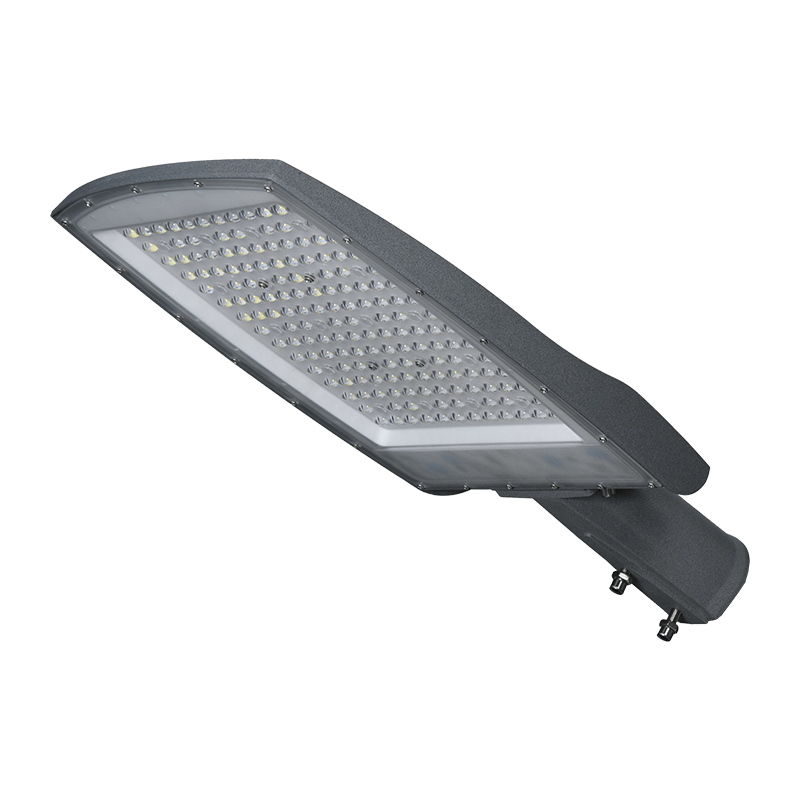
+86-13777012108
(WhatsApp/WeChat)
Home / News / Industry News / How Do Street Lights Work? Photocells, Timers and LED Drivers Explained
How Do Street Lights Work? Photocells, Timers and LED Drivers Explained
A street light does not wait for a control room to tell it that night has fallen. A small light sensor on top of the housing measures ambient brightness, and at a threshold between 10 and 20 lux it closes its contacts and sends mains power to the driver inside the fixture. The driver converts alternating current into a regulated direct current, and the LED module turns that current into light. The whole sequence takes a few seconds and repeats every evening without anyone touching a switch.
Seeing a street light as three blocks working in sequence makes real world problems easier to diagnose. A lamp burning at noon, a fixture that flickers before it settles, a pole that dims to half output at 1 a.m. and returns to full brightness when a car approaches. Each symptom points to the control layer, the driver or the LED module. The sections below follow that chain in order, then list the checks that prevent costly mistakes when street lights are ordered in volume.
Content
- 1 The Three Blocks Inside a Working Street Light
- 2 How a Photocell Decides That It Is Dark Enough
- 3 Timers, Motion Sensors and Smart Controls
- 4 What Happens Between the Pole and the LED Chip
- 5 Solar Street Lights Use the Same Logic With a Different Power Path
- 6 What Buyers Should Confirm Before an Order Is Placed
- 7 Field Symptoms and What They Usually Mean
The Three Blocks Inside a Working Street Light
Every pole mounted fixture, from a 50 W residential lantern to a 240 W arterial road light, contains the same three functional blocks.
- Power and driver. Mains voltage arrives at the pole, usually 120 V, 230 V or 277 V single phase, and up to 347 V or 480 V on some North American corridors. The driver rectifies the AC, corrects the power factor and feeds the LEDs with a constant current, typically 350 mA to 1.05 A depending on the module design.
- Light engine. LED chips mounted on a metal core board. Light from the semiconductor die passes through a phosphor layer and emerges as white light. Well built commercial luminaires deliver 120 to 160 lumens per watt at the fixture level, after optical and thermal losses.
- Control layer. A photocell, an astronomical timer, a motion sensor or a networked controller decides when the driver receives power and how much current it should deliver. On older installations it is a twist lock photocell in a receptacle on top of the housing. On newer fixtures it can be a surface mounted sensor wired directly to the driver board.
Because the blocks are independent, a fault in one rarely looks like a fault in another, which saves a great deal of guesswork on site.
How a Photocell Decides That It Is Dark Enough
The sensing element is a cadmium sulfide cell whose resistance falls as light rises, or a silicon photodiode paired with a comparator circuit. In both cases the electronics compare the measured level against a reference and drive a relay or a solid state switch.
Two figures matter. The turn on threshold is normally set between 10 and 20 lux, which corresponds to late dusk under a clear sky. The turn off threshold is deliberately higher, often two to three times the turn on value. That gap is called hysteresis, and without it the fixture would switch off the moment its own output lifted the ambient light level, then switch back on, cycling all night.
Sensor position decides reliability
A photocell has to see the sky, not the fixture it controls. When a sensor faces a nearby wall, a reflective sign or the beam from the next pole, the feedback loop can hold the lamp on after sunrise. The same thing happens when the sensor window is coated with dust or a spider web, which is the most common reason a street light stays on all day.
Timers, Motion Sensors and Smart Controls
An astronomical timer works differently. It stores latitude, longitude and date, calculates sunset and sunrise to within a minute or two, and switches the circuit accordingly. It is immune to dirty windows and shaded locations, but a power outage that clears the clock, or a daylight saving change the controller does not know about, shifts the schedule until someone corrects it.
Motion sensing adds a second layer of savings. A microwave or passive infrared detector holds the fixture at a standby level of about 20 to 30 percent and lifts it to full output when a vehicle or pedestrian enters the zone. On low traffic roads this can cut nightly energy use by a third. Passive infrared detection is less reliable in very cold weather, and both types need careful aiming to avoid false triggers from moving foliage.
Networked street lights go further. A controller in a NEMA or Zhaga socket reports power consumption, operating hours and fault codes over a wireless mesh or NB IoT link. Operators can dim whole circuits, run separate weekend profiles and spot a failed driver before residents call. This overview of the application prospects of smart street lights covers what city scale deployments actually involve.
| Control method | How it triggers | Typical switching level | Points to check |
|---|---|---|---|
| Photocell | Measures ambient light with a light sensitive cell | On near 10 to 20 lux, off near 30 to 60 lux | Window must face open sky and stay clean |
| Astronomical timer | Calculates sunset and sunrise from location and date | Within one to two minutes of true sunset | Clock resets after outages and daylight saving changes |
| Motion sensor | Detects movement with microwave or passive infrared | Full output on detection, 20 to 30 percent standby | Aiming, false triggers and cold weather range |
| Networked controller | Receives commands from a central management system | Any profile the operator sets | Reliable communications and a maintenance plan |
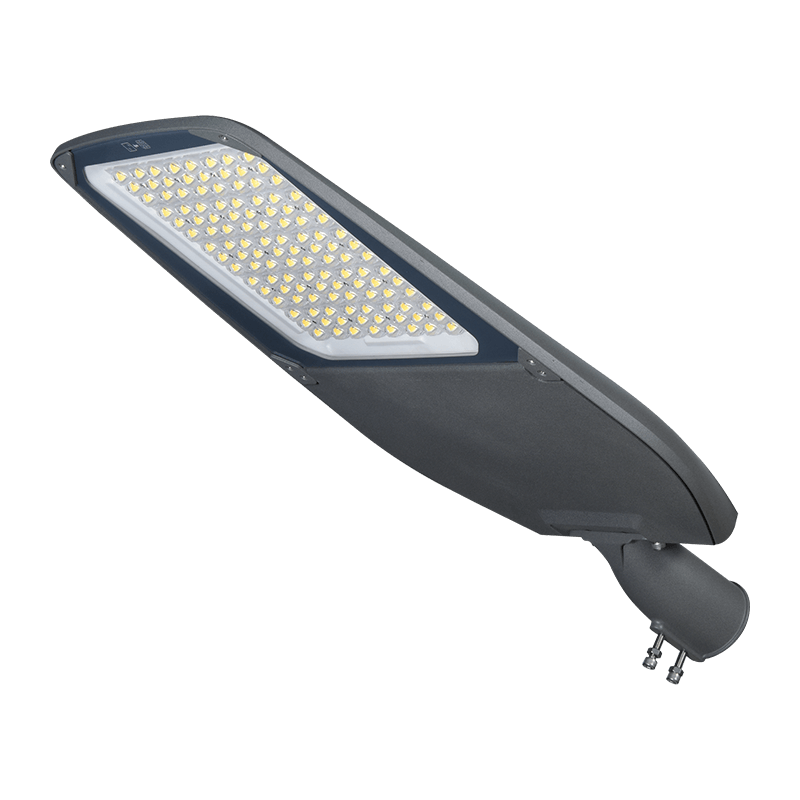
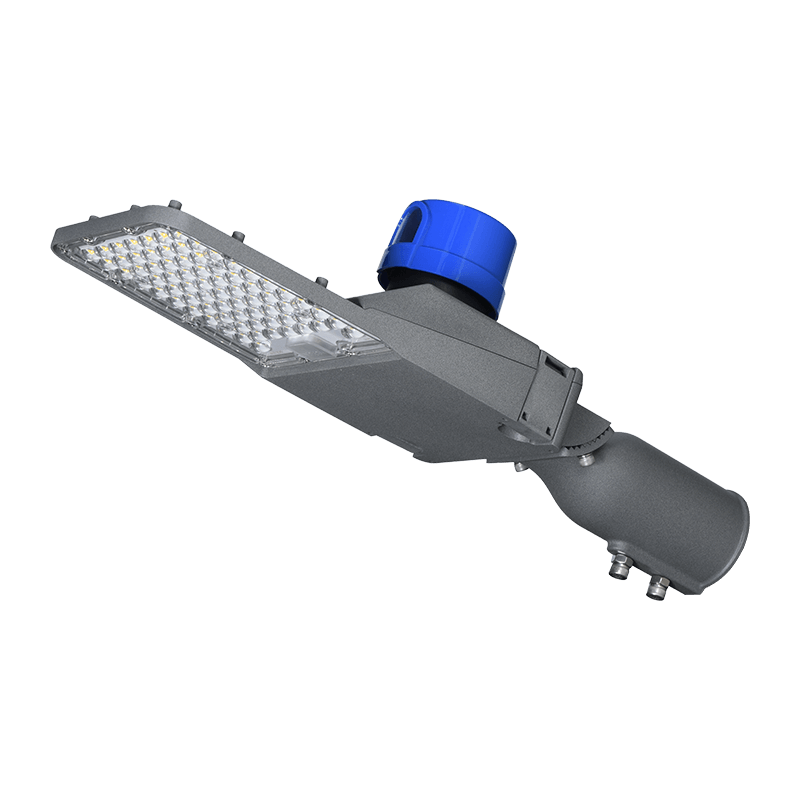
For projects that need dimming schedules and fault reporting built into the fixture rather than added later, a 240 W smart street light with an integrated controller socket is a practical starting point on the specification list.
 PY-LED666-240W Smart Street LightThe smart LED666-240W street light is a modern road lighting solution that integrates energy efficiency, intelligent control, and stable performance. Utilizing high-qu...View Product →
What Happens Between the Pole and the LED Chip
Between the pole connection and the light engine sits the driver, and it does more than change voltage. It holds current constant as the LEDs heat up, so output stays stable across a warm summer night and a cold winter night alike. Driver efficiency of 88 to 92 percent is normal, and the metal body behind the board is the thermal path that keeps junction temperature inside the range the manufacturer rated.
Outdoor fixtures also carry protection that indoor lamps do not need. An on board surge protection device in the 10 kA class absorbs transients that travel up the pole during nearby lightning strikes. Gaskets and a die cast aluminium body hold an IP66 rating, the lens usually meets IK08 or better, and the cable gland and gasket are the parts most likely to admit water after years of thermal cycling.
The gain over older light sources is easy to see in round numbers. A 150 W high pressure sodium fixture produced roughly 15,000 lumens while drawing about 175 W once ballast losses were counted. A modern LED luminaire at 140 lumens per watt reaches the same delivered light with about 100 W of input, and because the optic aims the beam at the road instead of radiating in all directions, usable road illuminance is often higher at the same lumen figure.
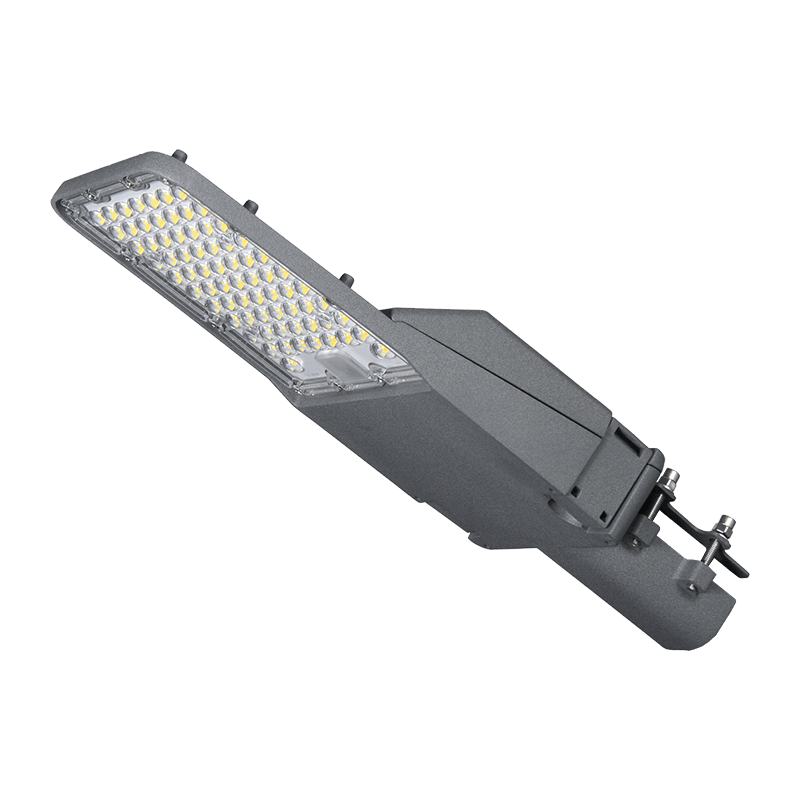
Stable output at that level depends on the light engine and the thermal design working together, which is what a fixture such as this 150 W LED street light is built around.
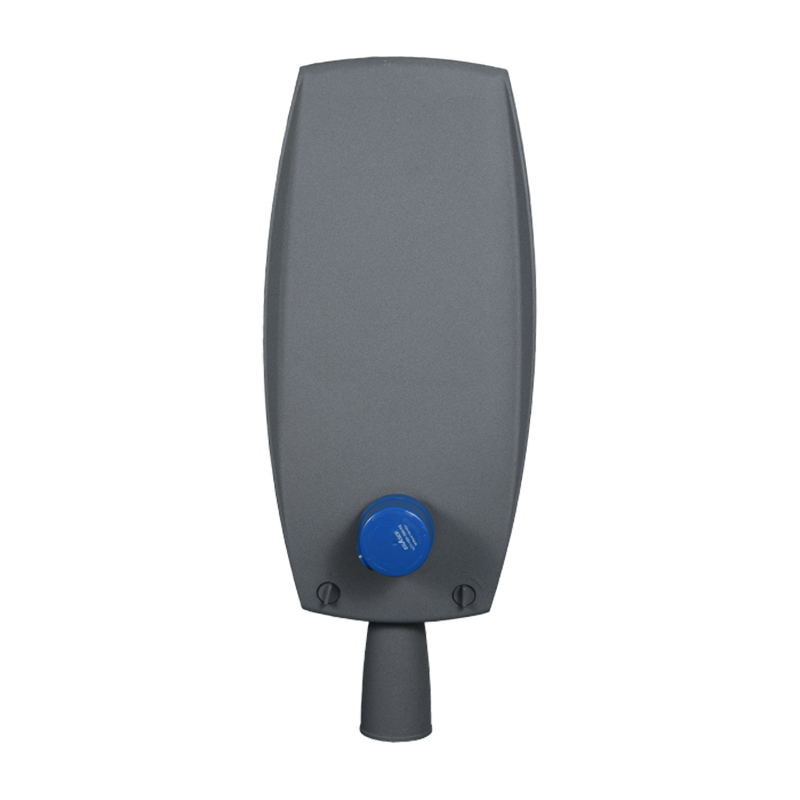 PY-LED591-150W High Quality Outdoor Street LightThe high-quality outdoor LED591-150W streetlight is a professional-grade lighting fixture designed for demanding lighting scenarios such as urban main roads, large squ...View Product →
Solar Street Lights Use the Same Logic With a Different Power Path
A solar street light replaces the mains connection with a photovoltaic panel, a charge controller and a battery pack, then keeps the same control logic at the end of the chain. During the day the panel charges the battery through an MPPT controller. At dusk the photocell or the timer releases stored energy to the driver.
Sizing is arithmetic rather than guesswork. Daily energy equals luminaire wattage multiplied by operating hours, adjusted for any dimming profile. A 60 W fixture running five hours at full output and five hours at 30 percent consumes about 390 watt hours, which a 12.8 V 100 Ah lithium iron phosphate pack covers with margin, and a 120 to 150 W panel refills on a normal sunny day. Sites with long cloudy periods need two to three nights of autonomy.
Split designs put the panel and battery on a separate rack so the pole carries less weight, while integrated designs keep everything in the fixture head for faster installation. Neither needs trenching, which is why solar units are common along parks, plazas and rural roads where the cost of a grid connection is higher than the light itself.
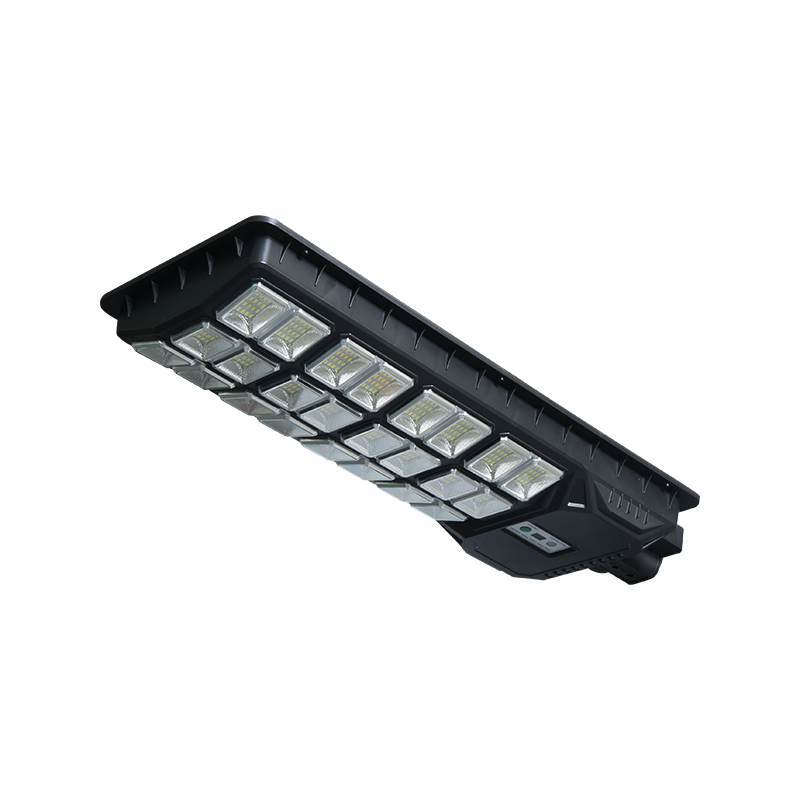
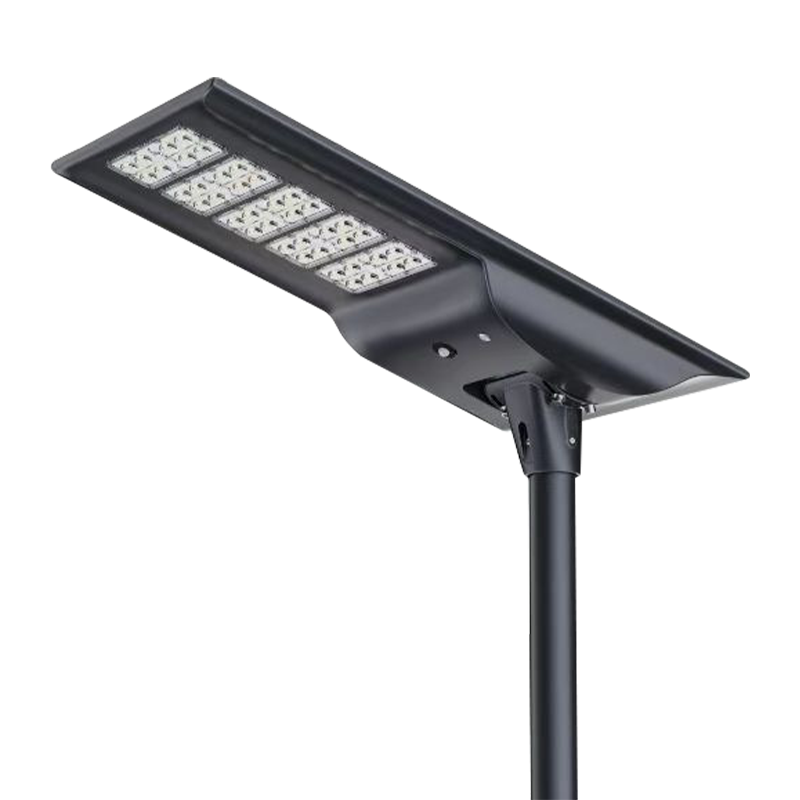
An 80 W high brightness solar street light shows how panel, battery and driver are matched in a single product family.
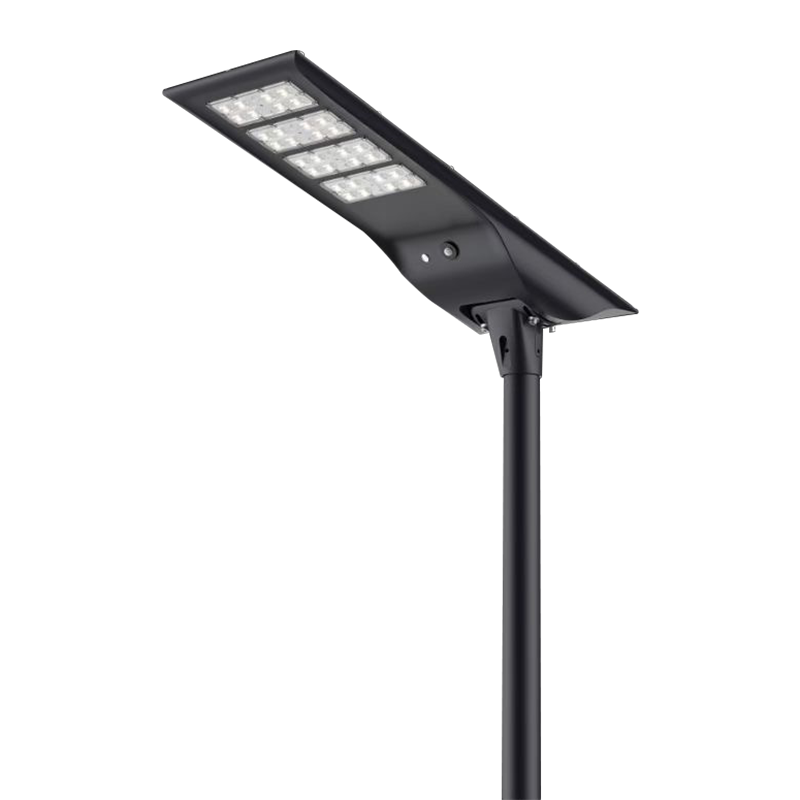 PY-SLST06-80W High-Brightness Solar Street LightThe 80W high-brightness solar street light is a high-performance, energy-saving product designed for medium to large-scale road and public lighting projects. This seri...View Product →
What Buyers Should Confirm Before an Order Is Placed
Most street light complaints traced back to procurement come from one of two situations. A figure was quoted at the chip level rather than the fixture level, or the luminaire was chosen without checking the control system it has to work with. The table below lists the values worth confirming in writing.
| Parameter | What to request | Typical value |
|---|---|---|
| Luminaire efficacy | Fixture level test report, not chip level data | 120 to 160 lumens per watt |
| Colour consistency | Binning data checked across repeated orders | Within 5 SDCM, 3000 K to 5000 K |
| Ingress and impact | IP and IK certificates for the housing | IP66 and IK08 or better |
| Surge protection | Internal device rating for lightning prone areas | 10 kA, combination wave tested |
| Dimming compatibility | Signal type matched to the chosen controller | 0 to 10 V, DALI or PWM |
| Photocell | Whether it is supplied and at what switch level | On at 10 to 20 lux |
| Warranty and spares | Named driver brand and replacement lead time | Five years is common |
Three further points deserve a place in the same conversation. Confirm the mounting diameter and arm tilt match the pole and the road class, since a 60 mm entry will not fit a 76 mm bracket. Ask for LM-80 and TM-21 lumen maintenance data rather than a marketing lifetime figure. Finally, list the certifications the destination market requires, such as CE, RoHS or TUV, so compliance is settled before production starts.
Field Symptoms and What They Usually Mean
Once the three blocks are clear, most service calls resolve into a short list of causes.
- Light stays on through the day. The photocell window is dirty, shaded or failed, or an astronomical timer lost its date after an outage.
- Flicker or a short dropout. A failing driver, a loose spade terminal, or interference on the dimming pair.
- On and off cycling near dawn. The hysteresis band is too narrow, or the sensor is catching light from a neighbouring pole.
- Full brightness at 2 a.m. on a road that should be dimmed. The control profile was never loaded, or the network controller dropped off the mesh.
- Lower output than on day one with no dimming command. LED module degradation, a failed string, or a driver that reduced current to protect itself from heat.
Street lighting is a simple system once it is broken into its parts. Something decides that it is dark, something converts mains or stored DC power into a controlled current, and something turns that current into light. Faults point to one of those three blocks, and a good specification pins down the performance of all three before the order is signed.
For buyers running multi site projects, the practical advantage of a manufacturer that handles design, tooling and assembly in house is consistency between orders, meaning the same optic, the same binning and the same driver platform year after year. Poda Lighting produces mains powered and solar LED street lights in the 50 W to 240 W range, alongside flood lights, high bay lights and garden lights used in stadiums, tunnels, factories and residential streets, and exports to more than fifty countries. If you are preparing a tender or comparing samples, you can send your project specifications to the team for a matched recommendation.
Previous Post
How Much Are Stadium Lights? Real Project Costs, Wattage and Buying Guide
Next Post
Commercial Parking Lot Lighting: How to Spec LED Area Lights That Last
Related Products

Our Products
Keep In Touch
export@polaryang.cn
+86-574-65167530
Xue'ao Qiangjiao Town, Ninghai County, Ningbo, Zhejiang, China
Contact Us
Copyright © Ninghai Poda Electrical Appliance Co., Ltd. Rights Reserved.
Wholesale LED Lighting Manufacturer
OEM Solar Lighting Factory
