 English
 Español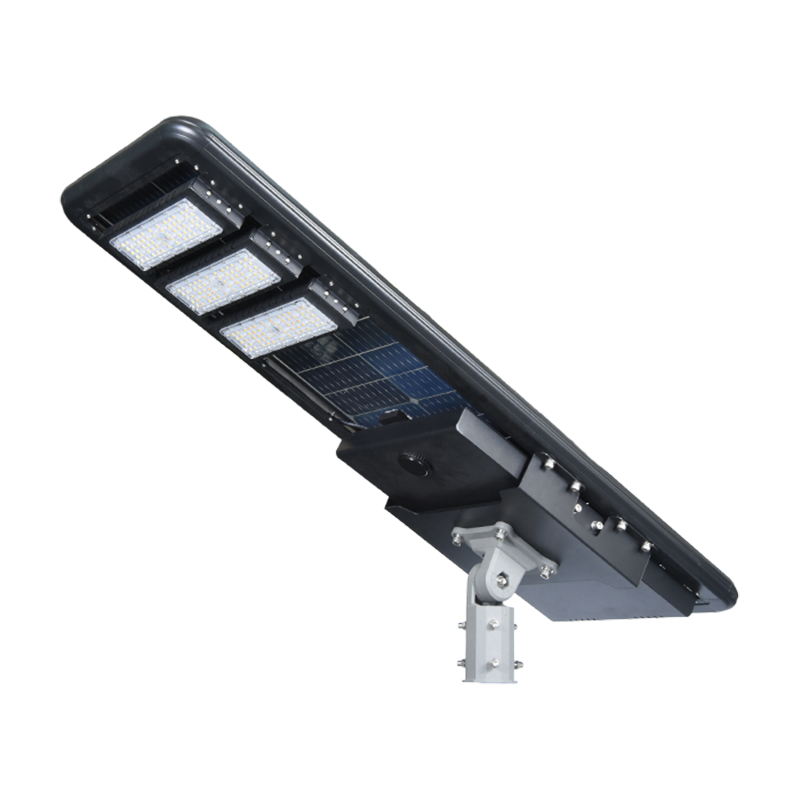
+86-13777012108
(WhatsApp/WeChat)
Home / News / Industry News / How Much Are Stadium Lights? Real Project Costs, Wattage and Buying Guide
How Much Are Stadium Lights? Real Project Costs, Wattage and Buying Guide
Two contractors quoted the same eight pole high school football field last season. One came in at $118,000. The other came in at $241,000. The fixtures were close in wattage. The gap sat in pole foundations, a service upgrade, and a lighting control package that nobody had asked about in the first meeting.
So here is the short answer first. In most markets, a single LED stadium light fixture costs roughly $250 to $1,500 depending on wattage, beam control, and housing quality. A complete high school football or soccer field project usually lands between $100,000 and $300,000. Small community and practice fields can be lit for $20,000 to $70,000. College and professional venues with broadcast requirements often start near $250,000 and can pass $800,000 once poles, electrical service, and engineering are included.
Everything below explains where those numbers come from, which parts of the budget you can actually control, and how to read two quotes that look nothing alike.
Content
- 1 Typical Stadium Lighting Cost by Venue Type
- 2 What the Project Budget Actually Contains
- 3 What Drives the Price of One Stadium Light
- 4 Energy Cost: The Number Buyers Underestimate
- 5 Installation and Pole Work
- 6 Maintenance and Ten Year Cost
- 7 How to Compare Two Stadium Lighting Quotes
- 8 Working With a Manufacturer on a Field Project
- 9 Common Questions About Stadium Light Pricing
Typical Stadium Lighting Cost by Venue Type
Venue size is the strongest single predictor of price. A practice field needs enough light for players and coaches to see the ball. A televised stadium needs vertical illuminance, color consistency, and glare control that meet broadcast standards. Those two jobs use different fixtures, different quantities, and different control systems.
| Venue type | Typical fixture count | Fixture budget | Full installed project |
|---|---|---|---|
| Practice or small community field | 4 to 8 | $2,000 to $8,000 | $20,000 to $70,000 |
| High school football or soccer field | 12 to 24 | $6,000 to $30,000 | $100,000 to $300,000 |
| College or semi professional stadium | 24 to 48 | $20,000 to $70,000 | $250,000 to $700,000 |
| Professional or broadcast venue | 40 to 80 plus | $60,000 and above | $800,000 and above |
Read the table as a starting point, not a quote. Two high school fields of identical size can sit at opposite ends of the range because one still has sound poles from 2005 while the other needs four new poles, new concrete, and a transformer upgrade.
What the Project Budget Actually Contains
Buyers often assume the fixture price is the project price. It is usually 20 to 35 percent of the total. The rest is infrastructure, labor, and compliance.
- Fixtures, brackets, and aiming hardware
- Poles and crossarms, including new foundations or reinforcement of existing poles
- Trenching, conduit, wiring, and panel or transformer upgrades
- Controls, dimming, and remote monitoring
- Installation labor, cranes, and bucket truck time
- Engineering, permits, and commissioning measurements
If a quote arrives far below the others, check these six lines first. Missing pole reinforcement and missing photometric commissioning are the two most common omissions.
What Drives the Price of One Stadium Light
A stadium light is priced by how much light it produces, how well it controls that light, and how long it survives outdoors.
Wattage and light output
Fixtures in the 200W to 400W class suit smaller fields and corner coverage. Main field lighting usually runs 600W to 1,200W per fixture. Higher wattage means a larger heat sink, a stronger driver, and a heavier housing, so price climbs faster than the wattage number suggests.
Optics and beam control
A tight beam that throws 60 meters without spilling light into neighboring homes costs more than a wide flood pattern. Asymmetric optics designed for pole mounting reduce the fixture count needed to hit a target illuminance, which can lower the whole project cost even when the unit price is higher.
Housing, driver, and protection rating
Die cast aluminum bodies with corrosion resistant coatings, IP66 sealing, and 10kV surge protection are the baseline for a field that stays outdoors for fifteen years. Powder coated steel housings are cheaper and show it after a few winters.
Certification and warranty
CE, TUV, and RoHS documentation matter for imported projects. A five year warranty covering driver and LEDs shifts risk back to the manufacturer, and it is worth paying for.
Manufacturers who also build street lighting often adapt the same die cast aluminum body and optical platform to stadium applications, which shortens development time and keeps spare parts available.
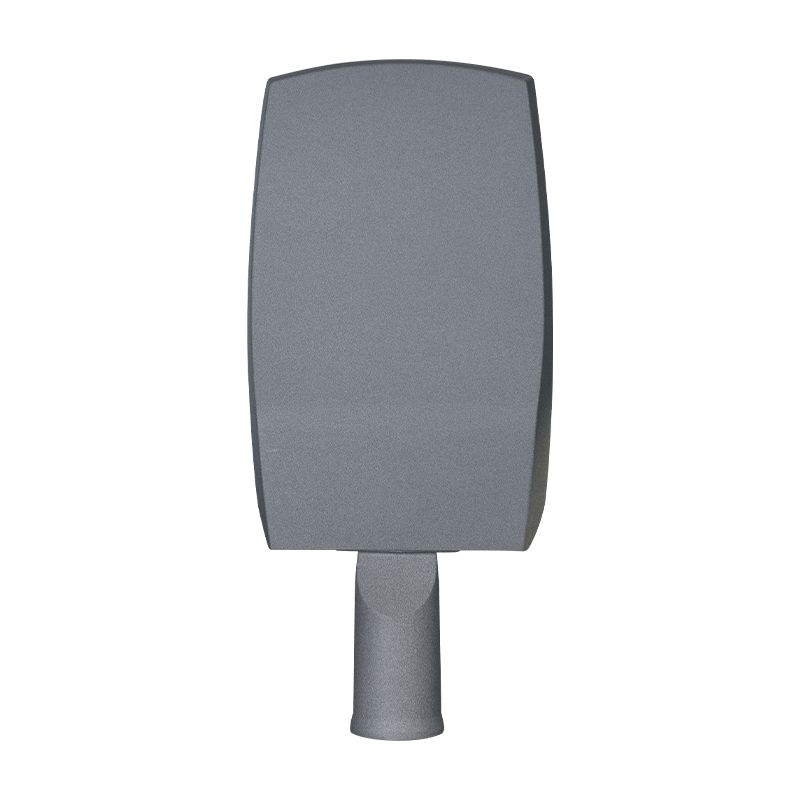 PY-LED612L-120W Outdoor Stadium Lighting Street LightThe 120W outdoor stadium LED street light is a high-performance, professional lighting solution designed specifically for stadiums and athletic fields. The light body ...View Product →
Energy Cost: The Number Buyers Underestimate
Electricity is where LED stadium lighting pays back its purchase price. Take a 24 fixture field running 500 hours a year.
- LED at 1,000W per fixture: 24,000W total, or 12,000 kWh per year
- Metal halide at 1,500W per fixture: 36,000W total, or 18,000 kWh per year
At $0.12 per kWh that is $1,440 a year for LED against $2,160 for the older system, before demand charges and before lamp replacement labor. Facilities running 800 hours a year save closer to $1,150 annually, and the gap widens as utility rates rise.
Dimming matters here too. A control system that drops output to 50 percent for youth practice sessions cuts consumption roughly in half during those hours and often pays for itself within three to five seasons.
Installation and Pole Work
Installation is the line item most likely to surprise a buyer. Budget roughly $1,500 to $4,000 per pole for labor alone, plus equipment.
Poles and foundations
New 60 foot steel poles with concrete foundations typically run $6,000 to $15,000 each installed, depending on wind loading and soil conditions. Reusing existing poles is far cheaper, but they must be inspected for corrosion, plumb, and load capacity before new fixtures are approved.
Electrical service
Running a new feeder to the field, adding a panel, or upgrading a transformer can add $20,000 to $80,000 on its own. A licensed electrician should confirm available capacity before anything is ordered.
Access and scheduling
Crane and bucket truck time is billed hourly, often $150 to $400 per hour. Sites with limited access, or work windows squeezed outside the playing season, cost more.
Maintenance and Ten Year Cost
LED stadium lights are rated L70 at 50,000 to 100,000 hours, which is well past ten years at typical use. That does not mean zero maintenance.
- Driver failures are the most common fault and are usually covered inside the first five years
- Lens cleaning every two to three seasons keeps output within design targets
- Bucket truck visits run $150 to $400 per hour, so one service trip can cost more than the part
The practical comparison is not LED against metal halide at purchase. It is ten years of lamp replacements, service calls, and rising energy bills against one higher initial invoice.
How to Compare Two Stadium Lighting Quotes
Prices only become comparable when the scope matches. Ask every supplier for the same six items.
- Fixture quantity, wattage, lumen output, and beam angle for each pole
- Photometric simulation showing horizontal and vertical illuminance across the playing surface
- Pole specification, foundation drawings, and whether existing poles are reused
- Electrical scope, including service capacity and panel work
- Control features such as dimming, scheduling, and remote monitoring
- Warranty terms, spare parts availability, and lead time in writing
If a supplier cannot produce a photometric file, the low price is a guess rather than an offer. Reviewing selection criteria in advance, such as key points when choosing stadium lights, keeps every bid on the same footing.
Working With a Manufacturer on a Field Project
For a single field, buying through a local distributor is often the fastest route. For multi field programs, school district contracts, or a reseller building a catalog, going directly to the factory changes the cost structure.
Ninghai Poda Electrical Appliance Co., Ltd. is an LED lighting manufacturer based in Ninghai, Zhejiang, China, founded in 2011, with more than 100 employees and exports to over 50 countries. The company handles in house design, mold development, and finished production, holds a Chinese invention patent along with more than 100 design rights, and states that it follows ISO 9001 quality procedures with CE, TUV, and RoHS certification on most products. Its outdoor range covers LED street lights, flood lights, high bay lights, garden lights, wall packs, and a solar line, which helps when one project mixes field lighting, parking, and walkway fixtures.
Large area fixtures for field perimeters and training zones usually fall in the 600W to 1,200W class, where heat management and driver quality decide how long the unit lasts.
 PY-SP08-1200W Low Energy Consumption Flood LightProduct Overview: The SP08-1200W LED floodlight utilizes high-efficiency LED chips and advanced heat dissipation technology to deliver exceptional illumination while s...View Product →
Mixing wattages inside the same optical family keeps color consistent across a site and simplifies spare parts inventory for the maintenance team that inherits the system.
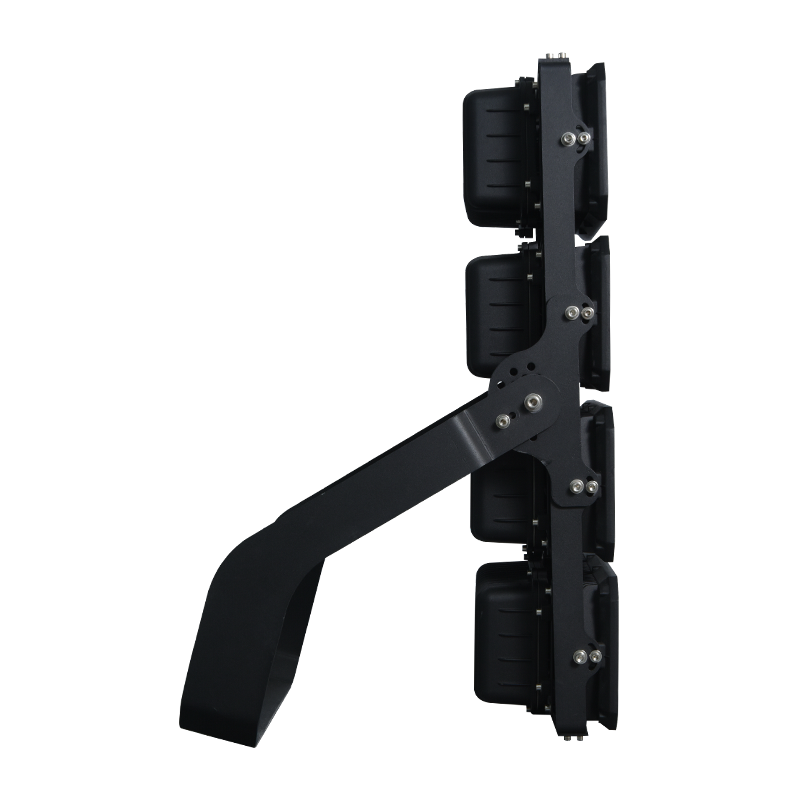 PY-LED553-960W Outdoor Flood LightThe LED553-960W outdoor floodlight is a flagship product designed specifically for large-scale outdoor lighting. Utilizing a next-generation, high-efficiency LED chips...View Product →
Custom work is a normal part of that manufacturing model. Buyers who need a specific beam angle, mounting bracket, or voltage configuration can usually request it before tooling begins. To discuss a field layout, quantities, and lead time, reach the team through the contact page.
Common Questions About Stadium Light Pricing
How much does one stadium light cost?
Between $250 and $1,500 for the fixture itself, with most field grade units landing in the $400 to $900 range at 600W to 1,000W. Poles, wiring, and installation are separate.
Is it cheaper to retrofit existing poles?
Almost always. Reusing sound poles can remove $30,000 to $80,000 from a high school project. The saving depends on a structural inspection, which costs far less than new foundations.
How many lights does a football field need?
Most high school fields use 12 to 24 fixtures on four to eight poles. The exact count comes from a photometric design, not from a rule of thumb.
Do LED stadium lights reduce electricity bills?
Yes. A 1,000W LED replaces a 1,500W metal halide fixture, cutting consumption by roughly one third. Dimming schedules can reduce it further.
The honest answer to how much stadium lights cost is that the fixture price is the easiest number to quote and the least useful one to plan around. A 12 fixture practice field and a 48 fixture broadcast stadium both need poles, wiring, controls, and someone qualified to aim and commission the system. Start with a photometric design for your field, confirm pole and service capacity before ordering anything, and compare quotes line by line. That single process usually decides whether the project lands at $70,000 or at $300,000.
Previous Post
How to Troubleshoot Parking Lot Lights: A Practical Step-by-Step Field Guide
Next Post
How Do Street Lights Work? Photocells, Timers and LED Drivers Explained
Related Products

Our Products
Keep In Touch
export@polaryang.cn
+86-574-65167530
Xue'ao Qiangjiao Town, Ninghai County, Ningbo, Zhejiang, China
Contact Us
Copyright © Ninghai Poda Electrical Appliance Co., Ltd. Rights Reserved.
Wholesale LED Lighting Manufacturer
OEM Solar Lighting Factory
