 English
 Español
+86-13777012108
(WhatsApp/WeChat)
Home / News / Industry News / Car Dealership Building Lighting: Specs, Levels, and LED Retrofit Guide
Car Dealership Building Lighting: Specs, Levels, and LED Retrofit Guide
It is 8:45 on a Tuesday evening. The dealership closed at seven, the last test drive ended an hour ago, and the sales floor is dark. Yet a couple pulls into the lot, parks near the front row, and walks slowly past the inventory. They are not here to buy tonight. They are here to look, and every impression they form in the next ten minutes comes from the lighting and not from a salesperson. A crisp, uniform wash of white light over the vehicles makes paint look polished and condition look genuine. A fixture that has faded to a dull yellow, with dark pools under each hood, makes even a new model look neglected. That is the commercial reality of car dealership building lighting: it sells the inventory before anyone speaks.
Content
- 1 Dealership Lighting Is a Business Decision, Not Just a Utility Bill
- 2 Recommended Light Levels Across Dealership Zones
- 3 Color, Glare, and the Way Paint Reads
- 4 Why LED Wins in the Dealership Environment
- 5 Choosing Fixtures That Handle the Site Conditions
- 6 A Phased Plan for Retrofitting or New Construction
Dealership Lighting Is a Business Decision, Not Just a Utility Bill
Because the visual effect is so direct, dealership owners and facility managers should treat lighting as a revenue investment rather than a maintenance line item. On the sales side, bright and color-accurate displays draw attention from the road, help customers find the vehicle they want to inspect, and make the entire site feel professionally managed. On the risk side, even illumination eliminates hiding spots and improves the odds that security cameras produce identifiable images. On the operating side, a modern LED installation typically cuts fixture wattage by 50 percent or more, which matters when the system runs 12 or even 24 hours a day on display lots, showrooms, and service access doors. Add those three effects together and lighting becomes one of the highest-return investments available to a dealership. If you want a site-specific estimate, the engineering team can model savings against your existing fixture count and local energy rates; start that conversation through the contact page.
Recommended Light Levels Across Dealership Zones
The place to begin is with footcandle targets, which state how much light needs to reach the ground, the vehicle surface, or the work plane. The numbers below represent the levels that lighting designers and contractors commonly use for dealership projects. Your final plan should be confirmed with a photometric layout, because mounting heights and surface reflectances change the result.
| Zone | Recommended footcandles | Typical fixture |
|---|---|---|
| Showroom | 100 | Track or accent downlight |
| Service bays | 100 | High bay or vapor tight linear |
| Frontline outdoor display | 50 and up | Flood light or area light |
| Parking areas | 20 | Pole mounted area light |
| Building facade | 15 to 30 | Wall pack or facade flood |
| Walkways and landscaping | 10 | Garden or bollard light |
The bar chart above puts these targets in perspective. The showroom and the service bays sit at the top of the scale at roughly 100 footcandles, because detail visibility and true color matter most in those spaces. The frontline outdoor display, where the newest vehicles are shown, follows at 50 footcandles and up. Parking areas, building facades, and walkways can run at lower levels while still providing good depth perception and security coverage. The takeaway for a dealer is that one fixture type cannot do all jobs well. A layered approach, with different luminaires aimed at different zones, costs less and looks far better than flooding the entire site from one set of poles. For the frontline display rows in particular, a high brightness LED flood light with a wide asymmetric beam keeps the paint readable from every approach direction.
Color, Glare, and the Way Paint Reads
Footcandle levels only tell half the story. Color quality and glare control determine whether a clean car actually looks clean under the light. The two numbers that matter most are correlated color temperature (CCT) and color rendering index (CRI).
For outdoor display areas and the building facade, a CCT of 4000K to 5000K reads as crisp and commercial, and it makes automotive paint appear neutral rather than warm or muddy. In the showroom, 3500K to 4000K feels more premium and flatters interior surfaces. In both cases, choose a CRI of 90 or higher for any surface that touches the customer experience. A fixture with low CRI can make a red car look brown and a black interior look grey.
Glare is the other issue. A high brightness bare lamp in the line of sight causes discomfort, and it also ruins the display composition by washing out dark surfaces. Use optics, shields, and proper mounting heights to keep the beam on the cars, not in the customers eyes. A useful test is to walk the entire perimeter path at night; if you can see a lamp aperture directly when looking toward the lot, the configuration has a glare problem.
Why LED Wins in the Dealership Environment
Once the targets and color requirements are clear, the technology decision follows. LED luminaires dominate new installations because of efficiency, longevity, and instant control; the comparison with legacy sources is worth documenting in numbers.
This bar chart compares the system wattage needed by four technologies to deliver roughly 15,000 lumens, a typical single-fixture output for a dealership display area or service bay. An LED fixture does it at about 120 watts; linear fluorescent needs about 180; high pressure sodium about 220; and metal halide about 250. On a site with 60 fixtures running 4,000 hours a year, the gap between LED and metal halide is roughly 31,000 kilowatt-hours annually, or several thousand dollars. That is why utility rebates exist for relighting projects. And as LED efficacy continues to climb, the savings grow with each new fixture generation.
The line chart above tracks lumen maintenance, or how much of the original output remains over time. A metal halide lamp falls to roughly 60 percent of its initial output by 10,000 hours and keeps dropping, which is why old dealership lots slowly get darker without anyone noticing. An LED luminaire typically stays above 90 percent through 10,000 hours and above 80 percent through 60,000 hours. That consistency keeps the sales presentation steady for years and cuts replacement labor, because lamps do not need changing every year or two. This is why lumen maintenance belongs in the procurement specification.
The radar chart compares all six criteria on one plot. LED reaches the top in every category except cold weather performance, where it ties metal halide. Metal halide keeps acceptable color rendering, but lagging lifespan and lumen maintenance drive replacement cost and light level drift. High pressure sodium is efficient and long-lasting, yet its orange output hides the colors of automotive paint. LED, in short, satisfies the visual, operational, and energy requirements of a dealership simultaneously.
Floodlights are often the workhorse of the dealership lot, and if you need a refresher on their optical design and installation, this explainer on what a floodlight is walks through the basics.
Choosing Fixtures That Handle the Site Conditions
Dealerships subject lighting to conditions that standard indoor fixtures never see. Outdoor fixtures sit through rain, ice, car wash overspray, and brake dust. Service bays combine those with vibration from lifts and airborne oil mist. The housing specification deserves as much attention as the lumen output.
Start with the IP rating. For outdoor or washdown exposure, IP65 or higher is a practical baseline because it stops dust and low-pressure water jets. Next, confirm that the driver is rated for the local temperature range and input voltage; surge protection is cheap insurance. Third, look for aluminum housings with finned heat sinks, because lower junction temperature preserves light output and driver life. Finally, choose optics to match the mounting height; a wide beam from 20 feet behaves very differently from the same fixture at 12 feet.
For service bays, a high bay fixture with a wide distribution keeps the work area free of shadows. A representative product from the Poda range is the 300W aluminum high bay light, which pairs a cast aluminum heat sink with a high efficiency driver.
 Poda PY-LED916-300W Aluminum High Bay Light for Industrial SpacesA 300W high bay luminaire with a cast aluminum heat sink and wide distribution, offering reliable illumination for service bays and warehouses while maintaining even, shadow-free light output.View Product →
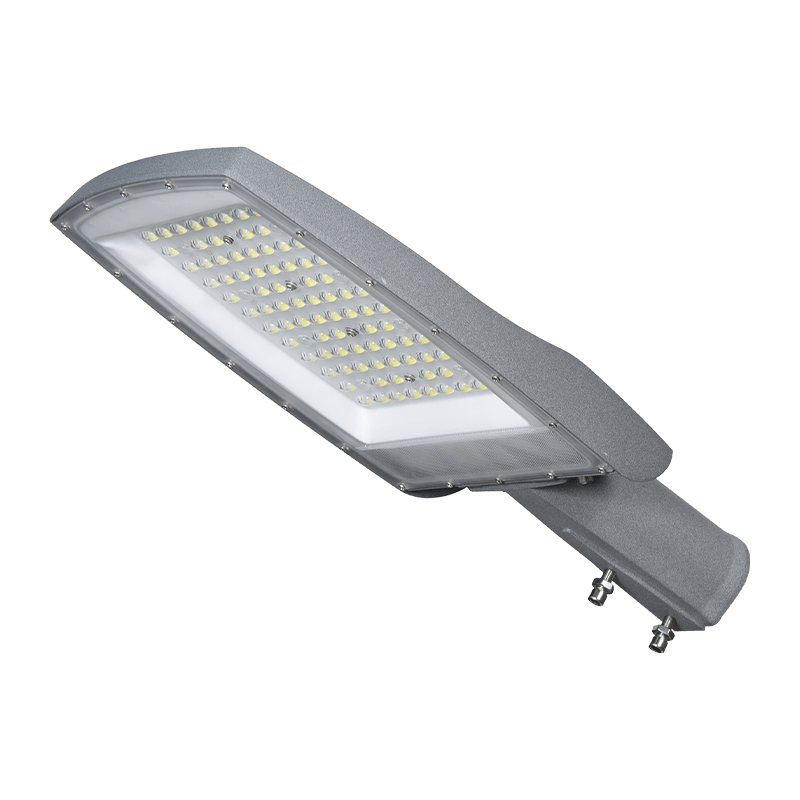
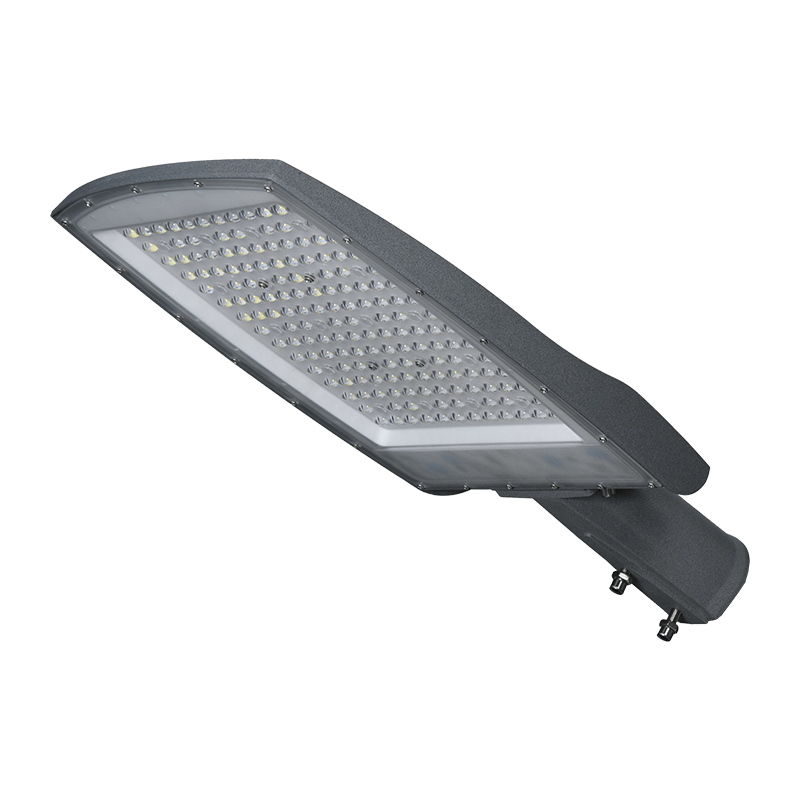
For the parking perimeter and access drives, a street light style luminaire with a Type II or Type III distribution provides even coverage without light trespass. The 150W outdoor waterproof street light in Poda's catalog is one such option.
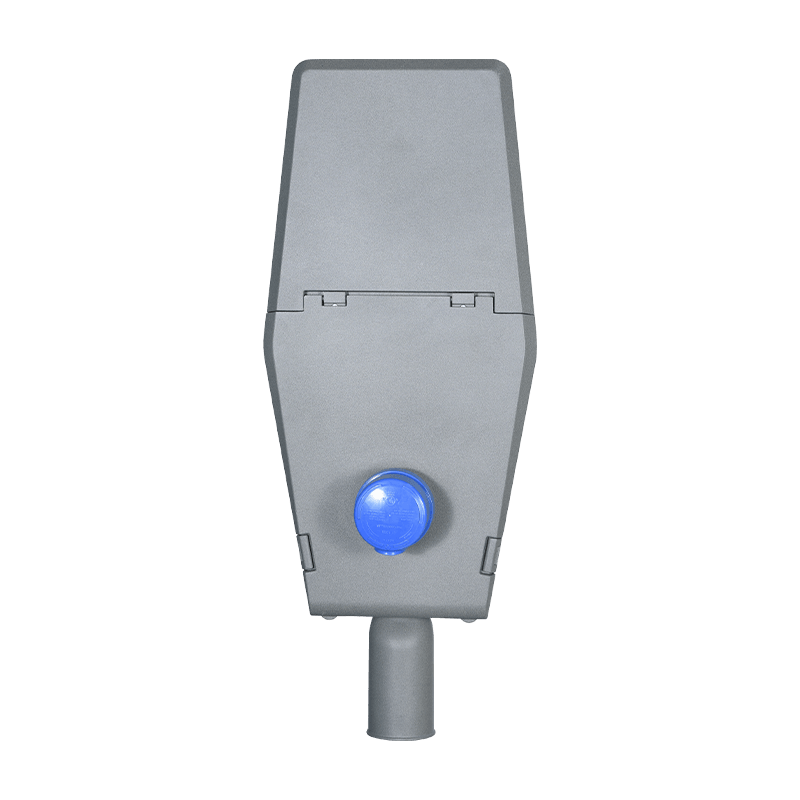 Poda PY-LED666-150W Outdoor Waterproof Street Light for Access RoadsA 150W street light designed for parking perimeters and access drives, featuring Type II or Type III distribution to provide even coverage without light trespass.View Product →
A Phased Plan for Retrofitting or New Construction
Whether relighting an existing site or starting from a vacant parcel, the following sequence keeps the project manageable.
- Perform a lighting audit. Photograph the site at night, measure footcandles, and check flicker and uniformity.
- Set targets and design. Document the footcandle goal for each zone, choose CCT and CRI, then ask for a photometric layout.
- Budget for fixtures and controls. Include occupancy sensors, photocells, and scheduling for marketing events.
- Install in phases. Upgrade the frontline display and showroom first, then service, parking, and the facade.
- Verify after installation. Measure again, compare with targets, and keep records for warranty and rebates.
This sequence avoids the common failure of buying bright fixtures that do not aim where the light is needed.
Car dealership building lighting is not a purely technical exercise. It determines how the inventory looks at night, how safe customers feel on the lot, how long the fixtures survive, and how large the electric bill will be. The dealerships that treat lighting as an investment, with zone-specific targets, quality color rendering, and LED technology, see the effect every evening from the street. The ones that leave aging fixtures in place lose sales without ever identifying the cause. If the front row of your lot does not make you stop and look twice at 9 PM, the lighting has already made its verdict.
Previous Post
Understanding Color Temperature in LED Lighting: Choosing the Right Kelvin Scale
Next Post
Basketball Court Lighting Design Guide: Lux Levels, Layout and LED Solutions
Related Products

Our Products
Keep In Touch
export@polaryang.cn
+86-574-65167530
Xue'ao Qiangjiao Town, Ninghai County, Ningbo, Zhejiang, China
Contact Us
Copyright © Ninghai Poda Electrical Appliance Co., Ltd. Rights Reserved.
Wholesale LED Lighting Manufacturer
OEM Solar Lighting Factory
