 English
 Español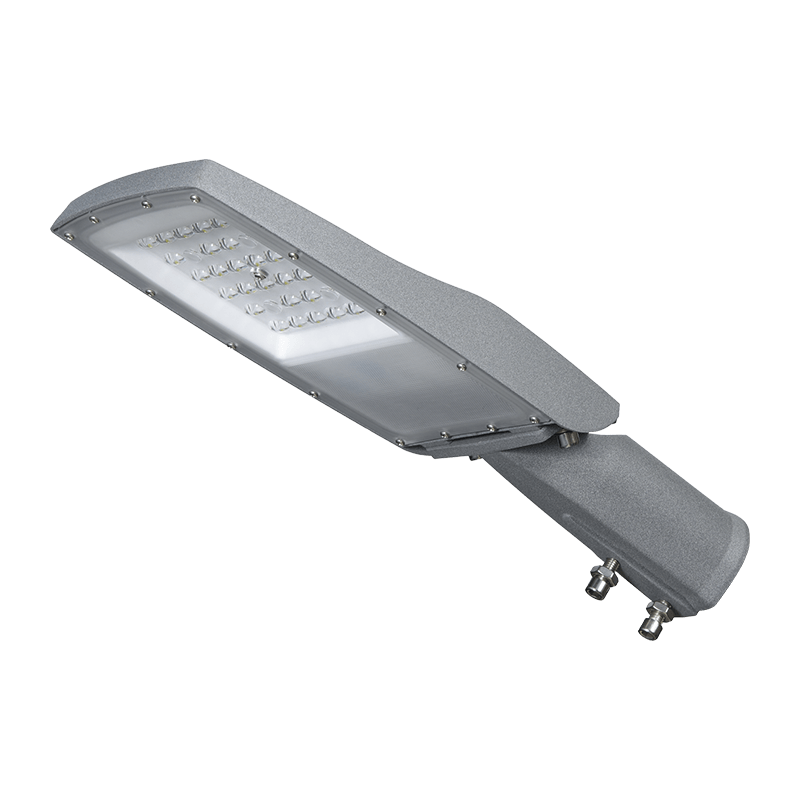
+86-13777012108
(WhatsApp/WeChat)
Home / News / Industry News / 450 Lumens Explained: Brightness, Beam Angle, and Real-World Applications
450 Lumens Explained: Brightness, Beam Angle, and Real-World Applications
If you have compared flashlights, work lights, or small lanterns, you have probably seen 450 lumen printed on the packaging. It reads like an ordinary spec, but what does it actually mean when you switch the light on? In practical terms, 450 lumens is about the same output as a classic 40-watt incandescent bulb. It is comfortable for reading, adequate for a small workbench, and useful for an entryway, but it is far from enough to light up a yard, driveway, or parking area. The sections below explain how 450 lumens compares with other common outputs, how beam angle changes the way it works, and where you should go brighter.
Content
- 1 How Bright Is 450 Lumens Really?
- 2 Wattage Lies, Lumens Tell the Truth
- 3 Beam Angle: Why 450 Lumens Feels Different in Different Lights
- 4 Why Same-Lumen Lights Can Perform Very Differently
- 5 Where 450 Lumens Fits, and Where It Does Not
- 6 When Your Lighting Needs Go Beyond 450 Lumens
- 7 Choosing the Right Brightness for Your Space
How Bright Is 450 Lumens Really?
The quickest way to picture 450 lumens is to remember the old 40-watt incandescent bulbs that were once standard in bedside lamps and hallway fixtures. That level of light works well when the source is within a few meters of the surface it needs to illuminate. As distances increase and the beam spreads out, the same 450 lumens quickly becomes insufficient.
Reading the chart. The horizontal axis shows lumen output, and each bar represents a common light source. The candle and the 40-watt incandescent sit at the low end, while the 30-watt LED flood light towers over the older sources. The key takeaway is that 450 lumens occupies the lower middle band of the lighting spectrum, a task-light level rather than an area-light level. Notice how far the bar for a modern 30-watt LED extends beyond 450 lumens, that one fixture produces roughly seven times the light. That gap between 450 lumens and a 30-watt LED fixture reflects the difference between close-range use and true area illumination. If you plan to light a workspace where precision matters, 450 lumens can serve you well; if you need to light a wide yard or warehouse floor, the bar chart above should convince you to move up.
| Light source | Lumen output | Typical use |
|---|---|---|
| Candle | about 12 lm | Ambiance, emergency lighting |
| 40W incandescent | about 450 lm | Reading, small task areas |
| 60W incandescent | about 800 lm | General room lighting |
| 100W incandescent | about 1,600 lm | Large rooms, work areas |
| 8W LED bulb | about 800 lm | Modern replacement for 60W |
| 30W LED flood light | about 3,000 lm | Security, driveways, backyards |
Wattage Lies, Lumens Tell the Truth
The reason 450 lumens is a useful number is that wattage no longer predicts brightness. A 40-watt incandescent, a 28-watt halogen, a 10-watt CFL, and a 5-watt LED can all produce roughly 450 lumens. The efficiency difference is dramatic: an LED needs only about one-eighth the electricity of an incandescent to deliver the same output.
Reading the chart. Each bar shows the wattage needed by a different technology to generate 450 lumens. The incandescent bulb consumes 40 watts for the same light an LED produces with just 5 watts. That is an 87 percent reduction in energy use for identical brightness. For a single lamp, the savings seem modest; across a warehouse or a street-lighting network, they become enormous. This chart also explains why lumens, not watts, should guide your purchasing decision. Two lights labeled good brightness may consume vastly different amounts of electricity while delivering the exact same 450 lumens. When you shop for replacements, look for the lumen figure on the box and check the wattage only to estimate running cost. The technology inside the bulb matters far less than the efficiency the label reveals.
Beam Angle: Why 450 Lumens Feels Different in Different Lights
Lumens describe the total amount of light a fixture emits, but the beam angle determines how concentrated that light is when it reaches a surface. A 450-lumen flashlight with a tight 15-degree spot focuses almost all its output onto a small circle; the same 450 lumens through a wide 120-degree optic spreads thinly across a room. The chart below shows how illuminance, measured in lux, decays with distance for both cases.
Reading the chart. The vertical scale is logarithmic, showing lux values from 1 to 10,000. The orange line represents a 450-lumen light in a tight 15-degree beam; the gray dashed line shows the same 450 lumens spread over a 120-degree beam. At one meter, the narrow beam delivers more than 8,000 lux, far brighter than what most indoor tasks require. At ten meters, even the narrow beam drops to around 80 lux, which is still serviceable for walking but too dim for detail work. The wide beam starts at roughly 140 lux and quickly falls below useful levels beyond three meters. This comparison explains why you cannot judge a light by lumens alone, the optic design decides how effective those lumens are at a given distance. When selecting a fixture, matching the beam angle to the mounting height and target area is every bit as important as choosing the right lumen count.
Why Same-Lumen Lights Can Perform Very Differently
A compact light producing around 450 lumens behaves very differently depending on its fixture format. A flashlight concentrates the light, a work light spreads it over a wider surface, and a solar garden light extends runtime at the expense of reach. The radar chart below compares these three types across five practical dimensions.
Reading the chart. The radar chart compares three compact lighting fixture formats across five dimensions, with scores ranging from 1 at the center to 5 at the outer edge. The flashlight scores highest on beam distance and portability, confirming its role as a compact thrower. The work light spreads its output over a much wider coverage area but sacrifices beam distance and portability. The solar garden light offers the longest runtime because it charges during the day from sunlight, yet it cannot match the others in portability or concentrated reach. Each polygon encloses a different shape, which is exactly the point, identical lumen output does not translate into identical real-world performance. When buying a compact light, pay equal attention to the form factor and the beam optics, not just the number printed on the package.
Where 450 Lumens Fits, and Where It Does Not
A useful rule of thumb is that 450 lumens is a close-range light. It will serve you well indoors, but in outdoor spaces with mounting heights above three meters, it will be drowned out by ambient darkness. The table below lists everyday scenarios and whether 450 lumens is adequate.
| Scenario | Recommended lumens | Is 450 lm enough? |
|---|---|---|
| Bedside reading | 300 to 500 lm | Yes |
| Walk-in closet | 400 to 600 lm | Yes |
| Kitchen task lighting | 400 to 800 lm | Borderline |
| Small workbench | 500 to 1,000 lm | Borderline |
| Entryway fixture | 500 to 700 lm | Borderline |
| Garden path marker | 100 to 300 lm | More than enough |
| Backyard security | 1,500 to 3,000 lm | No |
| Driveway or street | 3,000 to 10,000 lm | No |
When Your Lighting Needs Go Beyond 450 Lumens
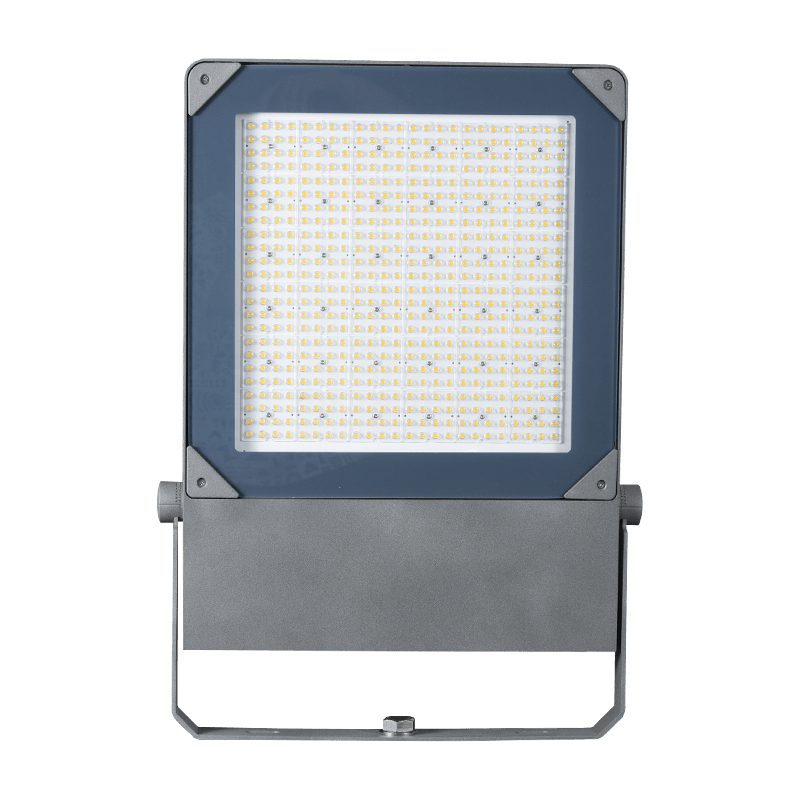
Once the mounting height rises or the target area widens, 450 lumens stops being enough. A standard garage door, for example, spans about 5 meters; a wall-mounted fixture at 3 meters needs at least 1,500 lumens to produce a useful 100 lux across the driveway. This is where LED flood lights take over. A 30-watt LED flood light typically produces around 3,000 lumens, which is seven times the output of a 450-lumen source, and its wide optic spreads the light evenly across an entire yard or parking strip.
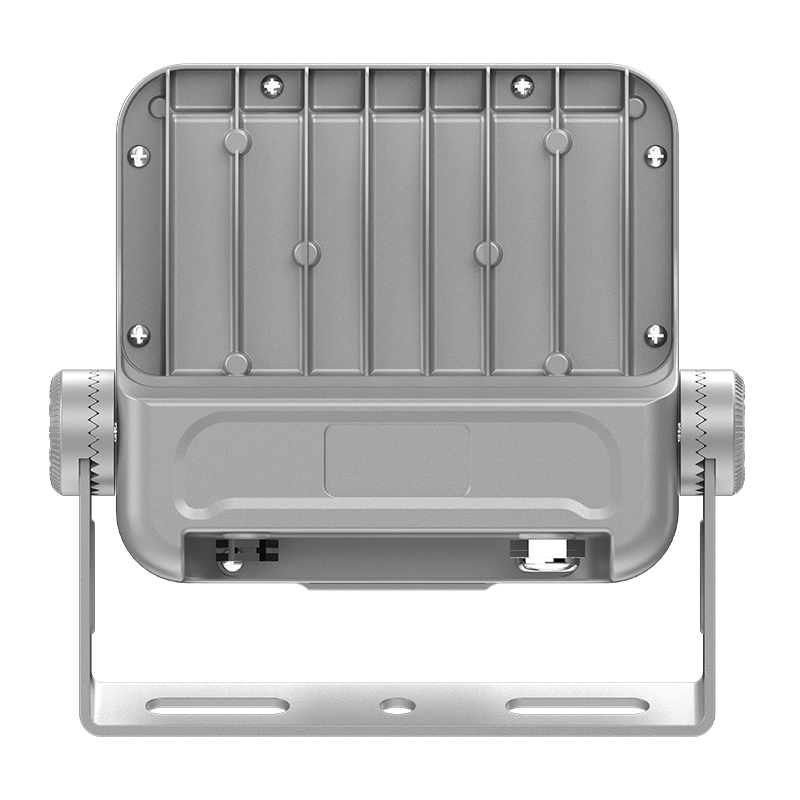 PY-FL02-30W Outdoor Durable Flood LightThis 30W LED flood light offers around 3,000 lumens with an IP65 rating and die-cast aluminum housing, making it a solid upgrade for wider driveways or yards needing bright, even coverage.View Product →
For area lighting in residential and commercial settings, the LED flood light category offers the most direct upgrade path from compact 450-lumen lights. When you evaluate flood lights, check not only total lumens but also the beam angle, the IP rating, and the housing material. Die-cast aluminum bodies, for instance, handle rain and heat far better than plastic housings.
Choosing the Right Brightness for Your Space
Start with the task, then choose the lumens, then verify the beam angle. For tasks within two meters of the fixture, 450 lumens is often enough; above that distance, step up to a fixture that produces at least 1,500 lumens, and for street-level or high-bay applications, select 3,000 lumens or more. If you are unsure how to compare fixtures, a detailed look at what makes a floodlight can help you understand the trade-offs between beam spread, mounting position, and output.
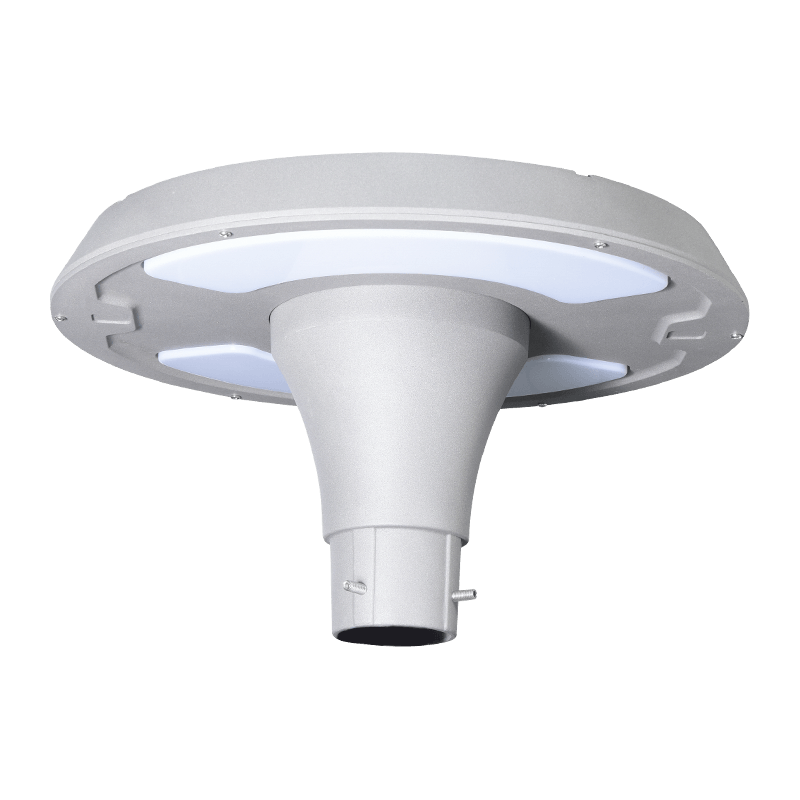
Consider the energy source as well. Solar-powered fixtures reduce wiring costs and run independent of the grid, but their lumen output is limited by the panel size and battery capacity. An 8-watt solar garden light produces roughly 800 lumens, a step above 450 lumens, and is ideal for marking paths and lighting small patios without trenching cables.
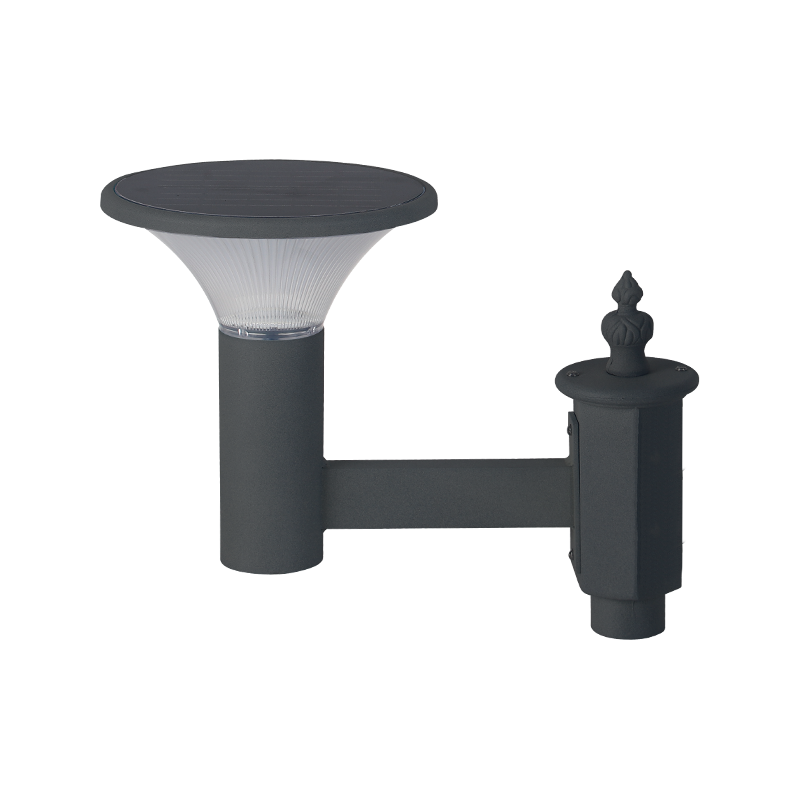 PY-SG018-8W Single Bulb Solar Garden LightAn 8W solar-powered garden light with warm 3000K illumination and a 6-8 hour runtime, ideal for marking paths or lighting small patios without wiring or electricity costs.View Product →
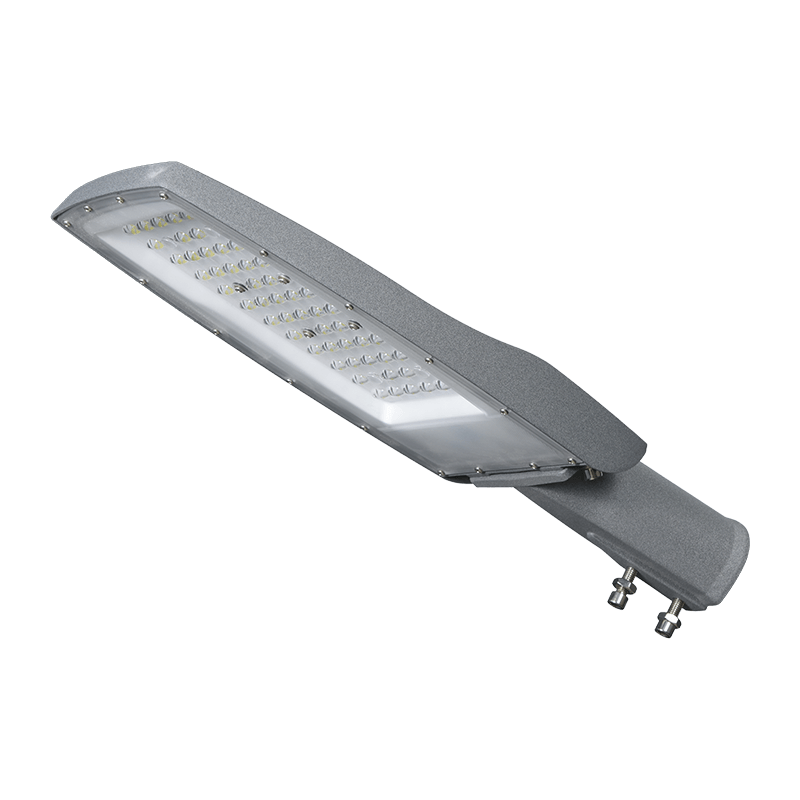
For roadways and large access areas, dedicated LED street lights start around 3,000 lumens and scale up quickly. A 60-watt street light delivers around 6,000 lumens, which is more than thirteen times the output of a 450-lumen task light.
 PY-LED666-60W Outdoor Waterproof Street LightA 60W LED street light delivering roughly 6,000 lumens with an IP65 rating and durable aluminum construction, suited for roadways and large access areas needing reliable, high-output lighting.View Product →
The bottom line is simple: know your distance, know your area, and choose lumens accordingly. 450 lumens is a great tool in the right context and a wasted specification in the wrong one.
Previous Post
Basketball Court Lighting Design Guide: Lux Levels, Layout and LED Solutions
Next Post
Baseball Field Lighting Cost: LED Systems, Installation and Savings Guide
Related Products

Our Products
Keep In Touch
export@polaryang.cn
+86-574-65167530
Xue'ao Qiangjiao Town, Ninghai County, Ningbo, Zhejiang, China
Contact Us
Copyright © Ninghai Poda Electrical Appliance Co., Ltd. Rights Reserved.
Wholesale LED Lighting Manufacturer
OEM Solar Lighting Factory
