 English
 Español
+86-13777012108
(WhatsApp/WeChat)
Home / News / Industry News / Baseball Field Lighting Cost: LED Systems, Installation and Savings Guide
Baseball Field Lighting Cost: LED Systems, Installation and Savings Guide
The honest starting number is wide: a complete baseball field lighting project typically lands between $40,000 and $420,000 installed. A small recreational field with four poles and modest LED fixtures can finish near the bottom of that range, while a collegiate or professional facility with eight poles, broadcast-level brightness, and a new electrical service sits at the top. The fixtures themselves rarely explain the difference. Pole work, trenching, power capacity, and the level of play the field must support move the total far more than luminaire prices do. This guide walks through each cost component with realistic figures, so you can build a budget that survives contact with actual quotes.
Content
- 1 What a Complete LED Baseball Field Lighting System Costs
- 2 New Installation or Retrofit: The Biggest Cost Divide
- 3 Equipment Costs: Fixtures, Poles, and Controls
- 4 Energy and Maintenance: Where LED Pays Back the Difference
- 5 Installation Labor and the Costs People Forget
- 6 Practical Ways to Keep the Budget Under Control
What a Complete LED Baseball Field Lighting System Costs
Published project data puts most completed LED baseball field lighting systems between $40,000 and $420,000, and competitive amateur facilities with higher specifications often land between $90,000 and $180,000. Where your project falls depends on three variables: how many poles the field needs, how bright the playing surface must be, and how much supporting infrastructure already exists. The table below summarizes the typical ranges by level of play, using footcandle targets that governing bodies generally expect.
| Level of play | Typical poles | Fixture count | Target light level | Installed cost range |
|---|---|---|---|---|
| Youth and recreational | 4 | 16 to 24 | 20 to 30 footcandles | $18,000 to $40,000 |
| High school varsity | 4 to 6 | 24 to 36 | 30 to 50 footcandles | $40,000 to $90,000 |
| College | 6 to 8 | 36 to 56 | 50 to 100 footcandles | $120,000 to $250,000 |
| Professional | 8 or more | 56 or more | 100 to 150+ footcandles | $250,000 to $420,000+ |
Installed cost by level of play
This chart compares the upper end of installed cost for each level of play, scaled against the most expensive professional build. The gap between a recreational field and a high school varsity field is mostly about fixture count and light levels, not fundamentally different technology. Once you move into collegiate territory, pole count, pole height, and electrical service upgrades start to dominate the budget. Professional facilities add broadcast-quality uniformity, higher footcandle targets, and often redundant circuits, which is why the bar stretches past $400,000. Use these bars as planning anchors rather than quotes, since your actual number will move with local labor rates and site conditions.
New Installation or Retrofit: The Biggest Cost Divide
If your field already has poles, the cheapest path is almost always a retrofit: keep the poles, foundations, and main service, and replace only the luminaires and branch wiring. Projects that reuse sound poles commonly spend 30 to 50 percent less than equivalent new installations. If your field has never had lights, or the existing poles fail inspection, expect the poles themselves to become a leading line item. A new steel sports pole 50 to 80 feet tall, set on a concrete foundation with a crane and an electrician, typically costs $8,000 to $25,000 installed before any fixture is mounted.
New builds also carry site work that surprises first-time buyers: trenching priced per foot, conduit and backfill, a new panel or transformer when the existing service cannot supply the load, and utility coordination for the power upgrade. Baseball adds a geometry problem that rectangular fields do not, because the infield, foul territory, and outfield each need coverage from particular pole positions, and relocating a pole after the concrete is poured is an expensive lesson. A site assessment and photometric study before you commit to fixture quantities is the least expensive insurance in this project.
Ten-year cost of ownership
Ten-year cumulative cost: LED versus metal halide
The line chart tracks the cumulative cost of owning a mid-size field lighting system over ten years, combining purchase, installation, energy, and routine maintenance. Metal halide starts roughly $40,000 cheaper, which is why it can look attractive to a tight capital budget. The two lines cross around year four, once lamp replacements, ballast failures, and higher electricity bills erase the initial saving. By year ten, the metal halide system has cost about $250,000 against roughly $180,000 for the LED system. Every season after that widens the gap further, because the LED array keeps burning with almost no scheduled maintenance. Over a fixture lifespan of two decades, the difference approaches the cost of a second lighting project.
Equipment Costs: Fixtures, Poles, and Controls
Equipment usually represents 40 to 60 percent of the total project. Sports-grade LED luminaires generally price between $1,500 and $6,000 per head depending on wattage, optics, and surge protection, and a single field uses anywhere from 16 fixtures at the recreational level to more than 50 at the professional level. Poles, brackets, and foundations take most of the remaining budget, with control gear, cabling, and surge devices completing the list.
Matching wattage class to level of play matters more than almost any other equipment decision, because overspecifying wastes capital while underspecifying fails the photometric targets your league expects. Higher-output heads also reduce fixture and pole counts, which frequently makes them the cheaper path per delivered footcandle. As a manufacturer that produces flood lights from 30 watts up to 1,200 watts, we see three wattage classes cover nearly every baseball field we quote.
For recreational fields and high school retrofits, a 480 watt flood light reaches the light levels most leagues expect at those levels while keeping the fixture count and pole load manageable:
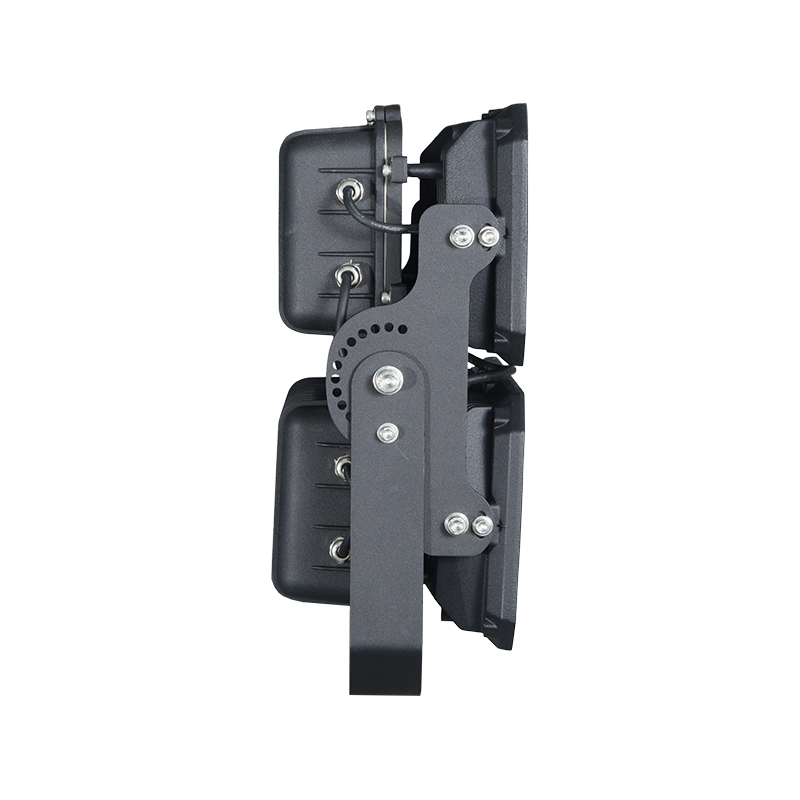 PY-LED553-480W Corrosion-Resistant LED Flood LightA 480 watt LED flood light built with sealed, corrosion-resistant housing for humid and coastal conditions. It suits recreational fields and high school retrofits, delivering league-expected light levels while keeping fixture count and pole load manageable.View Product →
Collegiate schedules need more footcandles and tighter uniformity across large outfields, which is where 960 watt fixtures earn their place by covering more ground from fewer poles:
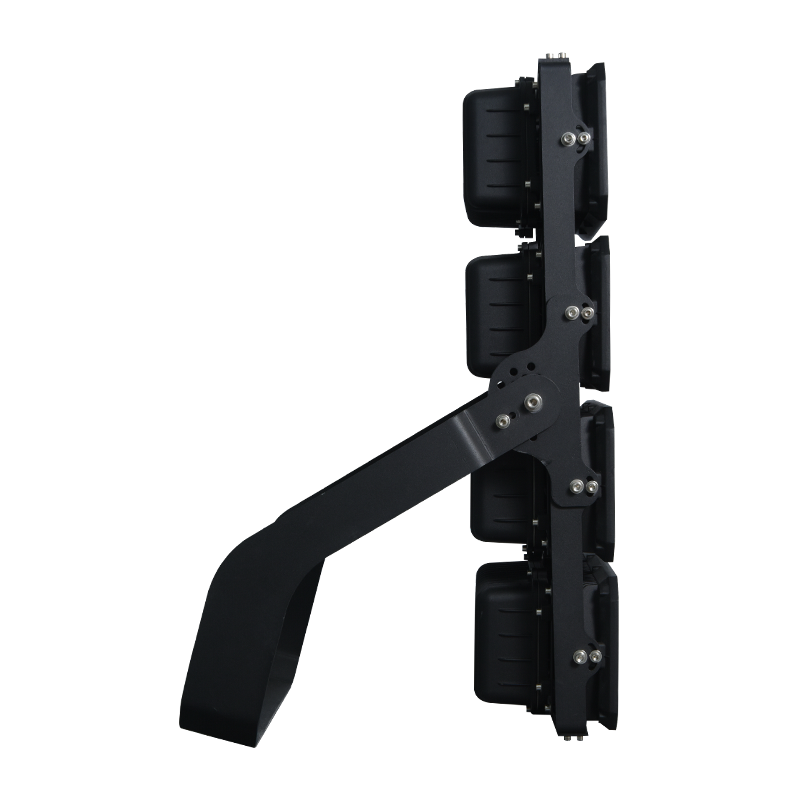 PY-LED553-960W Outdoor Stadium Flood LightThis 960 watt flood light produces over 140,000 lumens from a rugged die-cast aluminum housing that withstands heavy rain and salt spray. It fits collegiate fields needing higher footcandles and tighter uniformity across large outfields from fewer poles.View Product →
At the top of the range, 1200 watt fixtures with precise beam control meet competition and broadcast expectations and cut the total number of heads a large field requires:
 PY-SP08-1200W Low Energy Consumption LED Flood LightA 1200 watt LED flood light with efficient chips, advanced heat dissipation, and a durable die-cast aluminum body for demanding outdoor use. At the top of the range, it meets competition and broadcast lighting needs while reducing the number of heads required.View Product →
Energy and Maintenance: Where LED Pays Back the Difference
Operating cost is where the lighting decision stops being a one-time expense. Facility managers usually benchmark electricity at 12 cents per kilowatt-hour, and on that basis a metal halide field runs about $756 per month while the same playing schedule on LED costs about $378. Metal halide systems also lose 15 to 20 minutes at every start while lamps warm up, and their lamps need replacement every one to three seasons. LED fixtures switch on instantly, run 50,000 hours or more, and mostly need lens cleaning and an occasional driver check.
Annual operating cost
Typical annual operating cost per field
These bars convert monthly electricity readings into annual figures, assuming roughly 1,000 hours of field use per year at 12 cents per kilowatt-hour. A metal halide system draws close to twice the power of an LED system for the same light output, and aging ballasts waste even more energy as heat. That difference alone adds up to about $9,072 per year for metal halide against $4,536 for LED on a comparable field. Maintenance follows the same pattern, because metal halide lamps burn out every one to three seasons and each replacement needs a lift, a lamp, and an electrician. LED heads mostly need lens cleaning and occasional driver service, which keeps that bar near the floor. Together the two pairs of bars explain why operators who light practices nightly recover an LED retrofit within a few seasons.
LED versus metal halide at a glance
LED versus metal halide across six buying criteria
The radar chart scores the two technologies across six purchasing criteria on a scale of one to ten. LED dominates five of the six axes, including energy efficiency, fixture lifespan, light quality, ease of maintenance, and instant switching. Metal halide holds a single advantage, a lower purchase price, which shows up as the affordability axis where its shape reaches the outer ring. The weakest points on the metal halide profile, warm-up behavior and lamp life, are exactly the pain points that frustrate parks departments during short games and practice sessions. Read together, the two shapes explain why nearly all new baseball field projects now specify LED from the start. The only situation where metal halide still makes sense is a temporary installation with a very short service life.
Installation Labor and the Costs People Forget
Installation labor generally takes 25 to 35 percent of the project budget, and it scales with site difficulty rather than fixture count. Crane rental, licensed electricians, concrete work, and trenching dominate the labor bill, and rural sites with poor access pay more for all four. Beyond labor, several costs routinely surprise first-time buyers:
- Permits, zoning review, and photometric study fees, often $1,500 to $5,000 combined
- Spill light and glare ordinances that force shielded optics or lower pole heights
- Wildlife and dark-sky requirements in some municipalities
- Metering upgrades and utility connection fees when service capacity increases
- Equipment mobilization and access road work for remote fields
Funding source matters too, because public projects follow bid rules and longer timelines while privately funded fields can move in weeks. Whichever applies to you, lock the electrical scope early, since it is the line item most likely to grow.
Practical Ways to Keep the Budget Under Control
Buyers who control baseball field lighting costs well tend to follow the same sequence:
- Audit the electrical service first, because a panel upgrade discovered mid-project stalls everything.
- Order a photometric layout before buying fixtures, so quantities and mounting heights are engineered rather than guessed.
- Have every existing pole inspected, since a certified pole is worth keeping and a rejected one is cheaper to know about early.
- Phase the build if needed, lighting the infield to full level first and the outfield in a later budget cycle.
- Compare quotes by delivered footcandle at the same mounting heights, not by fixture price alone.
The same discipline applies to specification details, from beam angles to surge protection. Before you sign a purchase order, work through our guide to choosing LED stadium lights, because specification mistakes cost far more than fixture price differences.
A baseball field lighting budget holds up when it is built from pole work, power capacity, and photometrics first, and fixture prices second. Set your footcandle target, verify your infrastructure, and the rest of the numbers fall into a narrow band. If you share your field dimensions, level of play, and existing pole condition, our engineering team can return a photometric layout and a fixture-level quotation, so request a project-specific quote and turn the ranges in this guide into a concrete plan for your field.
Previous Post
450 Lumens Explained: Brightness, Beam Angle, and Real-World Applications
Next Post
Basketball Court Lighting: The Complete LED Design, Lux Level, and Layout Guide
Related Products

Our Products
Keep In Touch
export@polaryang.cn
+86-574-65167530
Xue'ao Qiangjiao Town, Ninghai County, Ningbo, Zhejiang, China
Contact Us
Copyright © Ninghai Poda Electrical Appliance Co., Ltd. Rights Reserved.
Wholesale LED Lighting Manufacturer
OEM Solar Lighting Factory
