 English
 Español
+86-13777012108
(WhatsApp/WeChat)
Home / News / Industry News / Basketball Court Lighting: The Complete LED Design, Lux Level, and Layout Guide
Basketball Court Lighting: The Complete LED Design, Lux Level, and Layout Guide
Selecting the right basketball court lighting comes down to one conclusion: LED floodlights deliver the best balance of performance, energy consumption, and service life. A standard outdoor basketball court measuring roughly 32 by 19 meters was traditionally served by four to six 400 W metal halide fixtures. Replacing that layout with 300 W to 480 W LED fixtures can cut energy use by more than half, eliminate the five-minute warm-up period, and raise color rendering, making the court more playable and more pleasant to watch. The sections below cover the specifications that matter, the layout rules that keep the court evenly lit, and the costs that affect the payback period.
Content
- 1 Why Lighting Quality Determines How Well a Court Plays
- 2 The Core Specifications That Define Court Lighting
- 3 Light Levels for Every Level of Play
- 4 Pole Heights and Fixture Layout
- 5 The Real Cost of Basketball Court Lighting
- 6 LED vs Metal Halide: A Balanced Comparison
- 7 Choosing the Right Fixture for Your Court
Why Lighting Quality Determines How Well a Court Plays
Uniformity matters more than raw brightness. When horizontal lux levels vary across the court, a player cannot reliably judge the distance of the ball, the depth of the hoop, or the movement of an opponent. The standard EN 12193 sets a minimum maintained illuminance of 200 lux for recreational basketball, 400 lux for club play, and 750 lux for televised events. Uniformity, the ratio of minimum to average illuminance, should stay above 0.6 for competitive play. Glare is equally important: a high-brightness fixture visible inside the players normal viewing angle can cause discomfort and momentarily blind a player tracking a high pass. For outdoor courts, an IP65 rating protects against rain, dust, and humidity while allowing heat to escape through the housing.
Annual Energy Consumption for Equivalent Court Brightness
LED
5,260 kWh
Metal halide
7,008 kWh
Halogen
8,760 kWh
The horizontal bar chart compares the annual energy use of three technologies producing similar brightness on the same court, based on six fixtures running eight hours per evening. LED fixtures draw about 5,260 kWh per year. Metal halide systems with magnetic ballasts draw roughly 7,000 kWh, and halogen systems reach 8,760 kWh. The gap between LED and metal halide alone is enough to pay for one new fixture every couple of years. Over a ten-year period, the energy difference between LED and halogen is close to 35,000 kWh, which in many regions represents thousands of dollars in operating cost. This is why the purchase price of a fixture is only a small part of the real cost.
The Core Specifications That Define Court Lighting
Five specifications determine whether a basketball court lighting system meets the needs of players, coaches, and broadcast cameras. The table below summarizes the recommended ranges and why each value matters.
| Specification | Recommended Value | Why It Matters |
|---|---|---|
| Horizontal illuminance, recreational | 200-300 lux | Clear sight lines for casual games |
| Horizontal illuminance, competitive | 400-750 lux | Faster play demands more light |
| Uniformity (min/avg) | 0.6 or higher | Eliminates dark zones between fixtures |
| Color rendering index | CRI 80 or higher | Accurate ball, jersey, and skin tones |
| Color temperature | 5000 K to 5700 K | Neutral white light that resembles daylight |
| Glare rating (UGR) | 25 or lower | Keeps fixtures comfortable to look at |
| Flicker | Less than 1 percent | Prevents strobing in broadcast footage |
The values above are not arbitrary. Horizontal illuminance controls how quickly a player can follow the ball in motion. Uniformity matters because the eye needs consistent background brightness to judge speed. Color rendering becomes critical when a court is filmed: an orange ball against a wooden floor must look natural, not muddy. A color temperature around 5000 K matches the daylight conditions that most outdoor courts see during afternoon games.
Light Levels for Every Level of Play
Different levels of play require different maintained illuminance values, and the curve below shows how the requirement rises with intensity.
The line chart illustrates the recommended maintained horizontal illuminance from backyard play to televised broadcasts. A casual half-court game is safe at around 200 lux. Recreational leagues and school training courts usually specify 300 to 500 lux. Club competitions move up to 750 lux, and televised arenas often request 1000 to 1500 lux to satisfy camera sensors. The shape of the curve is important for budgeting: every step upward in lux roughly doubles the number of fixtures or pushes you toward higher wattage. Designing to a mid-range target, for example 400 lux, leaves room for lamp depreciation without requiring an oversized system. For venue-scale projects, the same principles extend to arenas, and choosing LED stadium lights involves a few additional checks around camera shutter speed and emergency illumination.
Pole Heights and Fixture Layout
Mounting height changes the coverage area, glare, and the number of poles required. For a full-size outdoor court, 7.5 to 9 meter poles are the common range, with the higher end preferred for club play. The following list summarizes typical layouts.
- Half-court backyard: 6 to 7 m poles, two to four fixtures at 150 to 200 W
- Full-size recreational court: 7.5 to 8 m poles, four to six fixtures at 300 W
- Competitive outdoor court: 9 m poles, eight fixtures at 300 to 480 W
- Indoor courts: 9 to 12 m roof mounting, six to ten fixtures depending on the ceiling structure
Pole placement follows a simple rule: fixtures aim inward from the corners or sides, with a minimum vertical angle of 25 degrees to prevent glare in the eyes of players. The beam angle should be a medium or narrow flood, roughly 30 to 60 degrees, so that light lands on the playing surface rather than spilling into the surroundings. Wider beam angles reduce the number of fixtures but lower uniformity at the court edges. To avoid dark spots at the baseline, the first fixture should be positioned no farther than 3 meters from the end line.
The Real Cost of Basketball Court Lighting
Owners who compare only fixture prices often miss the largest expense, which is electricity over time. The chart below shows the ten-year total cost for the same court with three different technologies.
The ten-year cost includes fixtures, replacement lamps, routine maintenance, and electricity. The LED installation stays near 12,000 US dollars. Metal halide rises to about 19,000 dollars, and halogen approaches 25,000 dollars. The main driver is electricity, followed by lamp replacement frequency. Metal halide lamps typically burn out after 8,000 to 12,000 hours, so a busy court may need new lamps every two years. LED chips are rated for 50,000 hours at full output, which means the original fixtures can still be in service after a decade. Many utility companies also offer rebates for LED sports lighting, which shortens the payback period even further.
LED vs Metal Halide: A Balanced Comparison
To see the technical gap clearly, the radar chart below scores LED and metal halide across six practical criteria. Scores range from 1 to 10, with 10 being the best.
LED performs better on energy efficiency, service life, color rendering, instant start, dimming, and maintenance frequency. Metal halide scores closer to LED only on color rendering, where premium ceramic metal halide lamps reach a CRI of 80 or higher. The biggest difference appears in dimming and instant start, two features that matter for a basketball court that hosts different activities on different nights. Being able to dim a court for shooting practice or raise it to full brightness for a league match is a practical advantage, and it also saves energy. The radar chart also shows that metal halide requires a warm-up of three to five minutes, which is why LED is now the default for multisport facilities. Even the smallest LED installation can be switched on and off instantly, while a metal halide court might wait several minutes before play can begin.
Choosing the Right Fixture for Your Court
There is no single fixture that is best for every basketball court, but the choice narrows once the court size, pole height, and target lux level are fixed. For a single full-size outdoor court with 7.5 m poles, six to eight 300 W fixtures deliver roughly 300 to 400 lux, which suits recreational leagues and school games. For indoor courts or venues where the lux target is 500 or higher, 480 W fixtures reduce the number of mounting points while keeping the same coverage. Courts inside a sports hall can also use 600 W fixtures on high ceilings, provided the beam angle is matched to the layout. Beyond wattage, confirm that the fixture carries an IP65 or better ingress protection rating, a die-cast aluminum housing, and replaceable optics.
Recommended Fixture Options
Three paths are worth considering. The 300 W low energy LED flood light fits most recreational outdoor courts and pairs well with a 7.5 m pole layout. If the court sits near the coast or in an industrial zone, the 480 W corrosion resistant LED flood light adds durability where salt air attacks standard housings. For large venues or high ceilings, the 600 W LED flood light delivers the higher illuminance that competitive play demands.
 PY-SP08-600W LED Flood Light Manufacturer - Ninghai Poda Electrical Appliance CoNinghai Poda Electrical is China PY-SP08-600W LED Flood Light manufacturer and OEM factory, offer wholesale PY-SP08-600W LED Flood Light ...View Product →
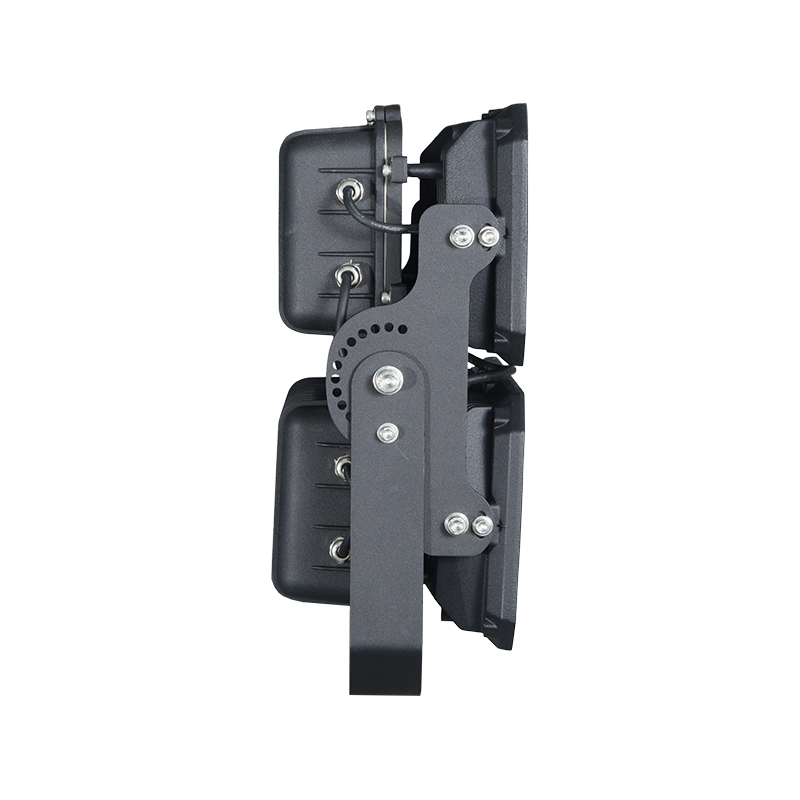 PY-LED553-480W Corrosion-Resistant LED Flood Light Manufacturer - Ninghai Poda ENinghai Poda Electrical is China PY-LED553-480W Corrosion-Resistant LED Flood Light manufacturer and OEM factory, offer wholesale PY-LED5...View Product →
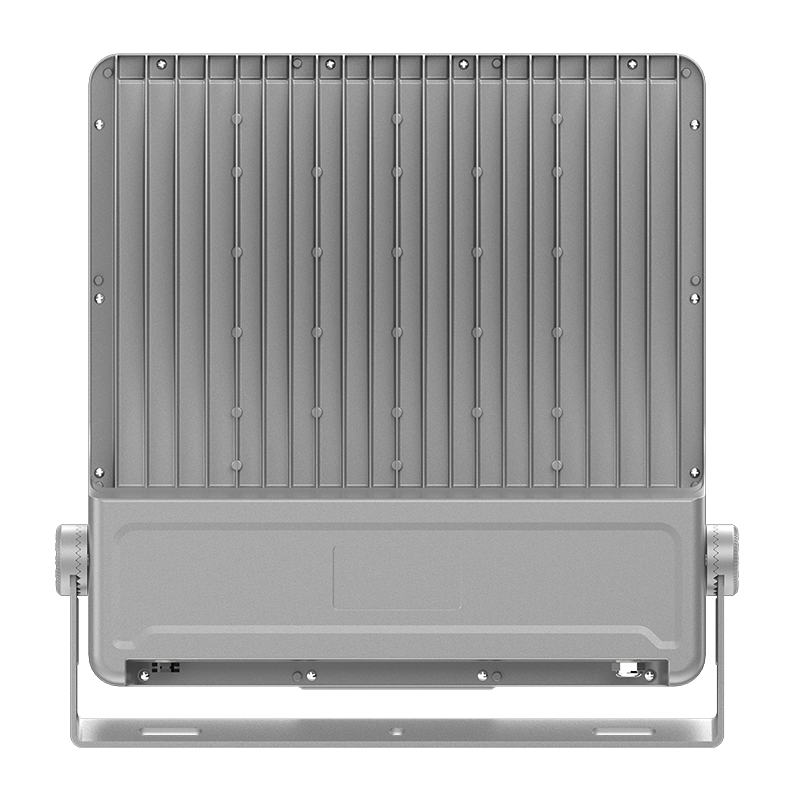 PY-FL02-300W Low Energy LED Flood Light Manufacturer - Ninghai Poda Electrical ANinghai Poda Electrical is China PY-FL02-300W Low Energy LED Flood Light manufacturer and OEM factory, offer wholesale PY-FL02-300W Low E...View Product →
Getting a Custom Lighting Layout
If the exact layout is unclear, send the court dimensions to our engineering team through the contact page, and we will prepare a lighting layout with pole positions and lux calculations. The recommended wattages above are starting points; the final number of fixtures depends on your specific court orientation, surrounding structures, and local standards. A photometric simulation is the most reliable way to confirm that the design meets both the uniformity ratio and the glare limits discussed earlier.
Previous Post
Baseball Field Lighting Cost: LED Systems, Installation and Savings Guide
Next Post
Pickleball Court Lighting Cost: LED Prices, Wattage, Poles and Budget Tips
Related Products

Our Products
Keep In Touch
export@polaryang.cn
+86-574-65167530
Xue'ao Qiangjiao Town, Ninghai County, Ningbo, Zhejiang, China
Contact Us
Copyright © Ninghai Poda Electrical Appliance Co., Ltd. Rights Reserved.
Wholesale LED Lighting Manufacturer
OEM Solar Lighting Factory
