 English
 Español
+86-13777012108
(WhatsApp/WeChat)
What is the working principle of LED high bay lights?
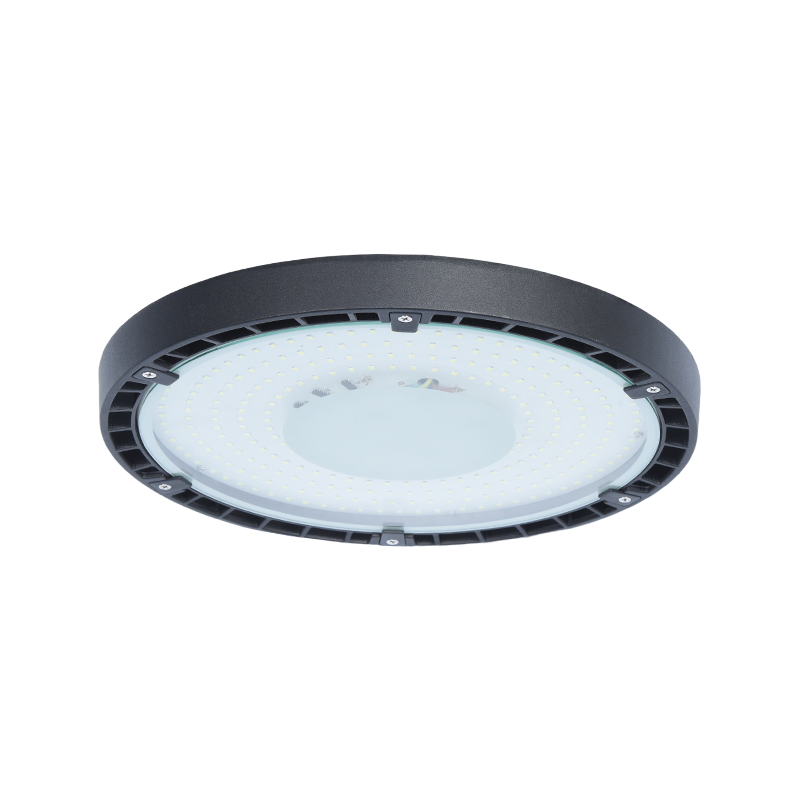
An LED high bay light works by passing electrical current through semiconductor diodes that emit light when electrons cross the diode's junction, with this process managed by an internal driver that regulates voltage and current while a heat sink dissipates the heat generated during operation. Unlike traditional high-intensity discharge lighting, which relies on gas ionization to produce light, LED technology converts electrical energy directly into visible light with significantly less energy lost as heat. This fundamental difference is why LED high bay fixtures commonly achieve luminous efficacy of 130 to 160 lumens per watt, compared to roughly 70 to 90 lumens per watt for older metal halide high bay fixtures, based on lighting efficiency data widely referenced across commercial lighting manufacturers.
Content
- 1 How the LED Chip Produces Light
- 2 The Role of the Driver in Regulating Power
- 3 Heat Management Through the Heat Sink
- 4 How Light Distribution Is Controlled
- 5 Why LED Technology Improves Energy Efficiency
- 6 Factors That Affect LED High Bay Lifespan
- 7 Practical Implications for Facility Applications
- 8 Who Should Understand This Working Principle
How the LED Chip Produces Light
At the core of every LED high bay light is a semiconductor chip that produces light through a process called electroluminescence, which differs fundamentally from the filament heating or gas discharge methods used in older lighting technologies.
The Basic Electroluminescence Process
- Electrical current flows through the semiconductor material, causing electrons to move across the diode junction
- As electrons cross this junction, they release energy in the form of photons, producing visible light
- The specific semiconductor material used determines the base wavelength, or color, of the light produced
A commercial-grade LED high bay light typically arranges multiple LED chips on a single circuit board, allowing the fixture to achieve the high total light output needed for large industrial or warehouse spaces with high ceilings.
The Role of the Driver in Regulating Power
LED chips require a very specific, stable current to operate correctly and maintain a long service life, which is why every LED high bay fixture includes a driver component to manage this electrical regulation.
Core Driver Functions
| Function | Purpose |
| Voltage conversion | Converts incoming AC power to the DC voltage LEDs require |
| Current regulation | Maintains a stable current flow to prevent chip damage |
| Flicker reduction | Smooths power delivery to minimize visible flickering |
Without proper driver regulation, LED chips would be exposed to inconsistent current levels, which can cause premature dimming, color shifting, or outright chip failure well before the fixture's expected service life is reached.
Heat Management Through the Heat Sink
While LEDs produce far less heat than traditional lighting technologies, they still generate thermal energy that must be effectively managed to maintain consistent light output and protect the chip's long-term performance.
Why Heat Dissipation Matters
Excess heat buildup at the LED chip level can cause a phenomenon known as thermal droop, where light output gradually decreases as the chip overheats, along with accelerated degradation of the phosphor coating responsible for producing white light.
Common Heat Sink Designs
Most LED high bay fixtures use finned aluminum heat sinks positioned directly behind or around the LED array, maximizing surface area for passive heat dissipation into the surrounding air without requiring active cooling fans in most standard applications.
How Light Distribution Is Controlled
Beyond simply producing light, LED high bay fixtures are engineered with specific optical components to direct that light effectively across large floor areas typical of warehouses and industrial facilities.
Optical Lens and Reflector Design
- Lenses positioned over each LED chip shape and direct the emitted light beam angle
- Reflector housings help capture and redirect stray light toward the intended coverage area
- Beam angle selection affects whether light spreads widely or concentrates in a narrower, more intense pattern
Facilities with higher ceilings generally benefit from narrower beam angles that concentrate light output downward, while lower ceiling installations often use wider beam angles to spread illumination more evenly across the floor area.
Why LED Technology Improves Energy Efficiency
Understanding the working principle of LED high bay lights also explains why they consume significantly less energy than older high-intensity discharge alternatives while producing comparable or greater light output.
Reduced Energy Loss as Heat
Traditional metal halide and high-pressure sodium fixtures convert a substantial portion of electrical energy into heat rather than usable light, whereas LED chips direct a much higher percentage of input energy toward actual photon production.
Instant-On Performance
Unlike gas discharge lighting, which requires a warm-up period to reach full brightness, LED chips reach full output immediately upon power activation, since the electroluminescence process does not depend on gradually heating and ionizing a gas medium.
Factors That Affect LED High Bay Lifespan
Because the working principle of LED lighting differs fundamentally from filament or gas-based technologies, the factors that determine service life are also different, centering primarily on thermal management and driver quality.
Key Lifespan Influencing Factors
- Operating temperature, since consistently high ambient heat can accelerate chip degradation over time
- Driver quality, as a poorly regulated driver can subject chips to current fluctuations that shorten lifespan
- Duty cycle, with fixtures running continuously experiencing different wear patterns than those cycled on and off frequently
A well-engineered LED high bay light designed with adequate heat sink capacity and a stable driver typically achieves a rated lifespan of 50,000 hours or more, significantly outperforming the operational lifespan of traditional high-intensity discharge fixtures.
Practical Implications for Facility Applications
Understanding how LED high bay lights function helps facility managers make more informed decisions when specifying fixtures for warehouses, manufacturing plants, or large retail spaces with elevated ceiling heights.
Matching Fixture Design to Ceiling Height
Facilities with ceilings above 20 feet generally benefit from higher-output fixtures with narrower beam angles, while spaces with lower ceilings can use lower-wattage fixtures with wider distribution to achieve even coverage without excessive brightness directly beneath each fixture.
Who Should Understand This Working Principle
Facility managers, electrical contractors, and procurement teams specifying industrial lighting benefit from understanding how LED high bay lights function, since this knowledge directly informs decisions around fixture wattage, beam angle selection, and expected maintenance intervals. This understanding is particularly valuable when comparing quotes or specifications from different suppliers, since driver quality and heat sink design, both rooted in the fixture's core working principle, significantly affect long-term reliability and total cost of ownership.
Previous Post
What are the advantages of LED high bay lights?
Next Post
Can solar lights be used indoors?
Related Products

Our Products
Keep In Touch
export@polaryang.cn
+86-574-65167530
Xue'ao Qiangjiao Town, Ninghai County, Ningbo, Zhejiang, China
Contact Us
Copyright © Ninghai Poda Electrical Appliance Co., Ltd. Rights Reserved.
Wholesale LED Lighting Manufacturer
OEM Solar Lighting Factory
