 English
 Español
+86-13777012108
(WhatsApp/WeChat)
What is the lifespan of an LED high bay light?
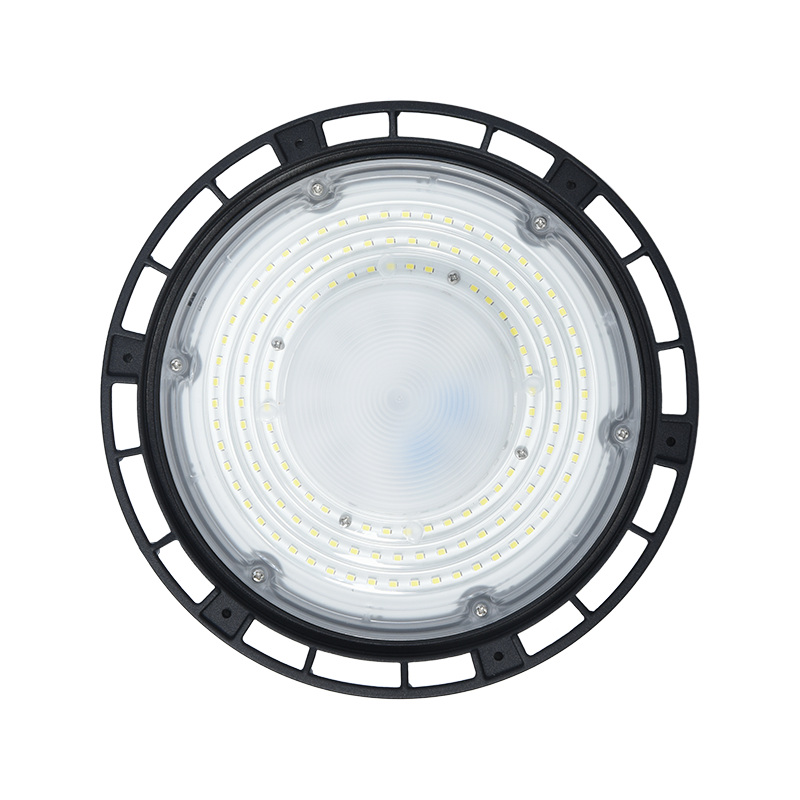
A quality LED high bay light is rated for 50,000 to 100,000 hours of operational life — with most commercial-grade units carrying an L70 rating of at least 50,000 hours, meaning the light output will remain at or above 70% of its initial value at that point. At 16 hours of operation per day (a typical warehouse or factory schedule), 50,000 hours equates to over 8.5 years of continuous use without requiring lamp replacement. This is 5 to 10 times longer than the metal halide or high-pressure sodium (HPS) high bay fixtures they replace, which typically last 10,000 to 20,000 hours with significant lumen depreciation well before end of life.
Content
- 1 How LED High Bay Lifespan Is Measured: L70 and TM-21
- 2 Lifespan Comparison: LED High Bay vs. Traditional Technologies
- 3 The Role of Thermal Management in Determining Lifespan
- 4 How Optical Design Protects Both People and the Fixture
- 5 Factors That Reduce LED High Bay Lifespan in Practice
- 6 Maintenance Intervals and Replacement Planning
How LED High Bay Lifespan Is Measured: L70 and TM-21
LED lifespan is not measured by catastrophic failure (when the light stops working entirely) but by lumen maintenance — how long the fixture maintains an acceptable proportion of its initial light output. The industry-standard metric is:
- L70: the operating hours at which light output falls to 70% of initial lumens — the standard threshold below which illuminance levels in industrial and commercial spaces typically fall below required minimums
- L80 and L90: higher-standard ratings used for critical applications; L80 means output remains at 80% of initial value at the rated hour figure
- IES TM-21: the North American testing standard that projects long-term lumen maintenance from accelerated test data, used to verify manufacturer L70 claims
When comparing LED high bay products, always confirm whether the stated lifespan figure is an L70 or L80 rating from TM-21 tested data — not simply a manufacturer estimate.
Lifespan Comparison: LED High Bay vs. Traditional Technologies
| Light Source Technology | Rated Lifespan | Lumen Maintenance | Warm-Up Time |
|---|---|---|---|
| LED (high bay) | 50,000–100,000 hrs | Gradual, predictable | Instant full output |
| Metal Halide (MH) | 10,000–20,000 hrs | Rapid depreciation after 50% | 3–5 minutes |
| High-Pressure Sodium (HPS) | 16,000–24,000 hrs | Significant color shift over time | 3–4 minutes |
| Fluorescent (T5/T8 high bay) | 20,000–30,000 hrs | Moderate depreciation | Instant (reduced in cold) |
The Role of Thermal Management in Determining Lifespan
Heat is the primary enemy of LED longevity. LED junction temperature directly determines both lumen maintenance and operational lifespan — every 10°C increase in junction temperature approximately halves LED service life according to the Arrhenius degradation model. In high bay applications, where fixtures may operate continuously in ambient temperatures of 30–50°C, thermal management is the critical engineering challenge.
Quality LED high bay lights address this through:
- Die-cast aluminum housings: aluminum's high thermal conductivity (approximately 150–200 W/m·K) draws heat away from the LED junction and dissipates it across the large surface area of the finned heat sink body
- Optimized fin geometry: deep, closely spaced fins maximize the convective heat transfer surface exposed to the ambient airflow within the facility
- Thermal interface materials (TIM): high-conductivity compound or pads between the LED module and heat sink substrate minimize thermal resistance at the critical junction
- Anti-aging electrostatic sprayed surface coating: protects the aluminum housing from corrosion and chemical exposure in industrial environments while maintaining thermal emissivity
How Optical Design Protects Both People and the Fixture
LED high bay lights use precision optical lenses or reflective cups to control light distribution — and this optical precision benefits both the quality of illumination and the longevity of the fixture itself. By directing light efficiently onto the work area, well-designed optics allow the fixture to achieve the required illuminance level at a lower drive current, which reduces LED junction temperature and directly extends operational life.
For the work environment, even light distribution reduces glare and eliminates harsh shadows — contributing to worker visual comfort, reduced fatigue, and improved safety in detail-demanding operations such as assembly, inspection, and packaging. A fixture that keeps workers comfortable also tends to operate in stable thermal conditions, as workplace environments without excessive heat sources are gentler on lighting equipment.
Factors That Reduce LED High Bay Lifespan in Practice
Even high-quality LED high bay fixtures will underperform their rated lifespan if the following conditions are not managed:
- Inadequate ventilation: enclosed or poorly ventilated spaces prevent convective cooling of the heat sink, raising ambient temperature around the fixture and accelerating LED degradation
- Voltage fluctuations: supply voltage spikes above the driver's rated input range stress LED components and reduce driver life
- Dust and contamination buildup: accumulated dust on heat sink fins insulates the metal surface and significantly degrades cooling efficiency — regular cleaning maintains designed thermal performance
- Chemical environments: in facilities handling acids, chlorine, or ammonia, inadequate IP or IK ratings allow corrosive agents to attack the housing, driver board, and LED substrate
- Overdriving: operating LEDs above their rated current to extract more lumens from a smaller fixture increases junction temperature proportionally — trading short-term brightness for significantly shortened life
Maintenance Intervals and Replacement Planning
Unlike metal halide or fluorescent high bays that require planned lamp replacement every 2–4 years to maintain adequate illuminance, LED high bays can operate for 8–12 years before any action is required under typical industrial usage patterns. This dramatically reduces maintenance labor costs — particularly in high-bay environments where changing lamps at 8–12 meter mounting heights requires elevated work platforms or scissor lifts.
A simple maintenance schedule for LED high bay lights includes:
- Annual visual inspection for physical damage to housing or lens
- Biannual cleaning of heat sink fins and lens surface to remove dust accumulation
- Periodic illuminance measurement to verify lumen output remains above the required minimum for the task area — typically every 3–5 years in clean environments, annually in dusty industrial settings
- Driver health check via any integrated fault reporting function if the fixture includes smart controls
Previous Post
What are the uses of Solar Street Lights?
Next Post
What are the advantages of LED garden lights?
Related Products

Our Products
Keep In Touch
export@polaryang.cn
+86-574-65167530
Xue'ao Qiangjiao Town, Ninghai County, Ningbo, Zhejiang, China
Contact Us
Copyright © Ninghai Poda Electrical Appliance Co., Ltd. Rights Reserved.
Wholesale LED Lighting Manufacturer
OEM Solar Lighting Factory
