 English
 Español
+86-13777012108
(WhatsApp/WeChat)
Home / News / Industry News / Outdoor Basketball Court Lighting Standards: Lux, Glare, and Fixture Selection
Outdoor Basketball Court Lighting Standards: Lux, Glare, and Fixture Selection
A common failure on an outdoor basketball court is not a lack of light, but uneven light. The court may look bright at center court while players lose the ball near the baseline, or the pole lights may shine directly into a shooter's eyes. For buyers, coaches, and facility managers, outdoor basketball court lighting standards are a set of measurable targets for average lux, uniformity, glare, color, and weather protection, not a simple wattage number.
The practical conclusion comes first: for most full outdoor courts, plan around 200 to 500 lux of maintained average light depending on play level, keep uniformity at 0.5 or better, choose 4000K to 5700K LED floodlights with CRI of 80 or higher, and specify IP65 or IP66 housings with controlled beams. Higher competition or broadcast use needs more light and tighter glare control.
Content
- 1 What Outdoor Basketball Court Lighting Standards Are Trying to Achieve
- 2 Illuminance and Uniformity Targets by Play Level
- 3 Glare, Beam Control, and Pole Layout
- 4 Color, Flicker, and Broadcast Requirements
- 5 Weather Protection, Mounting, and Long-Term Reliability
- 6 Choosing Fixtures and Checking a Supplier
- 7 A Practical Procurement Sequence
What Outdoor Basketball Court Lighting Standards Are Trying to Achieve
Basketball is fast and directional. Players track a ball above eye level, move sideways, and shoot toward a target. Lighting therefore has to support horizontal seeing across the court and vertical recognition of faces and jerseys. That is why standards combine several metrics rather than one.
- Illuminance sets the amount of light on the playing surface, usually measured in lux and stated as a maintained average.
- Uniformity compares the darkest and brightest areas. A high average with poor uniformity still produces dark corners and visual adaptation problems.
- Glare control limits direct light entering players' eyes. It depends on fixture optics, mounting height, aiming, and shielding.
- Color quality covers color rendering and color temperature, helping players see the ball and court markings clearly.
- Durability covers IP rating, impact resistance, corrosion, surge protection, and heat management for outdoor conditions.
For a court owner, these are procurement requirements. For a lighting supplier, they are design inputs. A fixture that meets IP65 but has a wide, uncontrolled beam may still fail the glare and uniformity goals.
Illuminance and Uniformity Targets by Play Level
There is no single lux value for every outdoor basketball court. A public park court used for casual games has different needs from a school competition court or a televised arena. FIBA guidance and common sports lighting practice use class-based targets. The table below gives practical project ranges, not a substitute for a final photometric design.
| Play level | Maintained average lux | Uniformity target | Typical use |
|---|---|---|---|
| Casual recreation | 100 to 200 | 0.4 or better | Parks, camps, backyard full courts |
| Training and school play | 200 to 300 | 0.5 or better | Physical education, club practice |
| Club and local competition | 300 to 500 | 0.5 or better | Community leagues, school games |
| High-level competition | 500 to 750 | 0.6 or better | Regional tournaments, show courts |
| Professional or broadcast | 750 to 1500 or project-specific | 0.7 or better | Televised games, national competition |
Uniformity is often written as minimum over average. A target of 0.5 means the darkest reading on the court should be at least half the average. For competition courts, 0.6 or 0.7 is more appropriate because players move quickly between lit and less-lit zones. Vertical illuminance also matters near the basket and along the sidelines, even when the horizontal grid looks acceptable.
Maintained values account for LED lumen depreciation and dirt on the lens. If a design says 300 lux, ask whether that is initial or maintained. A design that barely reaches 300 lux when new may fall below target within two or three seasons.
Glare, Beam Control, and Pole Layout
Glare is the most common complaint after installation. The usual cause is not excessive light but poor placement. Poles set too low, fixtures aimed across the court instead of down onto it, or wide beams that spill into players' sight lines all reduce performance.
For a full outdoor court, four to eight poles are common. Poles should sit behind the baselines and sidelines, not inside the run-off area. Mounting heights for outdoor courts often fall between 6 and 10 meters, with higher poles for larger sites or higher competition levels. The exact height depends on beam angle and the photometric layout. As a rule, the fixture should be high enough and far enough back that players do not see the LED source directly during normal play.
Beam angles of roughly 30 to 60 degrees are common for court floodlighting, but the number is less important than the calculated result. Asymmetric optics, visors, and precise aiming can reduce spill light and glare without lowering useful light on the court. If the supplier only asks for wattage and pole height, the design is incomplete. Ask for a photometric plan showing the lux grid, uniformity, and glare values.
Color, Flicker, and Broadcast Requirements
Color temperature between 4000K and 5700K is typical for outdoor sports lighting. Neutral to cool white helps contrast between the ball, players, and court surface. A CRI of 80 or higher is a sensible baseline for club and school courts. For broadcast or filmed events, CRI of 90 or higher and flicker-free drivers are often specified so that slow-motion replays do not show banding.
Flicker is easy to overlook because it is invisible to most players. Under high-frame-rate cameras, however, a poor driver can create dark bands. If the court will host streaming, highlight reels, or local television, include flicker performance in the specification. The same applies to dimming systems: confirm that dimming does not introduce visible flicker or color shift.
Weather Protection, Mounting, and Long-Term Reliability
Outdoor courts face rain, dust, wind, heat, and voltage surges. An IP65 rating protects against dust and water jets, while IP66 adds stronger water-jet protection. For coastal areas or polluted sites, corrosion-resistant die-cast aluminum housings and stainless fasteners are worth specifying. Impact resistance also matters on courts where balls or equipment may hit the pole area.
Surge protection is a practical procurement point. LED drivers are electronics, and a court in an open field can attract voltage spikes. A luminaire with a high surge rating and good thermal design usually costs less over ten years than a cheaper unit that fails early. Ask for LM-80 or LM-79 data where available, plus a clear warranty that covers the driver and housing finish.
Maintenance access should be considered before the poles go up. A fixture that requires a lift every time the driver fails may erase the energy savings. Serviceable drivers, standard mounting brackets, and clear spare-part support reduce long-term cost.
Choosing Fixtures and Checking a Supplier
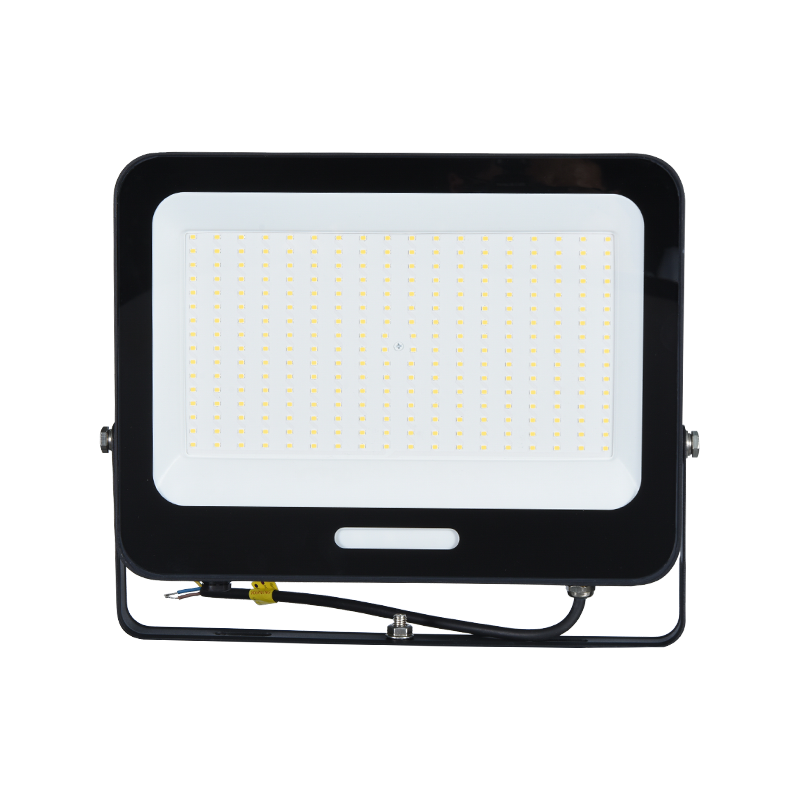
For outdoor basketball, LED floodlights are often the right category because they offer high output, controlled beams, and robust housings. Wattage should come from the lighting design, not from a guess. A small half court may need 100W to 200W fixtures, while a full competition court may use 300W to 500W units or a larger number of lower-wattage fixtures. The total layout, beam angle, and mounting height determine the result.
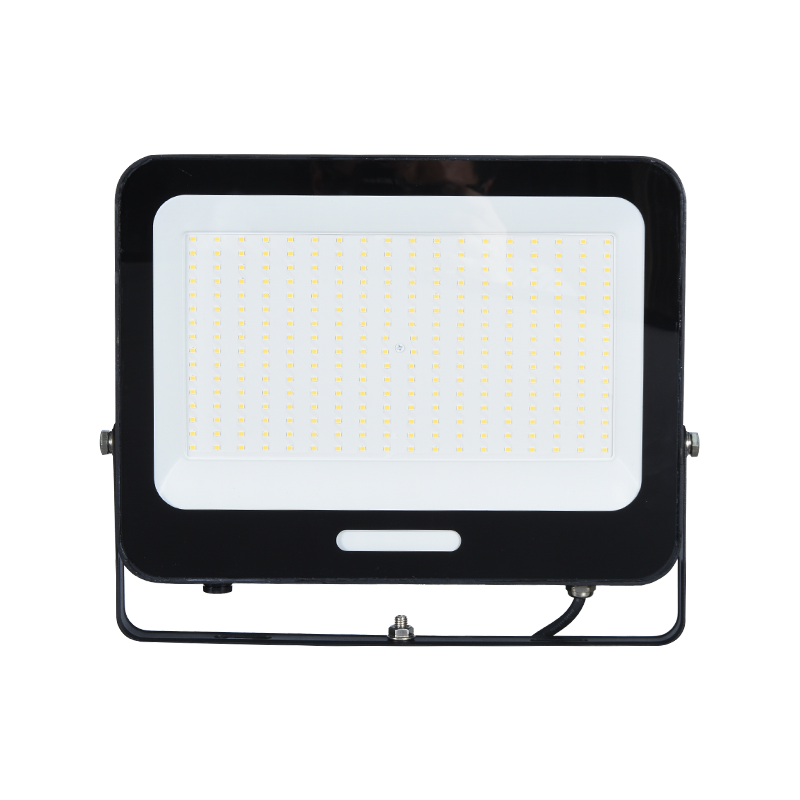
 PY-FL02-200W Outdoor Low Energy Flood LightHigh-efficiency LED floodlight with aluminum housing and heat management, intended for long-duration outdoor lighting; review beam layout and photometrics for court projects.View Product →
When comparing suppliers, request a photometric layout using the actual court dimensions, pole positions, and mounting heights. Check the IP rating, CRI, color temperature, surge protection, warranty, and certifications. A supplier that manufactures its own housings and understands thermal design can usually respond better to custom beam or bracket requirements. For stadium-scale projects, it also helps to review stadium lighting selection considerations before fixing the fixture schedule.
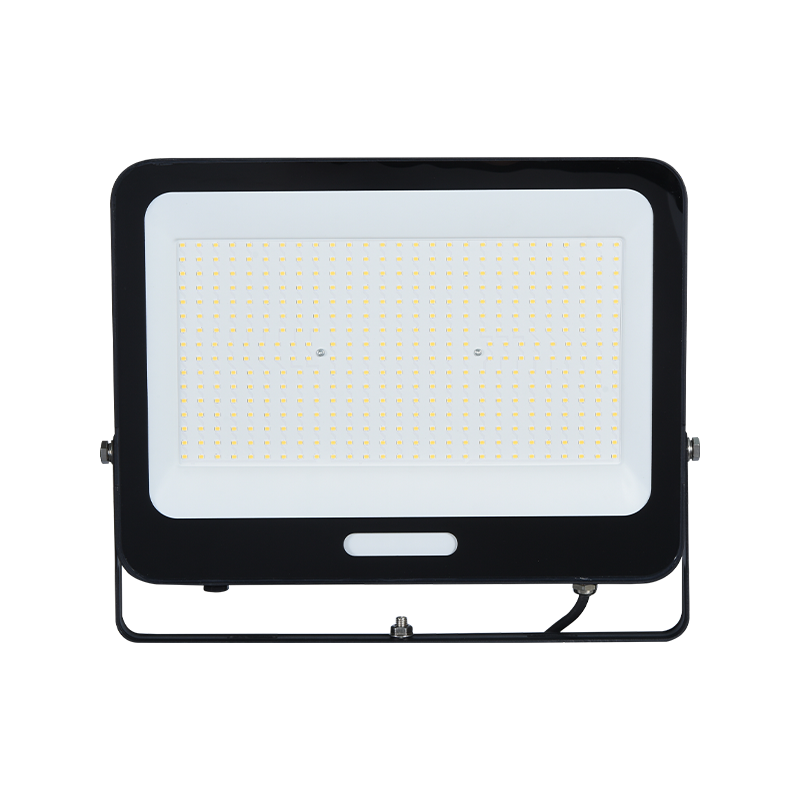
 PY-FL02-300W Low Energy LED Flood LightIP66-rated LED floodlight for ports, stadiums, and industrial plants, with stable -40°C to 60°C operation, replaceable components, and low-energy outdoor design.View Product →
If the court has no reliable grid connection, solar floodlights can be an option for low-level recreation, but they need careful sizing for winter sun and battery autonomy. For competition play, grid-connected LED with a properly sized driver and control system is usually more predictable.
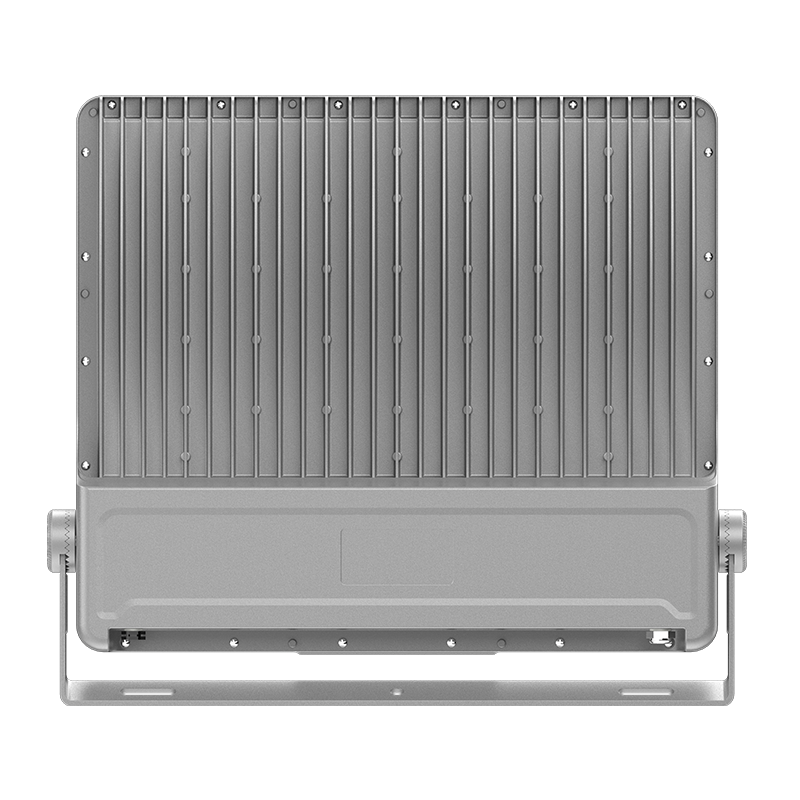 PY-FL02-400W Environmentally Friendly LED Flood Light400W LED floodlight for industrial areas, stadiums, and plazas, featuring IP65 protection, -40°C to 60°C operation, and mercury-free, lead-free construction.View Product →
A Practical Procurement Sequence
Start with the play level and the governing standard, then define the maintained lux target and uniformity. Next, set pole positions and mounting heights with the court layout. After that, select optics and wattage through a photometric study, and only then compare fixture prices. Finally, confirm IP rating, CRI, flicker, surge protection, warranty, and spare-part support.
- Define court size, run-off, and play level.
- Set maintained average lux and uniformity targets.
- Fix pole positions, heights, and aiming zones.
- Run a photometric design and check glare.
- Specify IP, CRI, CCT, flicker, and surge requirements.
- Compare lifecycle cost, not only purchase price.
If you are planning a court and want a fixture layout that fits the site, contact the team with the court dimensions, pole options, and target play level. A clear standard and a checked photometric plan are what separate a court that looks bright from one that actually plays well after dark.
Previous Post
parts of a street lamp: Applications, Selection Criteria, and Practical Guidance
Next Post
Municipal Street Lighting Suppliers: How to Vet an LED Factory Partner
Related Products

Our Products
Keep In Touch
export@polaryang.cn
+86-574-65167530
Xue'ao Qiangjiao Town, Ninghai County, Ningbo, Zhejiang, China
Contact Us
Copyright © Ninghai Poda Electrical Appliance Co., Ltd. Rights Reserved.
Wholesale LED Lighting Manufacturer
OEM Solar Lighting Factory
