 English
 Español
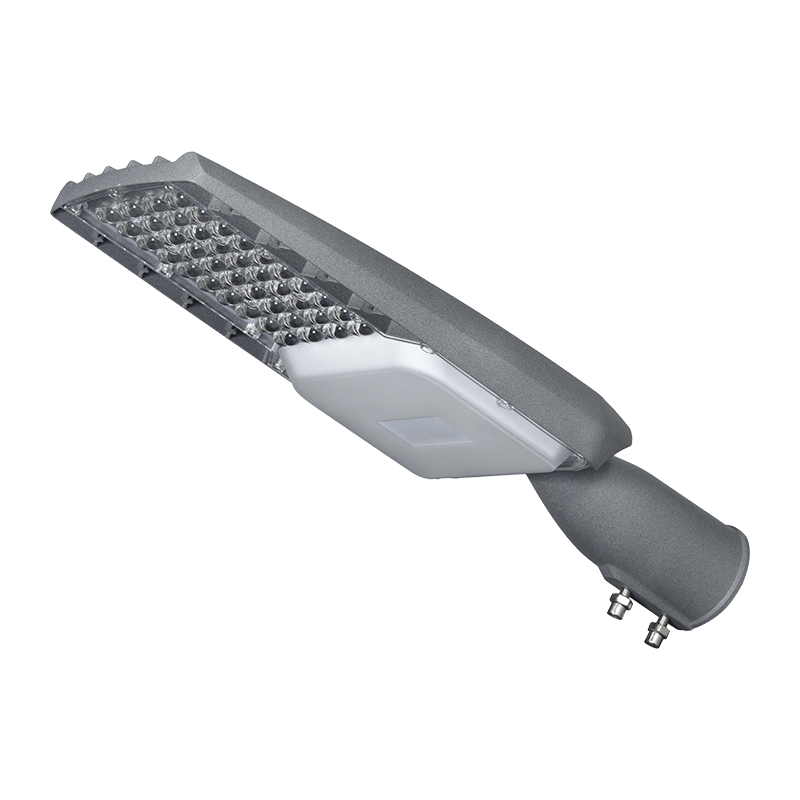
+86-13777012108
(WhatsApp/WeChat)
Home / News / Industry News / parts of a street lamp: Applications, Selection Criteria, and Practical Guidance
parts of a street lamp: Applications, Selection Criteria, and Practical Guidance
A street lamp that flickers after a storm is rarely a single failed component. More often, water has entered a gasket, a driver has overheated, or a pole base has shifted enough to stress the wiring. Buyers who treat a street lamp as one product often miss those weak points until installation or the first maintenance cycle.
A reliable street lamp is a matched system: foundation, pole, arm, luminaire, driver, controls, and wiring. Get the interfaces right first, then compare light output, finish, and price. The parts below are the ones that most often decide whether a project runs smoothly.
Content
- 1 Street lamp parts at a glance
- 2 Pole, base, and foundation: alignment matters more than appearance
- 3 Arm, bracket, and mounting interface
- 4 Luminaire housing, lens, and LED module
- 5 Driver, surge protection, and controls
- 6 Solar street lamp parts that replace grid power
- 7 Small parts that decide long term reliability
- 8 A practical checklist for specifying street lamp parts
Street lamp parts at a glance
Use this table as a quick reference, then confirm the actual dimensions and ratings on the project drawings.
| Part | Main function | Typical materials or features | Procurement check |
|---|---|---|---|
| Foundation and anchor bolts | Transfers wind and weight loads into concrete | Concrete grade, bolt circle, thread length, leveling nuts | Verify bolt pattern and projection before pouring |
| Pole shaft and base plate | Raises the light to the required height | Steel or aluminum, galvanized or powder coated, handhole, grounding lug | Check height, wall thickness, finish, and wind load |
| Arm or bracket | Sets outreach and aiming angle | Cast or formed metal, slip fitter or bolt flange | Match tenon diameter, rise, and tilt to the luminaire |
| Luminaire housing | Protects optics from weather and impact | Die-cast aluminum, gaskets, IP rating, impact rating | Confirm service access and gasket compression |
| Lens and LED module | Shapes light and delivers useful output | Optical lens or reflector, LED board, heat sink | Compare distribution type, lumen output, and color quality |
| Driver and surge protection | Converts power and protects electronics | Constant current driver, fuse, terminal block, surge device | Check thermal design, replaceability, and electrical ratings |
| Controls and wiring | Switch, dim, or monitor the lamp | Photocell, NEMA socket, dimming input, cable glands | Confirm voltage, control protocol, and service access |
| Solar add-ons | Replace grid power in off grid locations | Panel, battery, charge controller, mounting frame | Check autonomy, battery chemistry, and shade tolerance |
Pole, base, and foundation: alignment matters more than appearance
The pole is the most visible part of a street lamp, but the foundation and base plate do the quiet work. A typical pole may run from about 8 feet in a pedestrian area to 50 feet along a major road. Height affects light spread, wind exposure, and maintenance access, so it should be chosen with the road width and mounting distance in mind.
At the base, check the anchor bolt circle, thread length, leveling nut arrangement, and grout plan. A base plate that arrives with the wrong bolt pattern can stop a crew for days. The handhole position also matters: it should face away from traffic and give enough room for wiring, fusing, and grounding. Confirm that the pole includes a grounding lug and that the galvanized or powder coated finish is specified by thickness, not just by color.
Wind load is a system calculation. The pole, arm, and luminaire together create effective projected area, and a larger luminaire can change the load on a pole that was selected for a smaller fixture. If the project has a structural drawing, compare the luminaire dimensions and weight against it before release.
Arm, bracket, and mounting interface
The arm sets outreach, rise, and tilt. It also creates the mechanical handshake between pole and luminaire. A slip fitter that is loose, or a bolt flange that is mismatched, can leave the light pointing off target. Common tenon sizes vary by market, so confirm the actual diameter and length instead of assuming that a catalog image is enough.
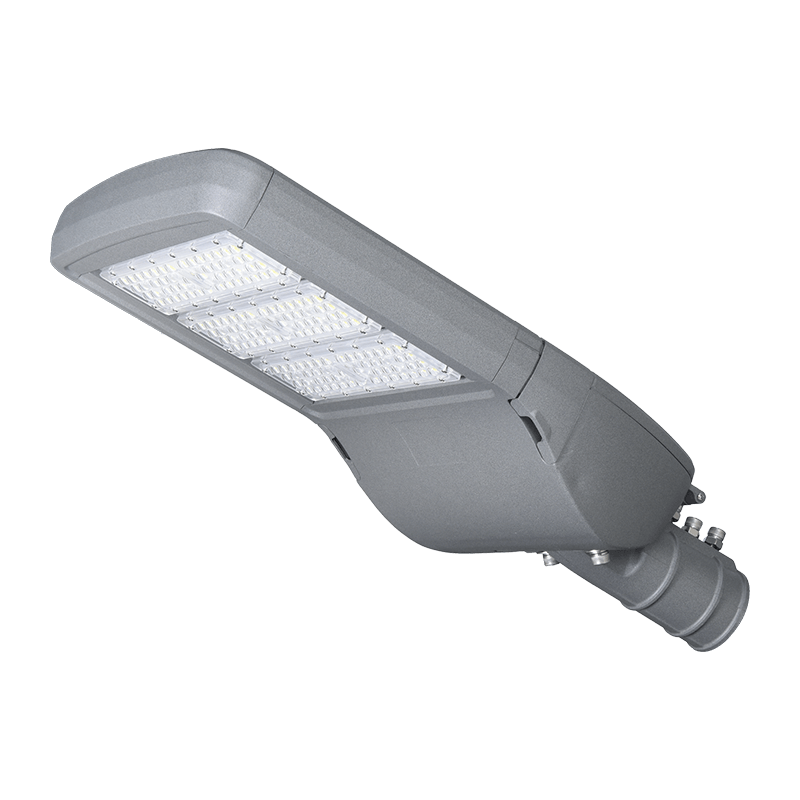
For wide roads, staging areas, or the edge of a sports field, a 120W street light with a cast aluminum body shows why the arm and housing should be checked as a matched set.
 120W Outdoor Stadium and Street LED LightCast-aluminum 120W LED fixture for stadiums and streets; review arm, housing, mounting, and tilt details before installation.View Product →
Ask for a dimension drawing that shows the center of gravity, mounting point, and maximum tilt. If the arm is adjustable, mark the target angle during inspection and confirm that the locking hardware can be reached after installation.
Luminaire housing, lens, and LED module
The luminaire is more than a metal box. Its housing carries heat away from the LED module, its gasket keeps water out, and its lens or reflector puts light where the road needs it. Die-cast aluminum is common because it handles heat and impact well. Powder coating protects the outside, but the gasket, cable gland, and breather often decide whether moisture enters over time.
Look for an IP rating that matches the site and an impact rating that suits the risk of hail, debris, or vandalism. For road lighting, distribution type matters as much as lumen output. A narrow beam on a wide carriageway can create dark bands, while an overly wide beam may waste light on nearby property. Color quality, color temperature, and glare control should also be reviewed with the local road standard in mind.
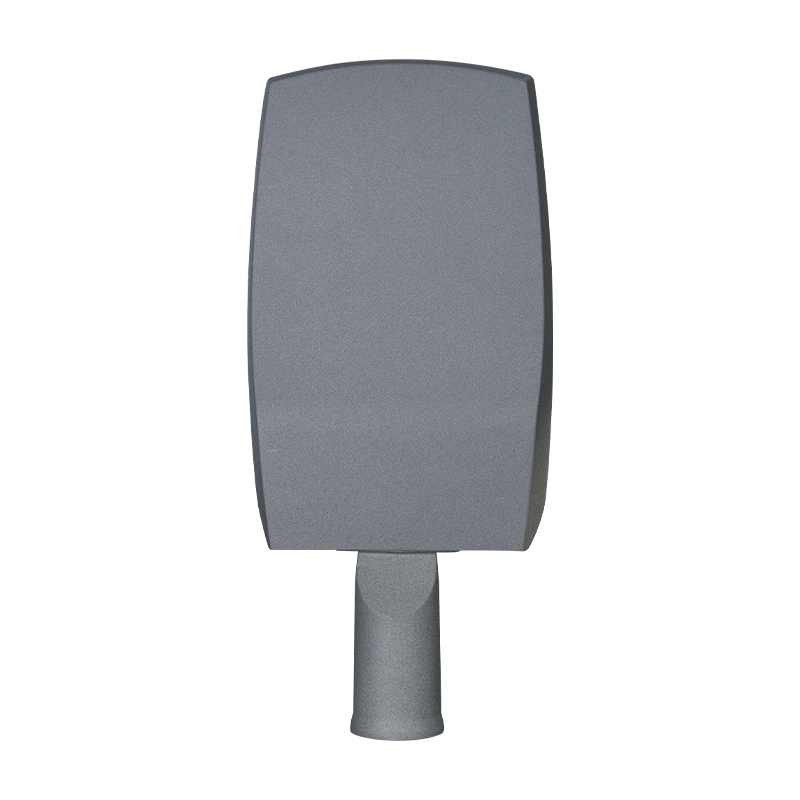
A 150W LED street light with a waterproof cast aluminum housing is a useful reference point when comparing thermal design, gasket construction, and service access.
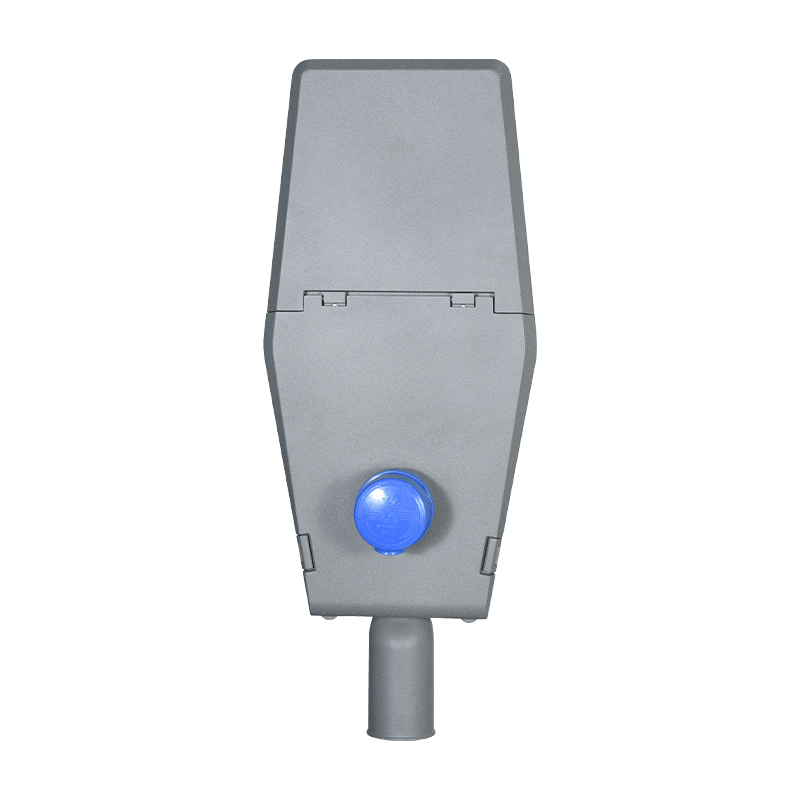 150W Waterproof Cast-Aluminum LED Street LightDie-cast aluminum 150W street light with IP66 housing and multiple optical options; compare output, distribution, and service access.View Product →
Do not compare wattage alone. Compare delivered lumens, distribution, efficacy, and the ability to replace the driver or LED board without scrapping the whole fixture.
Driver, surge protection, and controls
The driver converts incoming AC power into the current the LEDs need. It is also the part most sensitive to heat and voltage spikes. A well designed compartment keeps the driver cool, separates line voltage from low voltage controls, and allows service without removing the entire luminaire. A poorly placed driver may meet the catalog rating on day one and fail early in a hot location.
Surge protection deserves a direct question. Roadside luminaires are exposed to lightning induced surges and switching events. A surge protective device, fuse, and robust terminal block should be part of the assembly, and the surge device should be easy to inspect or replace. The same applies to photocells and dimming controls. A photocell that switches at the wrong light level, or a control node that loses power, can look like a driver failure.
Smart street lighting controls are becoming more common, but they still depend on clean power and a serviceable driver compartment. For a broader view of where road lighting is heading, see this overview of LED street lighting and urban controls.
Solar street lamp parts that replace grid power
A solar street lamp swaps the grid connection for a panel, battery, and charge controller. The luminaire may look similar, but the energy budget changes everything. Panel tilt, shade tolerance, battery chemistry, and local weather all affect performance. Lithium iron phosphate batteries are often chosen for cycle life and thermal stability, while integrated designs reduce wiring between components.
Size the system from the load profile, not from the panel label. A lamp that runs all night needs enough battery capacity for cloudy days, and the controller must protect the battery from overcharge and deep discharge. Check that the panel can be cleaned and that the battery compartment can be serviced in the field.
An 80W solar street light with an integrated body shows the main trade off: compact installation and no trenching, balanced against careful battery sizing and panel placement.
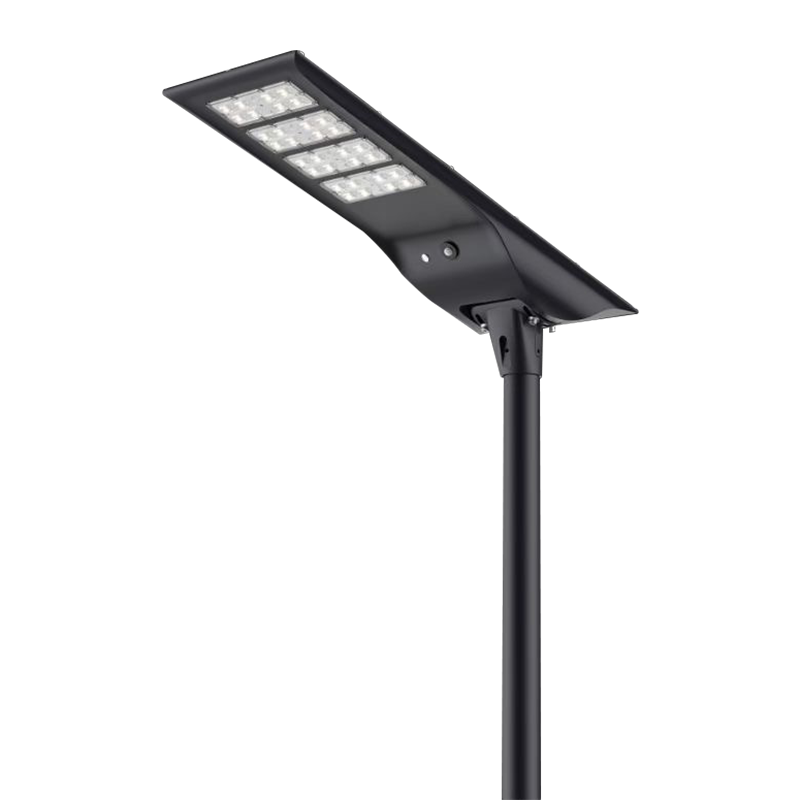 80W Integrated Solar LED Street LightAll-in-one 80W solar street light with battery and automatic brightness adjustment; check panel, battery, and small installation parts.View Product →
Small parts that decide long term reliability
The small parts are easy to overlook in a quotation, yet they often explain why two lamps with similar wattage behave differently after two years.
- Gaskets and breathers that equalize pressure without letting water in.
- Cable glands sized to the cable jacket, not just the conductor count.
- Stainless fasteners that resist galling and corrosion at the mounting points.
- Fuses, terminal blocks, and grounding lugs rated for the available fault current.
- Handhole covers, anchor covers, and labels that remain legible after UV exposure.
- Touch up paint or powder coat repair kits for scratches found during installation.
During inspection, check screw torque, gasket compression, and the presence of drain paths. A lamp that seals perfectly but cannot breathe may pull in moisture as temperature changes. A lamp that breathes too freely may collect dust. The right balance is a design decision, not an accessory.
A practical checklist for specifying street lamp parts
Use the following sequence to reduce rework and keep the buying decision grounded in the site, not just the catalog.
- Define the mounting interface first: pole height, tenon size, arm rise, tilt, and anchor bolt pattern.
- Confirm wind load and effective projected area for the complete pole, arm, and luminaire assembly.
- Compare luminaire and driver as one system: thermal path, service access, surge protection, and replaceable parts.
- Check IP and impact ratings against the actual exposure, including coastal air, dust, and vandal risk.
- Review the control plan: photocell, dimming, network node, and the voltage available at the pole.
- For solar, verify load profile, autonomy days, battery chemistry, and shade at the final location.
- Inspect labels, wiring diagrams, and test reports before shipment, then repeat key checks on arrival.
If the pole, arm, luminaire, and driver are sourced as separate items, place the interface drawings in one package and make one person responsible for the fit. That single step prevents most of the mismatch costs that appear later in the field.
A street lamp is a small infrastructure system, not a single product. When the foundation, pole, arm, luminaire, driver, and controls are specified as a matched set, installation is faster and maintenance is more predictable. When they are not, the weakest part usually sets the schedule. If you are planning a project and want to confirm the right assembly for your road, site, or solar location, contact the team with your drawings and operating conditions.
Previous Post
No previous article
Next Post
Outdoor Basketball Court Lighting Standards: Lux, Glare, and Fixture Selection
Related Products

Our Products
Keep In Touch
export@polaryang.cn
+86-574-65167530
Xue'ao Qiangjiao Town, Ninghai County, Ningbo, Zhejiang, China
Contact Us
Copyright © Ninghai Poda Electrical Appliance Co., Ltd. Rights Reserved.
Wholesale LED Lighting Manufacturer
OEM Solar Lighting Factory
