 English
 Español
+86-13777012108
(WhatsApp/WeChat)
Home / News / Industry News / Municipal Street Lighting Suppliers: How to Vet an LED Factory Partner
Municipal Street Lighting Suppliers: How to Vet an LED Factory Partner
Your tender pack asks for a 200W LED street light for a collector road: class II distribution, 4000K, IP66, 10kV surge protection, a five year warranty and delivery inside eight weeks. Three suppliers reply. Two are within eight percent of each other on price. The third is thirty percent cheaper and looks identical on paper.
That gap is the first thing worth investigating. Municipal street lighting suppliers compete on a narrow set of verifiable facts, and a quote that undercuts the field usually gives something back quietly: a lower flux bin, a driver with weaker surge handling, thinner die cast walls, or a warranty that excludes the driver and the surge protector.
The practical conclusion is simple. Build the shortlist on four verified items: photometric files for the exact model being offered, the driver and surge protection specification, factory evidence that the model is really made where the supplier claims, and a delivery record for comparable orders. Price becomes meaningful only after those four are settled.
Content
- 1 What Municipal Buyers Compare Before Price
- 2 Why the Lowest Quote Usually Carries a Hidden Cost
- 3 Reading a Supplier Range for Roadway Fit
- 4 Smart Controls and Dimming Questions to Ask Early
- 5 Solar Street Lights for Plazas, Paths and Grid Gaps
- 6 Factory Evidence Beats Catalogue Claims
- 7 Lead Times, Packing and Spare Parts
- 8 A Practical Qualification Sequence
- 9 Getting a Checked Proposal
What Municipal Buyers Compare Before Price
A public lighting order is judged years after installation, when failure rates and maintenance tickets are counted. That is why experienced buyers ask for documents rather than promises. The table below is the minimum verification set we would expect to see in a serious response to a street lighting enquiry.
| Criterion | What to request | Typical acceptable range |
|---|---|---|
| System efficacy | Photometric file and wattage for the exact model | 130 to 160 lumens per watt at 4000K |
| Light distribution | IES file matched to road width and pole spacing | Type II or Type III optic, verified by simulation |
| Colour consistency | LED binning report | Within three SDCM across the delivered batch |
| Ingress protection | IP test report from an accredited lab | IP66 standard, IP67 for coastal or washdown areas |
| Surge protection | Driver datasheet and SPD specification | 10kV common mode with integrated protector |
| Lumen maintenance | LM-80 data plus TM-21 projection | L70 above 50,000 hours |
| Housing | Material grade, wall thickness, coating thickness | Die cast aluminum with polyester powder coat |
| Compliance | Certificate numbers that can be checked online | CE and RoHS, plus market specific listings |
| Warranty | Written terms naming driver and LED separately | Three to five years with spare parts support |
Why the Lowest Quote Usually Carries a Hidden Cost
Substitution happens in four places, and none of them are visible in a product photo.
- Driver selection. A 150W luminaire can run near 60 to 70 degrees inside the housing in a hot climate. A driver rated for 50 degrees will fail early even though the label says the right wattage.
- LED flux bin. A design quoted at 155 lumens per watt may be built with bins delivering 130, which still sells but changes the achieved road class and may fail the acceptance test.
- Housing thickness and coating. Reducing wall thickness saves metal and weight. It also reduces heat spreading and shortens the life of every component inside.
- Surge protection. In regions with overhead distribution and frequent lightning, the difference between 10kV and 4kV clamping shows up as a failure count in the second or third rainy season.
For a 500 unit project, one early driver failure per hundred units already cancels the apparent saving, because the bucket truck and the admin cost usually exceed the price of the fitting. Ask each supplier to state the driver make, the temperature rating and the surge level in writing, and treat a refusal as an answer.
Reading a Supplier Range for Roadway Fit
A supplier worth shortlisting publishes a power ladder that covers the roads you actually light, not a single hero model. For municipal work the useful band usually starts around 50W for residential and park roads and reaches 200W or 240W for arterials, roundabouts and interchange lighting. Keeping the same optical family across that band means a consistent look across a city and a smaller spare parts inventory for the maintenance team.
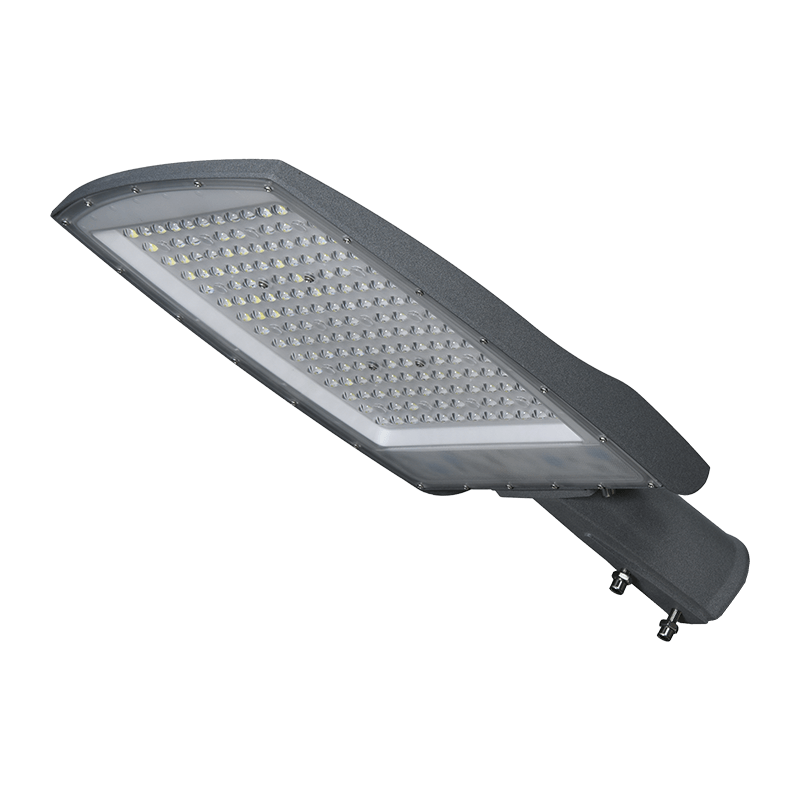
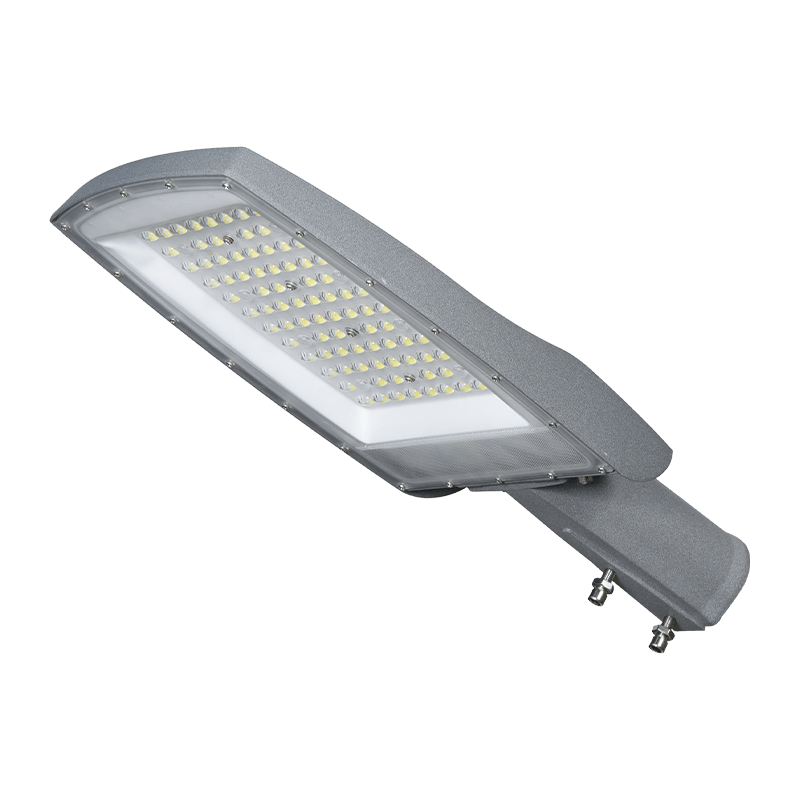
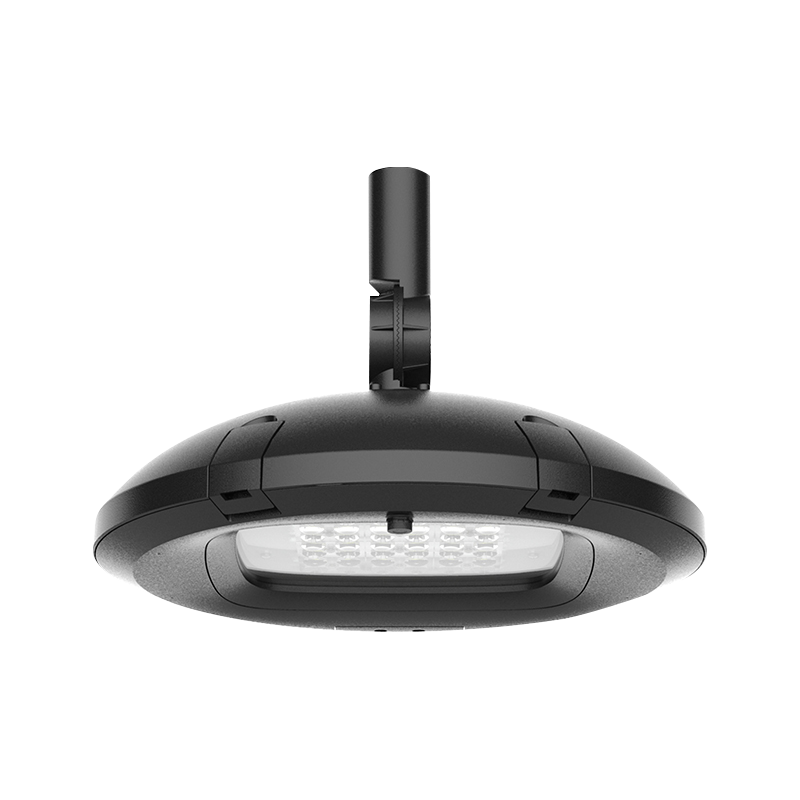
 PY-LED519-200W Cast Aluminum LED Street LightA 200W die-cast aluminum streetlight for harsh outdoor sites, with corrosion-resistant finish and a related 100W model for power-ladder planning.View Product →
When you evaluate that kind of unit, ask three questions. What is the actual measured wattage at the driver, not the LED? What pole entry diameter and tilt angle does the bracket support? And can the same housing be supplied at 100W and 150W so the network standardises on one body? A manufacturer with in house mould development can usually answer the third question with a modified bracket rather than a new tool.
Smart Controls and Dimming Questions to Ask Early
Controls are the part of a street lighting project most often decided too late. If the city intends to add a central management system, the luminaire must be ordered with the right receptacle and the right driver protocol from the start, because retrofitting a dimming interface into a sealed housing is expensive.
Confirm four things: whether a NEMA 7 pin receptacle is fitted as standard, whether dimming is 0 to 10V or DALI, whether an integrated photocell is available, and whether the driver accepts programmable dimming profiles such as 100 percent until midnight and 50 percent afterwards. Buyers evaluating a phased rollout can review the wider direction of smart street light deployment before fixing the specification.
 PY-LED666-240W Smart Street Light for Road NetworksA 240W smart road luminaire with around 160 lm/W efficacy, IP66 housing, DALI/0-10V or programmable drivers, and remote-management compatibility for phased deployments.View Product →
One more point worth writing into the contract: the control socket standard and the driver protocol should be listed as a warranty condition. That way, if a later batch arrives without the receptacle, the buyer has leverage before installation rather than after.
Solar Street Lights for Plazas, Paths and Grid Gaps
Solar is often the cheaper route where trenching a cable costs more than the fixture itself: plazas, campus paths, car park perimeters and rural road sections off the distribution network. The sizing rules are different from mains lighting, so ask for autonomy days rather than watts alone. Two to three days of autonomy is normal for a public path, and the battery chemistry matters more than the panel size.
Lithium iron phosphate batteries tolerate heat and deep cycling better than older chemistries and are the safer choice in hot climates, even at higher cost. A 20W to 30W unit suits a garden path, 60W to 80W suits a footpath or a plaza edge on a six metre pole, and 100W upward covers light roadway use. Ask for the lighting simulation at the proposed pole height and spacing, plus the panel tilt angle used in that calculation.
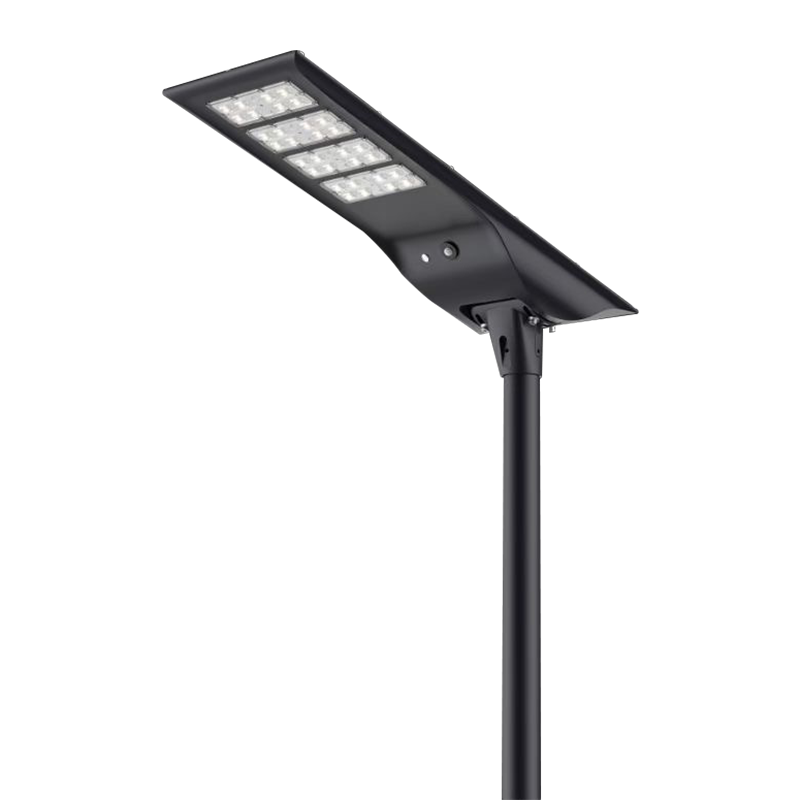 PY-SLST06-80W Solar LED Street LightAn 80W solar streetlight with 65W panel and 12.8V 36Ah battery, automatic brightness adjustment, and weather resistance for off-grid paths and public areas.View Product →
Also confirm how the controller behaves in a long cloudy spell and whether the battery is replaceable on site. A sealed unit with a non replaceable battery has a defined end of life, which should be reflected in the warranty.
Factory Evidence Beats Catalogue Claims
A catalogue can be produced from a trading office. Verification needs a factory. For a project order, ask for the business licence with a factory address that matches the audit location, and check that the ISO 9001 scope actually covers luminaire manufacturing rather than sales. Reports should name the model being purchased, not a similar one from two years ago.
- Business licence and factory address matching the inspection site
- ISO 9001 certificate with a manufacturing scope
- CE and RoHS reports bearing the exact model number
- IP and surge test reports from a named laboratory
- Burn in and ageing test record per production batch
- Written warranty terms covering driver, LED module and battery where applicable
Tool and mould ownership is another useful probe. A supplier that develops its own housings can support a modified arm, a different colour or a customised bracket without a long tooling delay. Companies that only assemble purchased housings cannot.
Lead Times, Packing and Spare Parts
An eight week delivery window is achievable but tight, and it should be broken down rather than accepted as a single number. A realistic split is seven to ten days for a sample, twenty five to thirty five days of production for 500 to 2000 units, and twenty to thirty days of sea freight. Request the production schedule in writing with the order confirmation.
Packing deserves the same attention. Ask about drop test results, master carton quantity, pallet configuration and marking requirements, because damaged optics on arrival are a common and avoidable loss. For orders above a few hundred units, request two percent spare drivers and LED modules, and confirm the spare parts availability period after the warranty ends. A supplier that cannot state a parts period in years has not planned beyond the current shipment.
A Practical Qualification Sequence
The fastest way to compare municipal street lighting suppliers is to run every candidate through the same sequence, so the answers are directly comparable.
- Send one specification sheet listing road class, pole height, spacing, control requirements and target warranty.
- Request photometric files and a simulation for your own geometry, not a generic sample layout.
- Order a sample of the exact wattage and check colour, finish, sealing and tool free access on arrival.
- Ask for two reference projects in a comparable climate, with installed dates.
- Place a pilot order of 20 to 50 units and inspect before releasing the main volume.
- Fix warranty, spare parts and response time in the contract before the production order.
Each step is cheap compared with a failed acceptance test on a thousand fittings. Most procurement teams that skip the pilot regret it in the second year of service.
Getting a Checked Proposal
Ninghai Poda Electrical Appliance, founded in 2011 and based in Ningbo, China, manufactures LED street lights, solar street lights, flood lights, high bay lights, garden lights and wall packs, with housing design, mould development and finished assembly carried out in its own plant. Products are exported to more than fifty countries, and the portfolio includes CE, TUV and RoHS certified models alongside smart and integrated solar versions. Send your road class, pole spacing and control requirements through the contact page, and ask for the photometric file and driver specification with the quotation. A proposal that arrives without them is not yet a proposal.
Previous Post
Outdoor Basketball Court Lighting Standards: Lux, Glare, and Fixture Selection
Next Post
Lighting for Parks and Trails: How to Choose Fixtures, Levels and Power Sources
Related Products

Our Products
Keep In Touch
export@polaryang.cn
+86-574-65167530
Xue'ao Qiangjiao Town, Ninghai County, Ningbo, Zhejiang, China
Contact Us
Copyright © Ninghai Poda Electrical Appliance Co., Ltd. Rights Reserved.
Wholesale LED Lighting Manufacturer
OEM Solar Lighting Factory
