 English
 Español
+86-13777012108
(WhatsApp/WeChat)
Home / News / Industry News / LED Soccer Field Lighting: Lux Levels, Pole Layout, and Luminaire Choice
LED Soccer Field Lighting: Lux Levels, Pole Layout, and Luminaire Choice
A club repainting its pitch lines and adding a second training night usually opens the lighting conversation with a simple question: how many floodlights do we need? That is the last decision to make, not the first. LED soccer field lighting is settled by three figures agreed before any quotation is compared: the maintained illuminance on the playing surface, the uniformity across that surface, and the glare limit for players and for the nearest houses. Once those are fixed, pole height, fixture wattage and aiming diagrams follow naturally.
The sections below work through those figures, the limits set by poles that already exist, and the outdoor details that separate a bright installation from one that is still performing properly after five winters.
Content
- 1 Set the Lux Target Before You Compare Fixtures
- 2 Uniformity and Glare Decide Whether Players Trust the Light
- 3 Pole Layout and Mounting Height Cap the Result
- 4 What LED Changes Compared With Metal Halide
- 5 Outdoor Details That Decide Year Five Performance
- 6 A Buying Checklist for Project Teams
- 7 Matching Fixtures to the Pitch in Front of You
Set the Lux Target Before You Compare Fixtures
Lux on the pitch, not lumens on the carton, is the currency of a sports lighting design. A 1000 W fixture and a 500 W fixture can produce the same result when the optics and the aiming differ, which is why a supplier quoting only wattage tells you very little. Most outdoor soccer specifications fall into a small number of bands, and the standard that governs your league or country will name the exact values you must hit. Confirm them before tender, because moving from a training target to a competition target can double the fixture count and change the pole plan. Projects that need a broader view of how these specifications are assembled can start from this guide to choosing LED stadium lighting.
| Level of play | Maintained average illuminance | Uniformity, minimum to average | What it usually means on site |
|---|---|---|---|
| Training and recreational | 75 to 100 lux | 0.4 to 0.5 | Four poles, moderate heights, dimming used for junior sessions |
| Amateur and regional competition | 200 lux | 0.5 to 0.6 | Six poles, careful aiming, spill light checked near housing |
| Professional, not televised | 500 lux | 0.6 to 0.7 | High masts, cross aiming, vertical illuminance also measured |
| Televised matches | 1000 lux and above | 0.7 and above | Flicker free drivers, camera facing vertical light levels |
Two practical notes. First, maintained values already allow for dirt and lumen depreciation, so a design has to start above the target rather than exactly at it. Second, the same standard usually sets a vertical figure alongside the horizontal one. Players judge a ball in the air by vertical light, and a scheme that only satisfies a horizontal grid can look flat from the touchline even when the numbers pass.
Uniformity and Glare Decide Whether Players Trust the Light
Uniformity is the lowest point on the measurement grid divided by the average. A pitch can average 300 lux and still feel badly lit if the corners fall to 90. Competition work is normally specified at 0.6 to 0.7, training pitches at 0.4 to 0.5, and the way the grid was built matters as much as the figure. A nine point grid flatters a design, while a fifteen point grid or a full grid is a fairer test, and the calculation should use the real mounting height and the real aiming angles.
Glare limits are the other half of comfort. Ratings around GR 50 are common for outdoor soccer, and they are reached through asymmetric optics, deliberate cross aiming, and visors or backlight shields, not by dimming the whole installation. Where a pitch sits beside houses or a road, spill light and upward light limits will shape the design as much as the lux target does.
Ask for three things alongside the price: the lighting calculation file with the grid and maintenance factor, the aiming diagram, and the photometric file for each luminaire so the design can be re-run independently. A quotation without those is an estimate dressed up as a design.
Pole Layout and Mounting Height Cap the Result
Where the poles stand limits everything else. Four corner poles keep equipment off the touchline, but they throw light across the whole field and demand high mounting points to control glare and shadowing. Six or eight poles along the sides deliver better uniformity at lower heights, and are often the only option when a running track or a fence line has already fixed the positions.
As a working rule, taller poles allow shallower aiming angles and softer light at eye level. Aiming points are usually placed at roughly a third and two thirds across the pitch rather than at the centre circle, which spreads output more evenly between poles and reduces the hot spot that players notice first. Existing masts deserve a structural check before new fixtures go up. LED replacements are lighter than the metal halide units they replace, but a larger number of smaller fixtures can still raise wind load on an older pole, and the mounting brackets have to suit the new fixing centres.
What LED Changes Compared With Metal Halide
The main gains from LED on a soccer field are control and running cost rather than raw brightness. A modern floodlight puts light where the design needs it, which is why an LED scheme often reaches the same lux with fewer kilowatts of connected load.
- Instant full output and instant restrike, so sessions can be split and lights switched off in between without a warm up delay.
- Dimming to roughly half output for junior or training use, with the saving visible on the electricity bill.
- Better optical control, so spill light and glare can be managed without blocking useful output.
- Fewer maintenance visits, which matters most where a cherry picker or crane has to be hired.
- Lower weight per fixture, although surge protection and heat management then become the critical design points.
An older metal halide installation is not automatically wrong, but it is harder to tune and dearer to run. Where a club replaces lamps one at a time, mixing technologies on the same pole tends to produce patchy uniformity and complicates the control gear.
Outdoor Details That Decide Year Five Performance
Pitch lighting lives outdoors in wind, rain and voltage that is rarely clean. Two luminaires with identical photometrics can behave very differently after three years because of housing and driver choices, and those differences usually show up as the same handful of site complaints.
| Symptom | Usual cause | What to check |
|---|---|---|
| Dark band down one side | Aiming drift or one failed driver | Aiming record against installed angles, driver status at the pole |
| Condensation behind the glass | Gland or breather not matched to the housing | IP66 sealing, pressure equalisation, torque on the cable gland |
| Driver failures after storms | Surge protection sized for a clean grid | Surge rating at the luminaire plus a separate device at the pole |
| Corroded brackets and screws | Mixed metals and salt air | Die cast aluminium body, stainless fasteners, stated corrosion class |
| Visible flicker on camera | Driver not suited to broadcast work | Flicker free driver and a site test at match lighting levels |
For coastal sites and pitches near salt water, the corrosion class matters more than the IP number. IP66 keeps water out of the housing, but it says nothing about how the aluminium and the coating behave after a decade of salt air, and that is where lifetime cost is really decided.
A Buying Checklist for Project Teams
- Confirm the competition level and the exact standard it refers to, in writing.
- Obtain the lighting calculation with grid, maintenance factor and aiming plan.
- Check pole condition, positions and wind load before fixing fixture counts.
- Specify IP66, die cast aluminium, stainless fasteners and the corrosion class the site needs.
- Require surge protection rated for the local network, plus a separate device at the pole.
- Agree the control plan: dimming levels, switching zones and who operates them.
- Book a night commissioning measurement against the design, not against a visual impression.
- Keep the photometric file and the aiming record for the next maintenance round.
Matching Fixtures to the Pitch in Front of You
Fixture size should follow the role the pitch plays in the season. A full size competition pitch lit from high masts needs high output floodlights with beams wide enough to cover the aiming zone without spilling behind the goal. A unit such as the 1200 W model in the PYSP08 range gives the output headroom that corner pole layouts ask for.
 PY-SP08 1200W LED Floodlight for High-Mast PitchesA 1200 W LED floodlight with die-cast aluminium housing and heat dissipation, suited to full-size pitch corner pole layouts requiring output headroom.View Product →
Mid size and training pitches rarely need that ceiling. A 500 W floodlight matched to a six pole layout keeps uniformity in range while cutting connected load, and dimming covers the evenings when only half the surface is in use.
 PY-FL05 500W Energy-Saving LED Floodlight for Training PitchesA 500 W LED floodlight described for outdoor locations, with energy-saving design; suited to six-pole training pitch layouts where connected load matters.View Product →
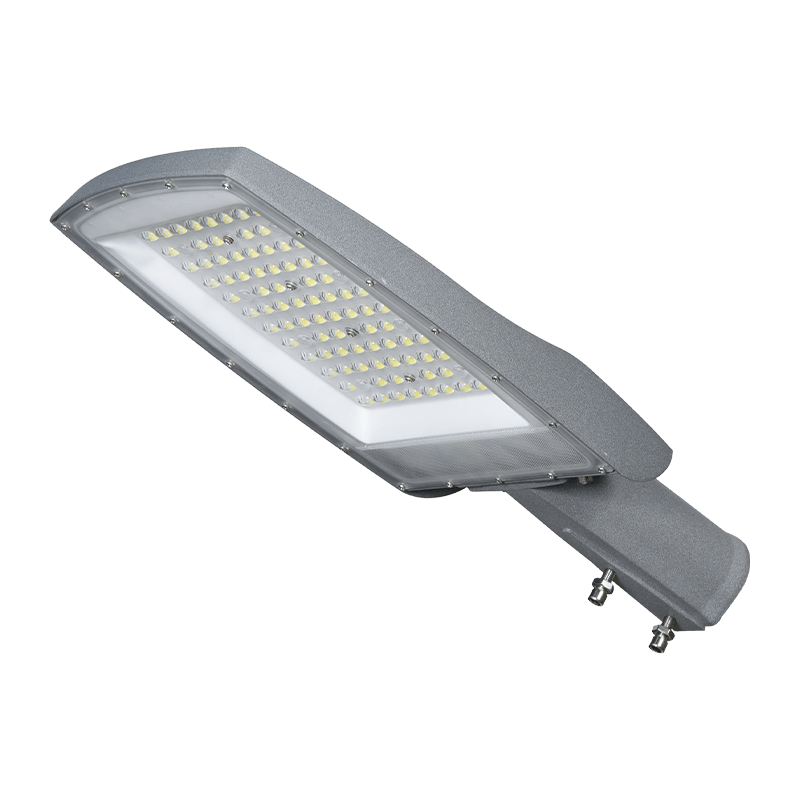
Areas around the pitch are often overlooked and then lit with whatever is left over. A dedicated 120 W stadium style street light keeps warm up zones, access paths and perimeter walkways usable without adding glare to the playing surface itself.
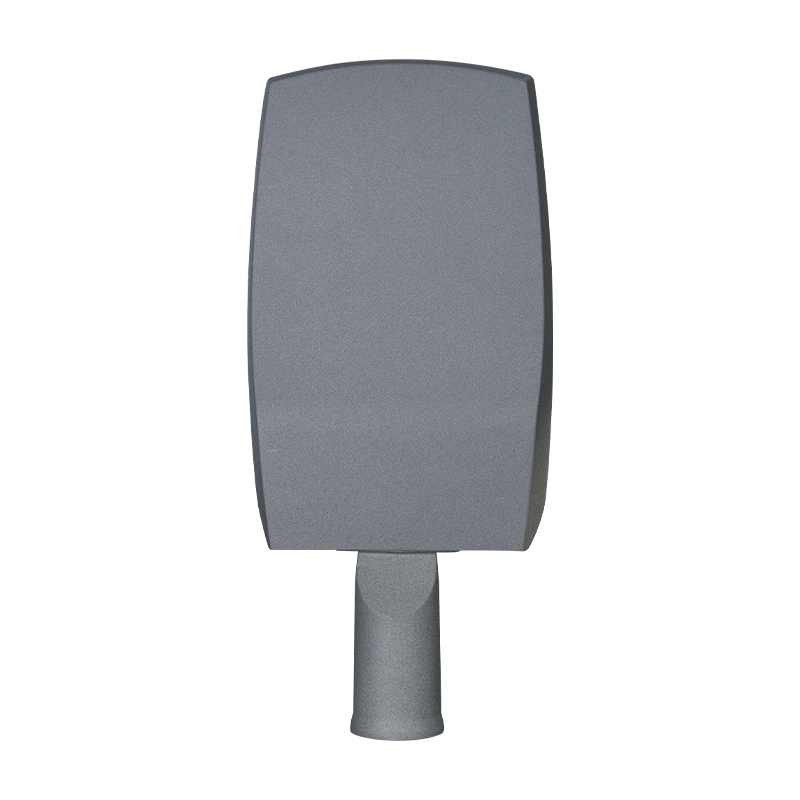 PY-LED612L 120W Stadium Street Light for Perimeter AreasA 120 W LED street light with die-cast aluminium body and even optical distribution, suited to warm-up zones, access paths and perimeter walkways.View Product →
Send over your pitch dimensions, pole positions and the level you play at, and the scheme can be checked against the numbers above before anything is ordered. Working from drawings and photometric files rather than a wattage list is usually the difference between a system that passes commissioning on the first night and one that has to be re-aimed after the first match. You can contact our lighting team with your project details to get that review started.
Previous Post
Light Pole Inspection: How Often to Check, What to Look For, and Repair Priorities
Next Post
led parking lot lights retrofit: Applications, Selection Criteria, and Practical Guidance
Related Products

Our Products
Keep In Touch
export@polaryang.cn
+86-574-65167530
Xue'ao Qiangjiao Town, Ninghai County, Ningbo, Zhejiang, China
Contact Us
Copyright © Ninghai Poda Electrical Appliance Co., Ltd. Rights Reserved.
Wholesale LED Lighting Manufacturer
OEM Solar Lighting Factory
