 English
 Español
+86-13777012108
(WhatsApp/WeChat)
Home / News / Industry News / LED Parking Lot Lighting: How to Choose Wattage, Optics, and Pole Layout
LED Parking Lot Lighting: How to Choose Wattage, Optics, and Pole Layout
A 120-space retail lot gets relamped with 300W LED fixtures on 30-foot poles set 120 feet apart. Two months later the property manager is fielding complaints about dark aisles and glare that blinds drivers backing out of stalls. The fixtures were fine. The layout was not. Parking lot lighting is a geometry problem before it is a product problem, and wattage is the last decision to make, not the first.
The practical answer is to work backward. Set the light level you need on the pavement, derive pole height and spacing from that, then choose the optic that puts light where it is useful. Wattage, color temperature, housing material, and certifications follow from those three steps.
Content
- 1 Set the Light Level Before You Shop
- 2 Wattage, Pole Height, and Spacing Work as One System
- 3 Match the Fixture Type to Each Zone
- 4 Optics: The Specification Most Buyers Skip
- 5 Specifications Worth Verifying Before You Order
- 6 Solar Versus Grid-Connected Parking Lot Lighting
- 7 Sourcing, Customization, and Lead Time
- 8 A Practical Order of Operations
Set the Light Level Before You Shop
Commercial lots in North America are typically designed to an average of 0.5 to 1.5 foot-candles across the parking field, with 2 to 5 foot-candles under canopies, at entries, and along pedestrian routes. The number that gets ignored is uniformity: a ratio of 4 to 1 or better between the brightest and darkest points on the pavement. A lot can hit its average target and still feel unsafe, because the eye reads the dark gaps between pools of light as hazards.
Two other numbers matter as much. Color temperature of 4000K to 5000K keeps the scene readable and helps camera systems, while 3000K suits residential-adjacent properties. Glare control is the second: a 500W fixture aimed flat across a lot will generate more complaints than a 150W fixture with a properly shielded optic, because discomfort glare is what drivers actually notice.
Wattage, Pole Height, and Spacing Work as One System
You cannot choose wattage in isolation. Output, mounting height, and pole spacing are three variables in the same equation, and changing one changes the others. These combinations show up repeatedly in commercial layouts.
| Fixture output | Mounting height | Suggested pole spacing | Typical application |
|---|---|---|---|
| 50W to 100W | 12 to 15 ft | 40 to 50 ft | Perimeter rows, small lots, walkway edges |
| 120W to 200W | 18 to 25 ft | 60 to 80 ft | Standard aisles, medium commercial lots |
| 240W to 300W | 25 to 30 ft | 90 to 120 ft | Wide aisles, dealerships, main drives |
| 300W to 500W flood | 15 to 30 ft, wall or pole | Not applicable | Storage yards, perimeter, facade wash |
Treat the table as a starting point. Ask for an isolux plot run against your actual pole locations and asphalt reflectance, not just a fixture datasheet.
Match the Fixture Type to Each Zone
A parking lot is not one lighting problem, it is four. Drive aisles, the parking field, the building perimeter, and the entry all have different requirements, and using one fixture type everywhere is the most common cost mistake.
Pole-mounted street light style fixtures for the field and aisles
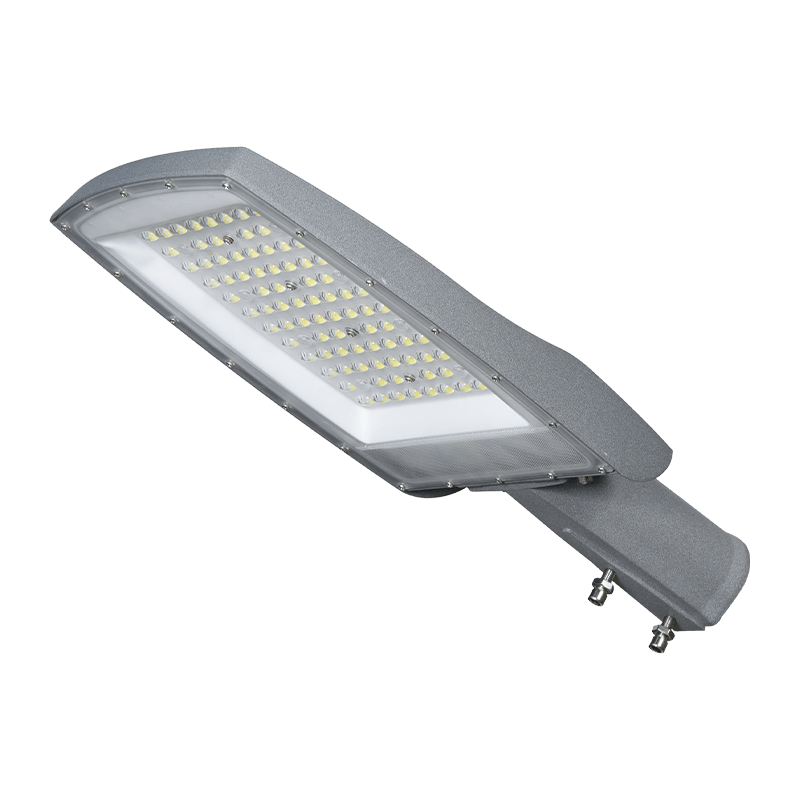
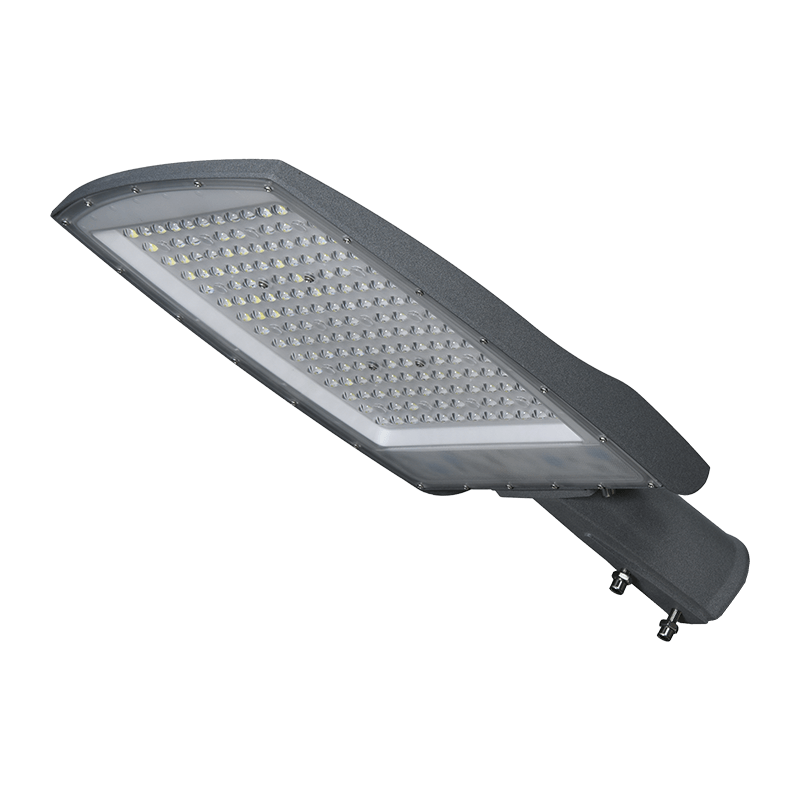
For the main field and drive aisles, a street light style fixture on a pole is the standard choice. It delivers a controlled asymmetric distribution, a clean look for the property, and easy service access. Look for a die-cast aluminum housing, IP65 or better, and a distribution pattern matched to your spacing. A 200W unit at 25 feet is a workable starting point for a 60 to 80 foot pole grid.
 PY-LED519-200W Cast Aluminum LED Street LightFor pole-mounted main field and drive aisle lighting, this 200W cast-aluminum LED street light offers weather-resistant outdoor construction.View Product →
Flood lights for perimeter rows and storage yards
Flood lights solve a different problem: covering an irregular area, a rear storage yard, or the outer edge of a lot where a pole grid is impractical. They can be mounted on shorter masts or directly on the building wall. Because flood optics spread light more widely, use them where uniformity across a large open surface matters more than sharp cutoff at a property line. Ratings from 100W to 300W cover most perimeter work.
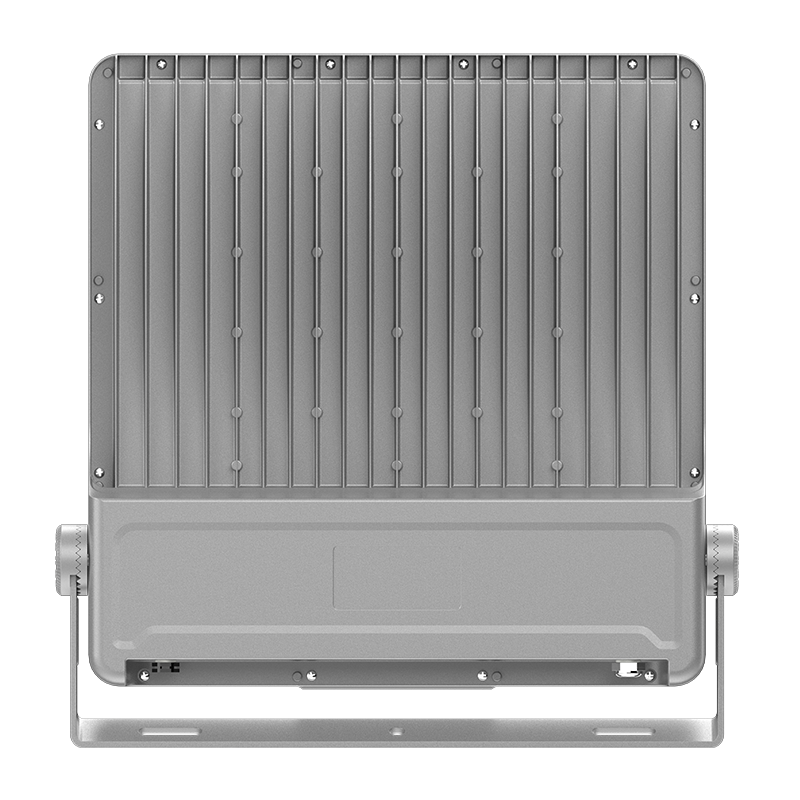 PY-FL02-300W Low Energy LED Flood LightA 300W IP66 floodlight for irregular areas and perimeter coverage, with modular replaceable components and -40°C to 60°C operation.View Product →
Wall packs and canopy fixtures for edges and entries
The zone within 20 feet of the building is usually better served by wall-mounted fixtures than by tall poles. Wall packs light doorways, service corridors, and the walk from the car to the entrance, which is where pedestrian-level illumination actually shapes perceived safety. Pair them with canopy fixtures under any overhang so the transition from a bright entry to a dimmer lot does not create a black hole effect.
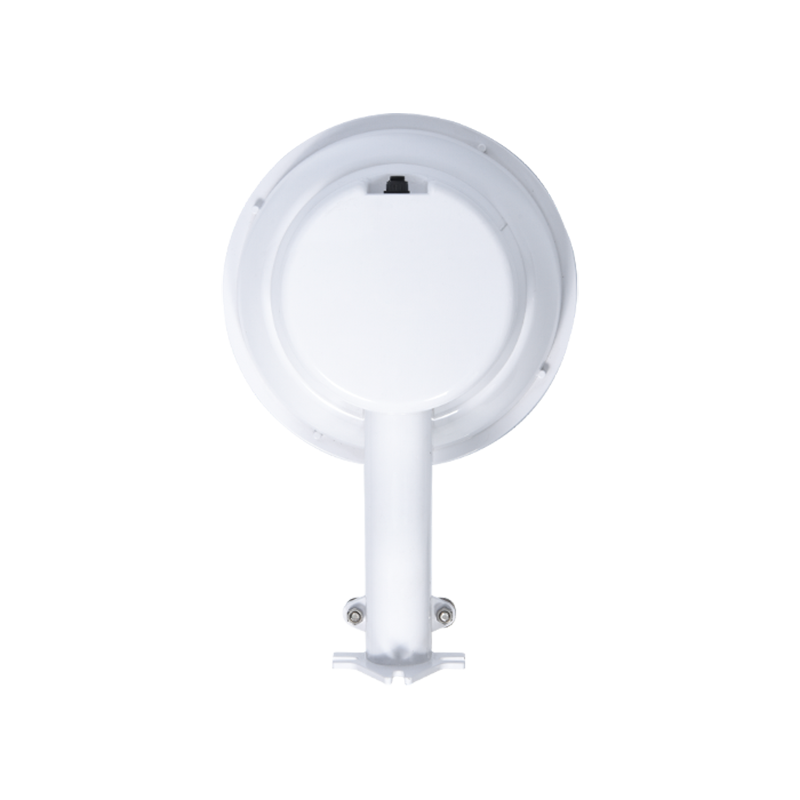 PY-WP9004 Outdoor Waterproof Wall Pack LightAn IP65 aluminum wall pack for building-adjacent doorways, corridors, and pedestrian paths, with sealed rain and dust protection.View Product →
Optics: The Specification Most Buyers Skip
The IES distribution type describes the shape of the light pattern, and it is worth more to your project than an extra 50W of output.
- Type II: narrow forward throw for walkways and tight aisles.
- Type III: the workhorse for parking aisles, throwing light asymmetrically from the pole.
- Type IV: wider forward throw for large open lots with generous spacing.
- Type V: circular, symmetrical pattern for center-pole and high-mast layouts.
Choosing Type V where Type III belongs is how a lot ends up with bright spots at the pole base and wasted light spilling onto neighboring property. If a photometric file is not available for a candidate fixture, that fixture is not ready for a commercial specification. For a wider view of how these distributions behave on public roads and shared corridors, see our notes on how LED street lighting is reshaping urban and campus roadway lighting.
Specifications Worth Verifying Before You Order
Once the layout is settled, these line items separate fixtures that last eight years from fixtures that fail in two.
- Ingress protection. IP65 minimum for pole fixtures, IP66 or IP67 for flood and wall units exposed to driving rain and irrigation spray.
- Surge protection. 10kV surge suppression protects the driver where overhead distribution and lightning exposure are common.
- Performance data. LM-79 reports for photometric output and LM-80 data for lumen maintenance over time.
- Housing and thermal design. Die-cast aluminum with adequate fin area keeps junction temperatures down; thin-wall housings and plastic bodies shorten service life.
- Certification. UL or ETL for North America, CE and TUV for European projects, RoHS for material compliance, and DLC listing where utility rebates apply.
- Warranty and spares. Five years is standard; confirm the terms on the driver and the LED board separately.
Solar Versus Grid-Connected Parking Lot Lighting
Solar makes sense when trenching or extending a service run would cost more than the fixtures themselves: remote lots, overflow fields, storage yards, and sites where electrical permits move slowly. Grid-connected remains the better choice for high-traffic commercial properties, because fixtures cost less per lumen, output is not limited by battery capacity, and maintenance is simpler.
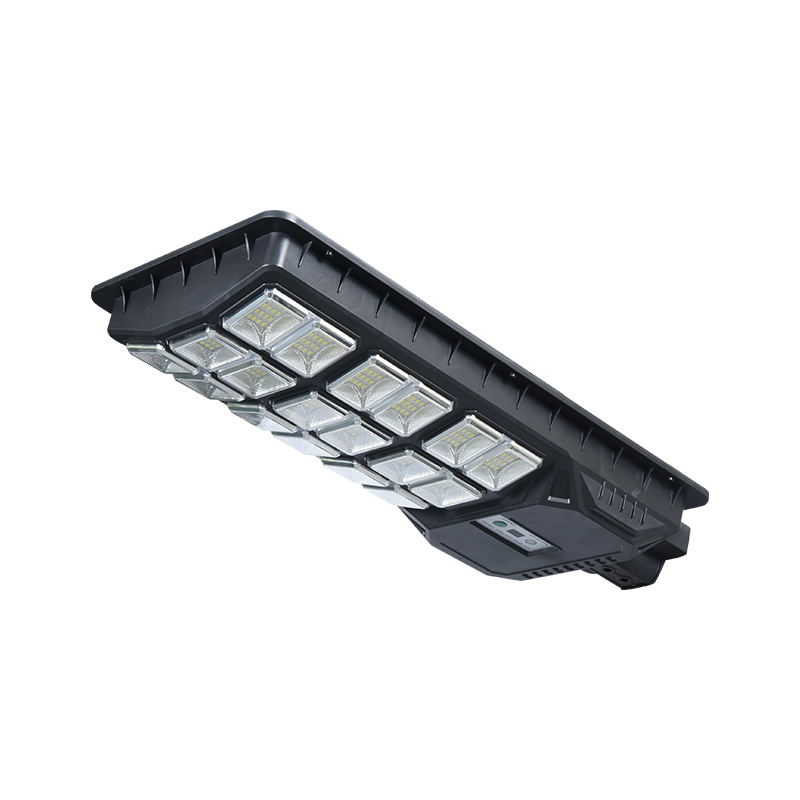
A middle path is common on larger sites. Run grid power along the main drive and use solar for the far perimeter where the conduit run is longest. Integrated solar street lights with lithium or lithium iron phosphate batteries have made this practical at 20W to 100W output levels.
Sourcing, Customization, and Lead Time
For project buyers, the difference between a smooth installation and a painful one often comes down to whether the supplier can work from your requirements instead of a fixed catalog. Unusual pole grids, specific color temperature targets, and private-label programs need to be settled at the tooling and design stage, not after the purchase order is issued.
Our company, Ninghai Poda Electrical Appliance, has manufactured LED outdoor lighting in Ninghai, Zhejiang since 2011. Design, mold development, and finished production are handled in-house, which lets us adjust housing design and optical configuration for a specific site rather than forcing a stock fixture into an unsuitable space. The range covers street lights from 50W to 240W, flood lights from 30W to 1200W, high bay lights, wall packs, garden lights, and a full solar line, with most units shipping alongside CE, TUV, and RoHS documentation under an ISO 9001 quality system. Products reach more than 50 countries, with the United States, Germany, the United Kingdom, and Japan among the largest markets.
A Practical Order of Operations
The sequence that avoids both over-lighting and callbacks looks like this:
- Define target foot-candles and uniformity for each zone: field, aisle, entry, and perimeter.
- Fix pole locations based on the site plan, drainage, and existing utilities.
- Request photometric layouts from two or three suppliers using those exact pole locations.
- Compare delivered lumens and distribution type at equal uniformity, not headline watts.
- Verify IP rating, surge protection, certifications, and warranty terms.
- Install one sample fixture and measure it before committing to the full order.
That last step costs very little and catches most of the problems that otherwise surface after the poles are already set. If you have a site plan or a photometric target, send it to our team and we can tell you which fixture and distribution will hold the uniformity you need across the whole lot.
Previous Post
led parking lot lights retrofit: Applications, Selection Criteria, and Practical Guidance
Next Post
Industrial LED Light Fixtures: How to Specify Wattage, IP Rating and Mounting
Related Products

Our Products
Keep In Touch
export@polaryang.cn
+86-574-65167530
Xue'ao Qiangjiao Town, Ninghai County, Ningbo, Zhejiang, China
Contact Us
Copyright © Ninghai Poda Electrical Appliance Co., Ltd. Rights Reserved.
Wholesale LED Lighting Manufacturer
OEM Solar Lighting Factory
