 English
 Español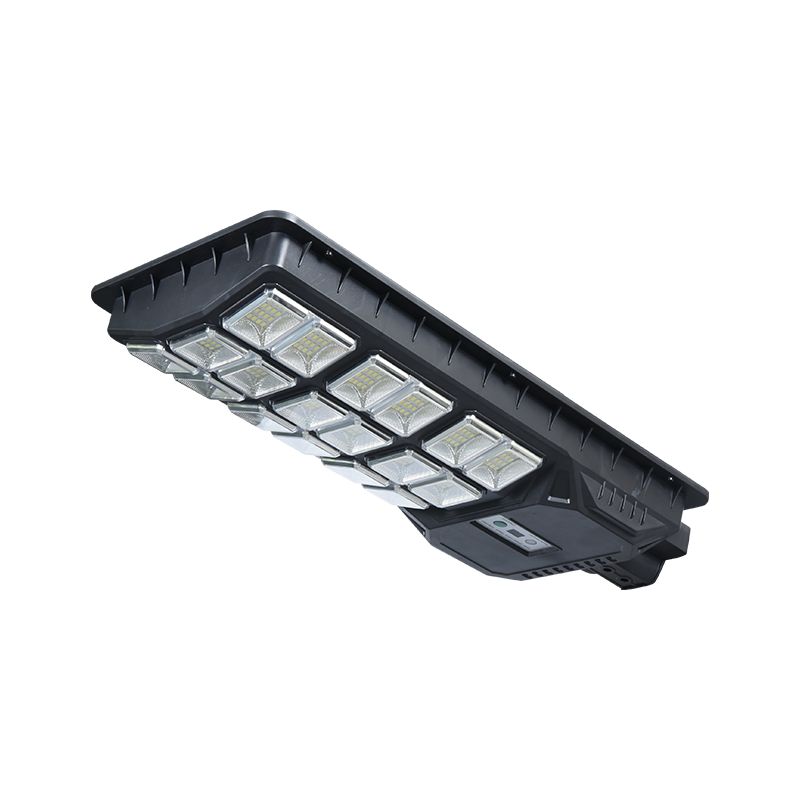
+86-13777012108
(WhatsApp/WeChat)
Home / News / Industry News / Industrial LED Light Fixtures: How to Specify Wattage, IP Rating and Mounting
Industrial LED Light Fixtures: How to Specify Wattage, IP Rating and Mounting
A warehouse with a 12 meter clear height, lit by 400W metal halide high bays, measuring 220 lux on the floor between the racks. Replacing like for like with another 400W fixture is the most expensive option on the table. Industrial LED light fixtures are specified in a set order: the visual task and the mounting height come first, the lumen output needed at floor level sets the wattage, and the housing, driver and certification paperwork decide whether the fixtures still perform in year five. Work through that order and a lighting upgrade stays predictable, in light level and in maintenance cost.
Content
- 1 Start With the Space, Not the Wattage
- 2 Matching Fixture Type to Mounting Height
- 3 High Bay Fixtures for Factory Floors and Warehouses
- 4 Enclosure Ratings, Heat and Certification Paperwork
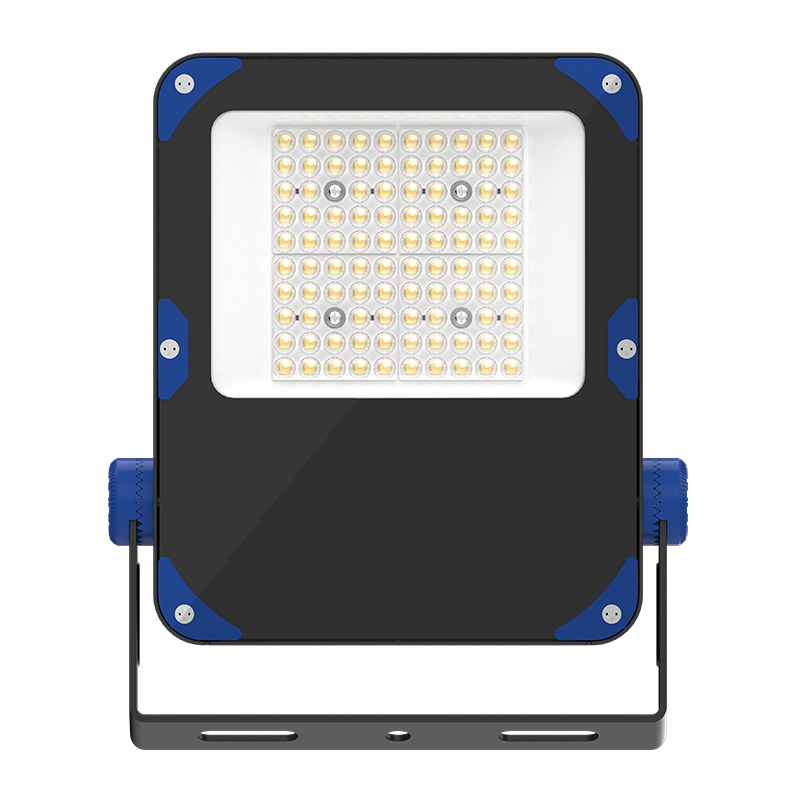
- 5 Flood Fixtures for Yards, Facades and Loading Areas
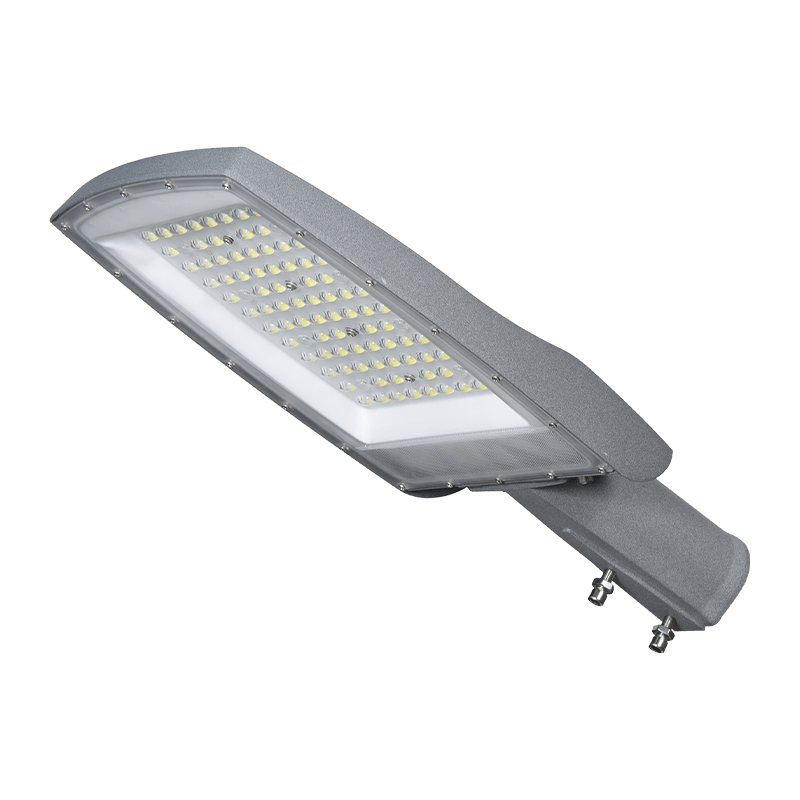
- 6 Street Fixtures for Roads, Parking and Sports Areas
- 7 Solar Fixtures Where the Grid Connection Is Unreliable
- 8 What Belongs in the Purchase Order
Start With the Space, Not the Wattage
Two warehouses with the same 3000 square meter floor can need completely different fixtures. What decides the answer is ceiling height, rack layout, surface color and the visual task performed underneath.
Working targets used in industrial practice:
- Circulation aisles, loading bays and outdoor storage: 100 to 200 lux
- General assembly, packaging and inspection: 300 to 500 lux
- Detailed electronics work, quality control benches and fine machining: 750 lux and above
Once the target lux and the mounting height are fixed, the rest is arithmetic. A 200W LED high bay delivering about 28,000 lumens at 140 lumens per watt will cover roughly 220 to 280 square meters from a 10 meter mounting height, provided the layout keeps a uniformity ratio of 0.5 or better. Lower the fixture to 6 meters and it covers less floor but concentrates more light underneath. Raise it to 15 meters and a narrow beam stops being a preference and becomes a requirement, because a 120 degree distribution loses too much light to the sides and leaves the aisle edges dim.
Matching Fixture Type to Mounting Height
Industrial is not a single application. It covers the production hall, the yard, the internal road and the wall beside the dock door, and each of those has a fixture family that suits it.
| Fixture family | Typical wattage | Mounting height | Typical industrial use |
|---|---|---|---|
| High bay | 100W to 300W | 5 m to 15 m | Production halls, warehouses, large workshops |
| Flood light | 50W to 500W | 3 m to 12 m | Loading yards, facades, container storage, construction sites |
| Street light | 50W to 240W | 6 m to 12 m | Internal roads, parking areas, perimeter lighting |
| Wall pack | 20W to 60W | 2.5 m to 4 m | Building exteriors, walkways, dock doors, service corridors |
| Solar flood or solar street | 20W to 400W | 3 m to 8 m | Remote depots, off-grid yards, sites without a reliable supply |
The wattage column tells you less than it appears to. A 20W wall pack and a 300W high bay are both industrial fixtures, but they are chosen for entirely different mounting heights, beam angles and coverage areas.
High Bay Fixtures for Factory Floors and Warehouses
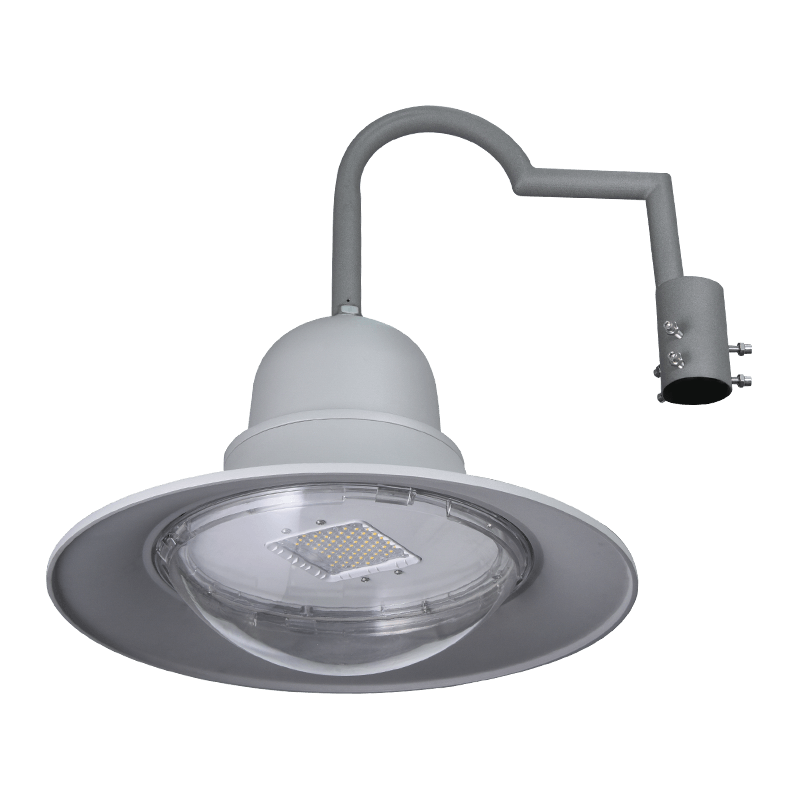
Above 5 meters, high bay fixtures take over. The round UFO body and the rectangular linear body solve slightly different problems. The round unit throws a circular pattern that suits open floor, while the linear unit spreads light along a rack aisle and reduces the dark band that forms between racking rows.
Heat is the real differentiator at this height. A die-cast aluminum body with a finned back runs cooler than a compact steel housing at the same wattage, and cooler LEDs lose less output over their service life. For a production hall, look for 100W to 300W units, a 60 or 90 degree beam, and a driver that can be replaced from below without dismantling the fixture.
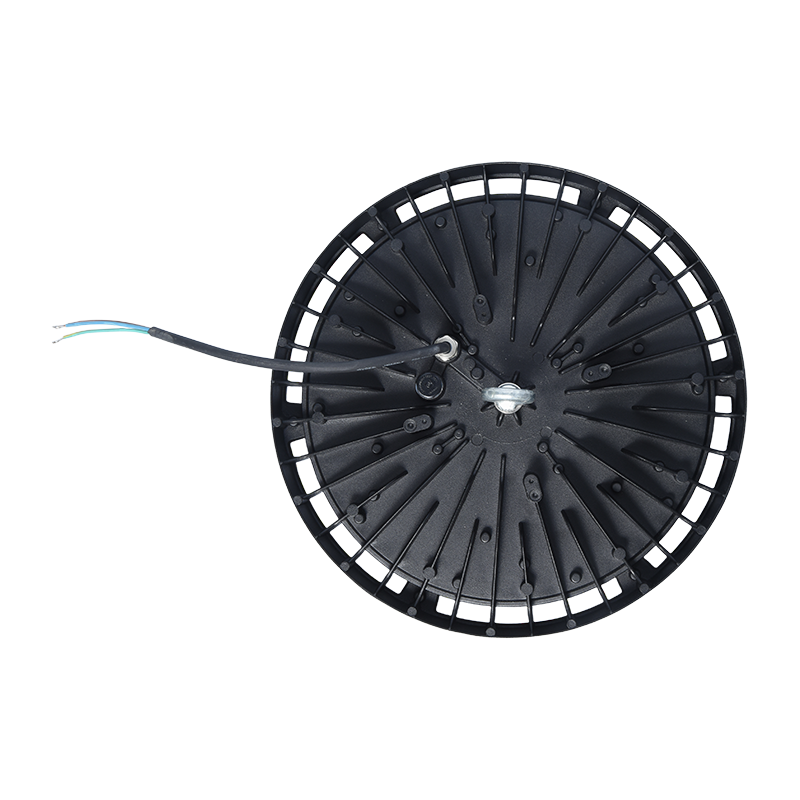 PY-LED916PAC-200W Cast Aluminum LED High Bay LightA 200W die-cast aluminum high bay with up to 26,000 lumens, over 130 lm/W and IP66 sealing for dusty, wash-down industrial spaces.View Product →
Enclosure Ratings, Heat and Certification Paperwork
Once the light level is right, the housing decides how long it stays right. Industrial environments punish fixtures with dust, humidity, vibration, ammonia, salt air and wash-down hoses, and the enclosure is the only barrier between the LED board and all of it.
Two ratings carry most of the weight in a purchase decision:
- IP rating, for dust and water ingress. IP65 is dust tight and protected against water jets. IP66 adds higher pressure jets, which matters near wash-down areas and at exposed coastal sites. IP67 and IP68 are reserved for fixtures that may be temporarily or continuously submerged.
- IK rating, for mechanical impact. IK08 covers a 5 joule impact, a sensible minimum for a fixture mounted at forklift height or next to a loading door.
Housing material matters just as much. Die-cast aluminum gives the LED board a direct thermal path to the outside air, so heat leaves the fixture instead of cooking the driver. Painted steel and plastic housings look similar on a quotation sheet and behave very differently after two summers on a roof. On coastal or chemical sites, ask for the salt spray hours on the coating and for stainless hardware, because a rusted bracket is what turns a ten year fixture into a three year fixture.
The paperwork is equally practical. The useful documents are not the ones printed on the carton:
- LM-80 and LM-79 test data for lumen maintenance, so rated life is backed by a test rather than a brochure
- IES photometric files, so the lighting design can be verified before the order is placed
- Certificates relevant to the destination market, such as CE and RoHS for Europe, and UL or DLC listing for North America
- ISO 9001 quality system evidence from the factory that will actually run the order
Flood Fixtures for Yards, Facades and Loading Areas
Yards, facades and loading areas are usually lit from a pole or a wall at 3 to 12 meters, which is flood territory. The specification that gets overlooked here is beam distribution, not power. A narrow 30 degree beam is right for a tall facade or a distant gate, 60 to 90 degrees covers a general yard, and 120 degrees stays close to the wall it washes.
Power range runs from about 50W at a doorway to 500W and beyond for a container yard. Two smaller fixtures on separate poles almost always beat one large fixture on a single pole, because the second position fills the shadows that a single source throws behind pallets and parked trailers.
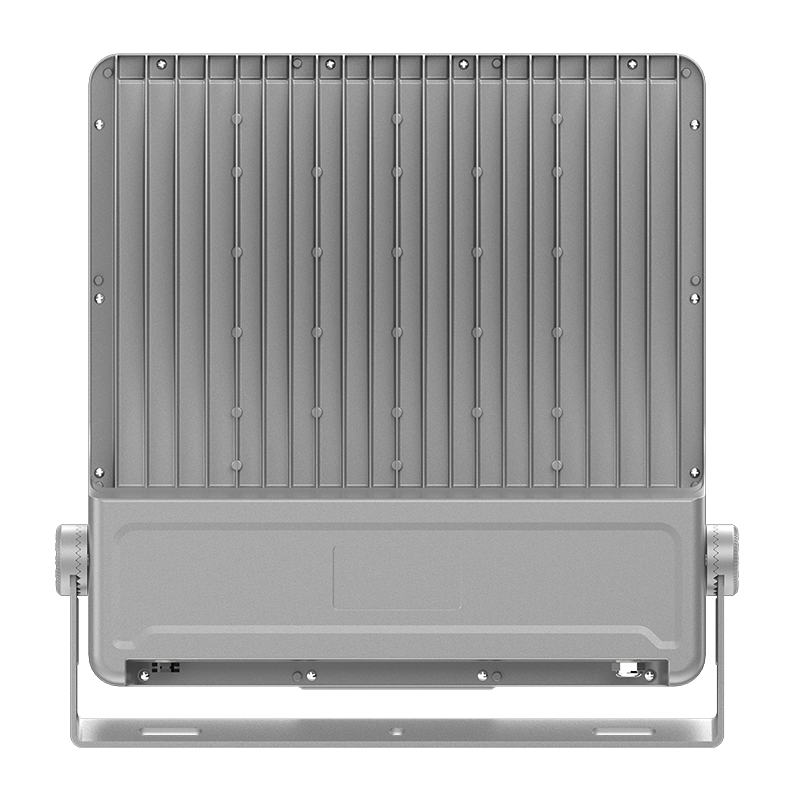 PY-FL02-300W Low Energy LED Flood LightA 300W IP66 floodlight built for -40°C to 60°C operation, with modular replaceable components for ports, plants and large outdoor venues.View Product →
Street Fixtures for Roads, Parking and Sports Areas
Internal roads, car parks and perimeter lighting sit between 6 and 12 meters and follow a different logic. The goal is even illumination along a strip rather than a bright circle in one spot. A 100W to 150W street fixture on an 8 meter pole with 25 to 30 meter spacing is a common arrangement for a private road, but only when the distribution type matches the road width and the pole offset.
Where a facility also has a sports court or a stadium perimeter, the same poles and a similar fixture family can often cover both tasks. That only works if the aiming and the uniformity target are agreed first, so it is worth reviewing the factors that matter when choosing stadium lighting before a dual purpose layout is fixed. A road distribution aimed at a playing field fails both jobs.
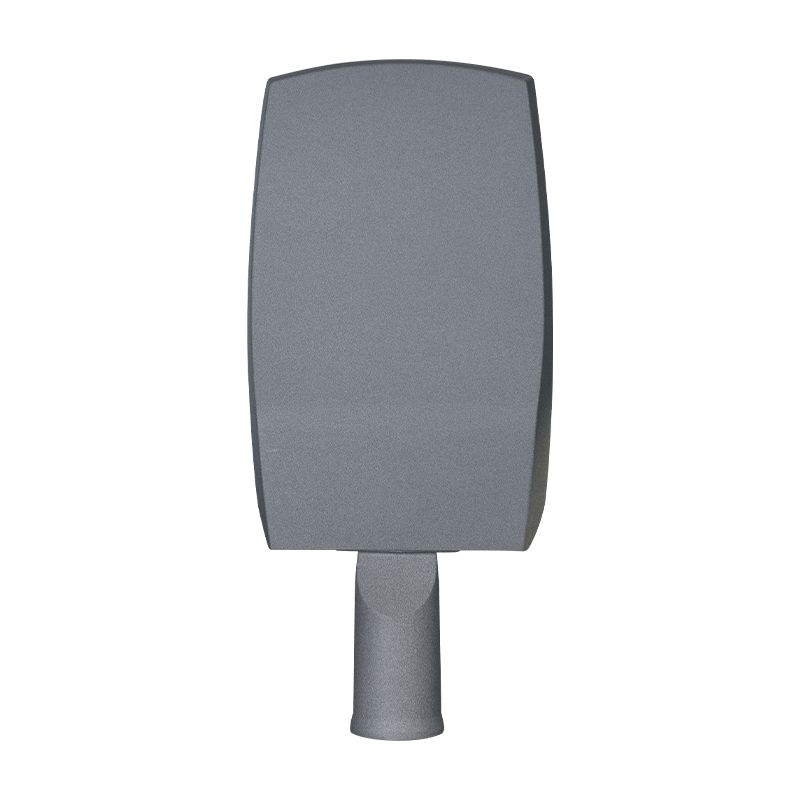 PY-LED612L-120W Stadium and Street LED LuminaireA 120W die-cast aluminum fixture with precise optics, IP66/IK08 ratings and modular parts for stadium or street installations.View Product →
Solar Fixtures Where the Grid Connection Is Unreliable
Not every industrial site has a usable supply at the point where light is needed. Container depots, quarry access roads, agricultural yards and temporary construction sites are the usual candidates for solar fixtures, and integrated units with lithium iron phosphate batteries have made them practical rather than decorative.
Three numbers decide whether a solar fixture is honest: daily energy consumption, battery capacity expressed in watt hours, and autonomy days. A 60W solar street light running 10 hours a night draws about 600Wh, so a 1.5kWh battery gives roughly two nights of reserve at a safe depth of discharge. Ask for the panel wattage, the battery chemistry, the autonomy figure at your latitude in the worst winter month, and the lumens delivered on the third night, not the first.
What Belongs in the Purchase Order
A clear specification document prevents most delivery disputes and reorders. Include the following items before the quotation is finalized:
- Fixture family, wattage and beam angle, each tied to a stated mounting height
- Target lux and uniformity at floor level, confirmed by an IES based layout
- Color temperature and CRI, for example 4000K at CRI 70 for a warehouse or 5000K at CRI 80 for inspection benches
- IP and IK rating, plus housing material and coating specification
- Driver type, and whether it can be replaced in the field without removing the fixture
- Certificates required by the destination market and by the project specifier
- Warranty terms, spare parts availability and lead time for repeat orders
Industrial LED light fixtures reward buyers who start from the task and the mounting height, then work outward to beam, enclosure and certification. When those four items line up, the results are measurable: fewer fixtures than the old metal halide layout, a lower connected load, and a maintenance schedule that stays empty for years.
A manufacturer with in house design, mold development and finished goods production can shorten that process, because beam angles, housings and driver choices can be adjusted to a project rather than forced into a catalog number. Our team works with importers, contractors and brand owners across more than 50 countries on exactly that basis. If you have a layout, a lux target or an existing fixture to match, send the details to our team and we will come back with a specification rather than a guess.
Previous Post
No previous article
Next Post
LED Factory Lighting: How to Specify High Bay Fixtures That Hold Up on Site
Related Products

Our Products
Keep In Touch
export@polaryang.cn
+86-574-65167530
Xue'ao Qiangjiao Town, Ninghai County, Ningbo, Zhejiang, China
Contact Us
Copyright © Ninghai Poda Electrical Appliance Co., Ltd. Rights Reserved.
Wholesale LED Lighting Manufacturer
OEM Solar Lighting Factory
