 English
 Español
+86-13777012108
(WhatsApp/WeChat)
Home / News / Industry News / LED Factory Lighting: How to Specify High Bay Fixtures That Hold Up on Site
LED Factory Lighting: How to Specify High Bay Fixtures That Hold Up on Site
A 400 W metal halide high bay hanging from a 9 meter ceiling in an assembly hall can usually be replaced by a 150 W LED fixture and still put more light on the work surface. That ratio is where most factory lighting projects start, and it is also where many of them go wrong. Teams buy on wattage, install on price, and then find that the floor is unevenly lit, the fixtures run hot, or the drivers fail inside two years.
The practical answer is to fix four numbers before opening any catalogue: the illuminance you need at task level, the mounting height, the beam angle that puts light where the work actually happens, and the environmental rating the space demands. Wattage is a result of those decisions, not an input. The sections below explain how the numbers interact and what to verify on a quotation before placing an order.
Content
- 1 Delivered Lumens and Efficacy Decide the Fixture Count
- 2 Matching Wattage and Beam Angle to Ceiling Height
- 3 Housing, Thermal Path and Driver Quality
- 4 IP, IK and Corrosion Ratings in Real Industrial Spaces
- 5 Perimeter, Yard and Off Grid Buildings
- 6 A Procurement Checklist Before You Place the Order
- 7 Working Directly With the Manufacturing Factory
Delivered Lumens and Efficacy Decide the Fixture Count
Factory lighting is specified in lux at the working plane, not in watts at the ceiling. Typical targets are 150 to 200 lux for general storage, 300 lux for assembly and packaging, 500 lux for inspection benches, and 100 to 200 lux for loading yards and internal roads. Once the target is set, the fixture count follows from lumens, not wattage.
A 200 W LED high bay running at 140 lumens per watt produces roughly 28,000 lumens. After allowances for light lost to the space and for normal lumen depreciation over the maintenance cycle, an effective figure of about 16,000 to 17,000 lumens reaches the floor. Drop the same fixture to 110 lumens per watt and the effective output falls to about 13,000 lumens, which means roughly a quarter more fixtures for the same result. That difference is usually larger than the price gap between a budget fixture and a properly engineered one, and it repeats across every replacement cycle for a decade.
Two specification details matter here. First, confirm whether the stated wattage is system wattage including driver losses or LED wattage only, because the two can differ by 8 to 12 percent. Second, ask for photometric files rather than a lumen number on a brochure, since a bare lumen figure says nothing about how the light is distributed.
Matching Wattage and Beam Angle to Ceiling Height
Beam angle and mounting height work together. A narrow beam from a high ceiling concentrates light but leaves gaps between aisles, while a wide beam from a low ceiling wastes light on the tops of racks and creates glare for anyone looking up. The table below gives workable starting points for open industrial interiors.
| Mounting height | Typical fixture wattage | Beam angle | Approximate spacing | Target illuminance |
|---|---|---|---|---|
| 4 to 6 m | 100 to 150 W | 90 to 120 degrees | 5 to 7 m | 200 to 300 lux |
| 6 to 9 m | 150 to 200 W | 90 degrees | 7 to 9 m | 300 lux |
| 9 to 12 m | 200 to 300 W | 60 to 90 degrees | 9 to 11 m | 300 to 500 lux |
| 12 to 15 m | 300 to 500 W | 45 to 60 degrees | 11 to 14 m | 300 to 500 lux |
Where racking is taller than half the mounting height, treat the aisles as separate lighting zones and use narrower optics over the picking faces rather than trying to flood the whole hall from one grid.
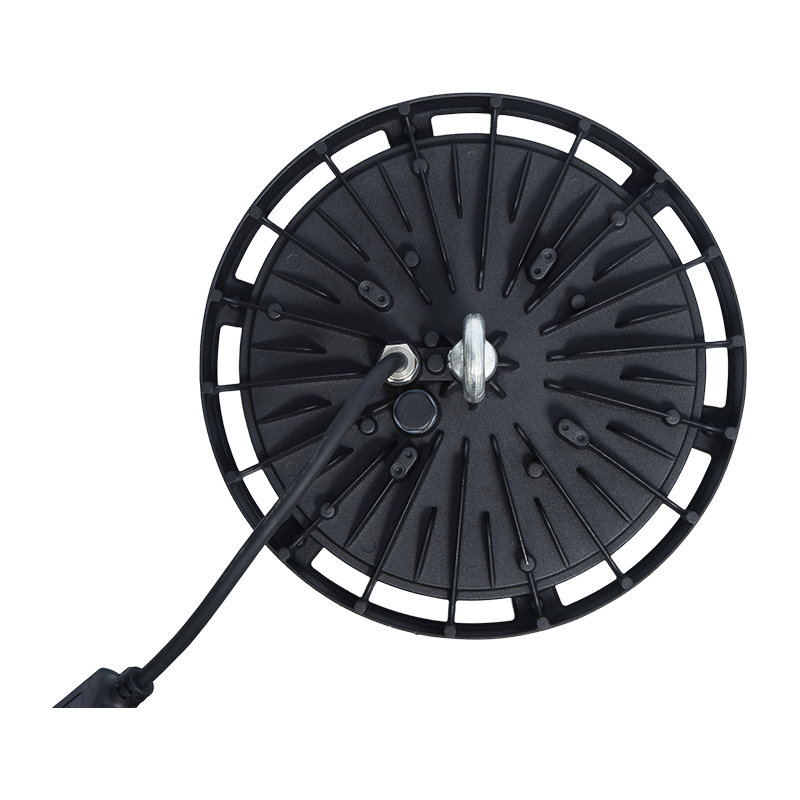 PY-LED916-150W Aluminum High Bay LightA 150W aluminum high bay with IP65 protection and heat-dissipating housing, suited to tall warehouse aisles where narrow optics and thermal reliability matter.View Product →
 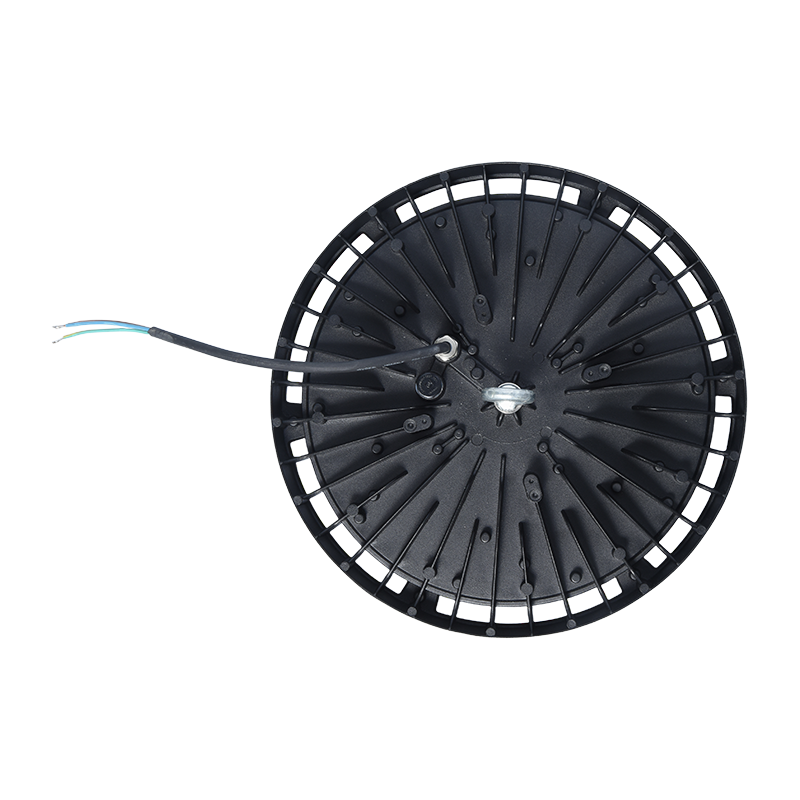 PY-LED916PAC-200W Cast Aluminum High Bay LightA 200W die-cast aluminum high bay with IP66 sealing and high-output LED chips, relevant for tall industrial zones needing durable thermal performance and water-jet resistance.View Product →
Housing, Thermal Path and Driver Quality
A high bay fixture is a thermal machine before it is a light source. LEDs convert most of their input into heat that must travel from the emitter through the board and the housing to the surrounding air. Die cast aluminium bodies with substantial fins handle that path far better than thin folded steel with a decorative heat sink, and the difference shows up in junction temperature, colour shift and how quickly the fixture loses output.
Check the ambient temperature rating as well. A fixture rated for 25 C operation and installed at 45 C in a foundry or a boiler room will run at reduced output and shortened life. Industrial grade products are typically rated to 45 or 50 C with a defined derating curve.
The driver deserves the same scrutiny. Ask for the surge protection level, which should be at least 6 kV and preferably 10 kV for sites with large motors and welding equipment, plus power factor and total harmonic distortion figures. Flicker is another practical issue: visible modulation upsets camera based inspection systems and can be uncomfortable for staff on long shifts. On a quotation, request the driver manufacturer, the warranty terms on the driver as a separate component, and lumen maintenance data rather than a simple lifetime claim.
IP, IK and Corrosion Ratings in Real Industrial Spaces
Ingress and impact ratings are where cheap factory lighting fails fastest. Dusty production areas need at least IP65, and areas washed down with hoses or exposed to process spray need IP66. In forklift traffic lanes, an impact rating of IK08 should be the floor and IK10 is a reasonable choice for low mounted fixtures that vehicles pass close to.
Corrosion matters in food processing, chemical plants and coastal sites. Look for powder coated die cast aluminium, stainless fasteners and gaskets that resist the specific chemicals in the space. If the facility is within a few kilometres of the sea, ask for salt spray test evidence, because inland rated housings can corrode within a season. Colour quality is the other invisible specification: neutral 4000 K or 5000 K light at CRI 80 or above is the practical baseline for assembly and inspection work, and consistent colour across batches prevents a mixed installation that looks patchy when one fixture is replaced years later.
Perimeter, Yard and Off Grid Buildings
Interior high bays are only part of a factory lighting project. Loading docks, container yards, tank farms and staff car parks usually need asymmetric flood lighting aimed at the ground rather than at the sky, with glare control that does not blind drivers approaching the gate. A useful primer on how floodlight optics and beam patterns differ is available in this explanation of what a floodlight actually is, which helps when writing specifications for exterior zones.
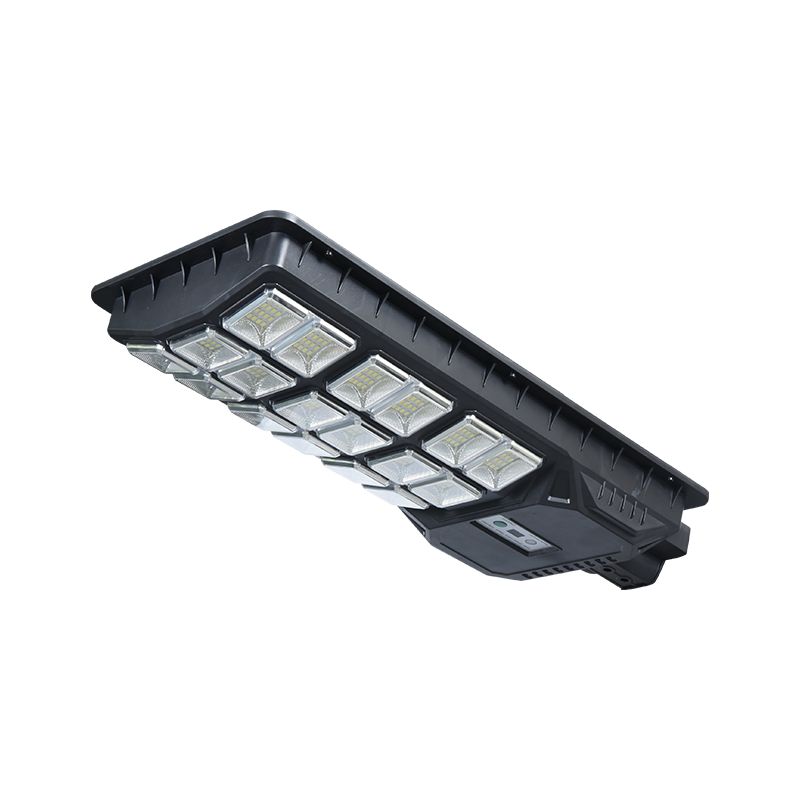
For remote workshops, guard houses, storage yards and internal roads where trenching a supply cable is expensive, solar powered fixtures remove the cabling cost entirely. Lithium iron phosphate batteries handle high ambient temperatures better than older chemistries, and integrated solar street lights reduce the installation to a single post and a few bolts, which matters when a site has limited maintenance staff.
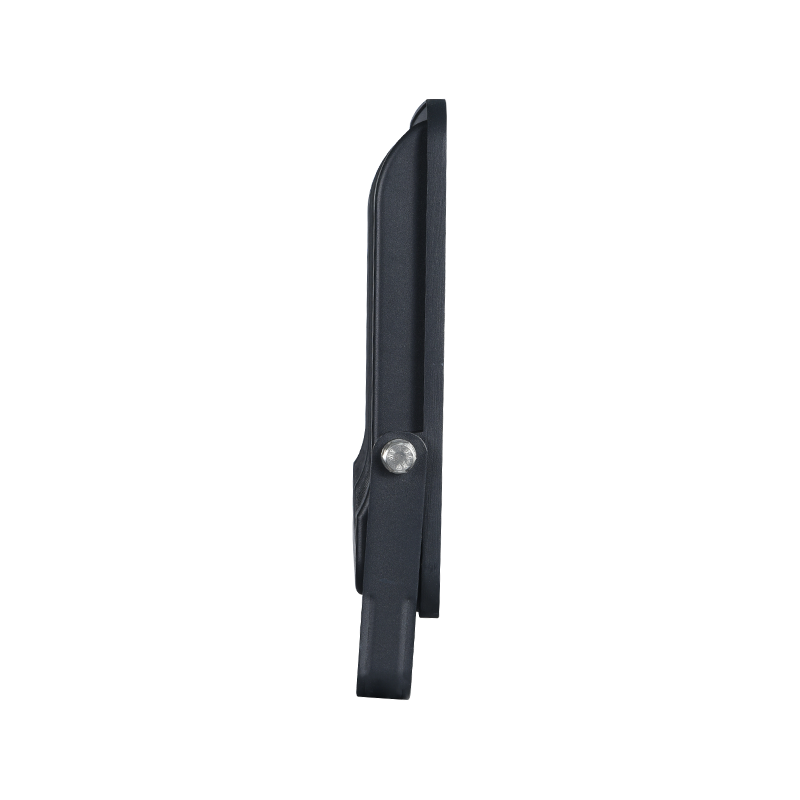 PY-H05-200W Outdoor Low Energy LED Flood LightA 200W outdoor flood light with IP66 protection and 50,000-hour lifespan, suited to industrial areas, plazas and ports where energy and maintenance costs matter.View Product →
A Procurement Checklist Before You Place the Order
Most disappointing factory lighting installations trace back to a quotation that answered the wrong questions. Use the following list to compare suppliers on the same basis.
- Illuminance target in lux for each zone, with the mounting height stated.
- System wattage and delivered lumens, plus efficacy in lumens per watt.
- Beam angle and optical distribution, supported by photometric files.
- Colour temperature, CRI and colour consistency across the order.
- Driver specification, surge protection level and flicker performance.
- IP and IK ratings, ambient temperature rating and derating curve.
- Compliance documents such as CE, TUV and ROHS, plus salt spray evidence where relevant.
- Warranty terms, spare parts availability and lead time for a repeat order.
- Mounting hardware, hook or bracket compatibility and installation instructions.
- A pilot order of two or three units for measurement on site before full release.
That last item is the cheapest risk control available. Measuring a sample fixture with a light meter in the actual space takes an afternoon and removes most of the uncertainty from a five figure purchase order.
Working Directly With the Manufacturing Factory
When a project needs non standard wattages, specific colour temperatures, private labelling or a housing that fits an existing bracket, buying from a manufacturer rather than a trading company shortens the feedback loop considerably. Ninghai Poda Electrical Appliance Co., Ltd. has operated from Ninghai in Zhejiang Province since 2011, employs more than 100 staff, and exports LED lighting to over 50 countries including the United States, the United Kingdom, Germany, Russia, Japan, South Korea, India and South Africa.
The company covers the full chain from luminaire design and mould development through to finished production on its own factory floor, holds more than 100 design patents and a Chinese invention patent, and works to ISO 9001 quality management with CE, TUV and ROHS certification on the majority of its products. Its range covers LED high bay lights, flood lights, street lights, garden lights, wall packs and a parallel solar line with lithium and lithium iron phosphate batteries. For buyers sourcing factory lighting, that combination means the layout advice, the photometric files and the production of the fixture come from the same team, which is where customised solutions and assembly services add the most value. Project specifications or sample requests can be sent through the contact page, and having the ceiling height, lux target and ambient conditions ready will speed up the response.
Get those four numbers right at the start, and the rest of the project, from fixture count to warranty claims, follows a much quieter path.
Previous Post
No previous article
Next Post
Industrial Outdoor Lighting Fixtures: Specs That Decide Project Outcomes
Related Products

Our Products
Keep In Touch
export@polaryang.cn
+86-574-65167530
Xue'ao Qiangjiao Town, Ninghai County, Ningbo, Zhejiang, China
Contact Us
Copyright © Ninghai Poda Electrical Appliance Co., Ltd. Rights Reserved.
Wholesale LED Lighting Manufacturer
OEM Solar Lighting Factory
