 English
 Español
+86-13777012108
(WhatsApp/WeChat)
What are the common issues with LED street lights?
The most common issues with LED street lights are premature driver failure, thermal management problems, light output degradation, glare and light pollution, moisture and corrosion ingress, flickering, and color temperature inconsistency. While LED technology is inherently more reliable than the sodium vapor and metal halide lamps it has replaced, the real-world failure rate of LED street lights varies enormously between product grades — high-quality units from reputable manufacturers achieve service lives of 50,000 hours or more with minimal output decline, while budget products can fail within 2 to 3 years of installation. Understanding the specific failure mechanisms behind each issue is the key to making procurement decisions and maintenance plans that actually deliver the 15 to 20 year return on investment that LED street lighting is designed to provide.
Content
- 1 Issue One: LED Driver Failure — The Most Common Cause of Early Light Loss
- 2 Issue Two: Thermal Management Failure and LED Lumen Depreciation
- 3 Issue Three: Moisture Ingress and Corrosion
- 4 Issue Four: Glare and Light Pollution
- 5 Issue Five: Flickering and Power Quality Problems
- 6 Issue Six: Color Temperature Inconsistency and Color Rendering Problems
- 7 Issue Seven: Surge Protection Inadequacy
- 8 Issue Eight: Communication and Smart Control System Failures
- 9 Common Issues at a Glance: Causes and Solutions
- 10 How to Avoid These Issues When Specifying LED Street Lights
- 11 Maintenance Practices That Extend LED Street Light Service Life
Issue One: LED Driver Failure — The Most Common Cause of Early Light Loss
The LED driver — the power supply unit that converts mains AC power to the controlled DC current the LED modules require — is consistently identified as the primary failure point in LED street light systems. Studies of field-returned LED street lights estimate that driver failure accounts for 50 to 70% of all LED street light failures in the first 5 years of service, far exceeding LED chip failure as the dominant failure mode. (Source: U.S. Department of Energy, Solid-State Lighting Technology Fact Sheet — LED Street Lighting, DOE/EE-1038, 2014)
The driver fails earlier than the LED chips for a structural reason: the electrolytic capacitors within the driver circuit — which smooth the rectified AC to stable DC — have a rated life of 5,000 to 15,000 hours at 85 degrees Celsius operating temperature. LED chips, by contrast, are rated for 50,000 to 100,000 hours under the same conditions. Since the capacitor and the LED chip both experience the same thermal environment, the capacitor fails first in the overwhelming majority of cases.
Why Driver Failure Varies So Much Between Products
The capacitor life doubles approximately every 10-degree Celsius reduction in operating temperature. A driver using capacitors rated at 105 degrees Celsius (versus the cheaper 85-degree standard) operating in a well-cooled housing can achieve 40,000 to 60,000 hours of capacitor life — closing the gap between driver and LED chip service lives significantly. A driver using 85-degree capacitors in a poorly cooled housing that runs at 95 degrees Celsius may fail in under 15,000 hours — approximately 5 years at an 8-hour operating day. (Source: Nichicon Corporation, General Description of Aluminum Electrolytic Capacitors, Technical Notes, 2022)
This is why the operating temperature of the driver compartment — not just the stated driver specification — is the most important factor in LED street light longevity. Products that specify 105-degree capacitors, thermally separate the driver from the LED heat sink, and design the driver compartment with effective natural convection cooling consistently outperform products that save cost on capacitor grade and housing thermal design.
Symptoms of Driver Failure
- Complete light-out: The most common symptom when the driver's main capacitor or output transistor fails. The LED chips themselves are intact and would function if supplied with correct DC current, but the driver cannot provide it
- Intermittent operation: The light operates normally in cool conditions but fails during warm nights as the driver temperature rises, and recovers when temperatures drop — a classic thermal marginal failure signature
- Reduced light output without total failure: As some driver components degrade, the output current may drop below the LED module's rated drive current, producing visibly dimmer light before complete failure
- Flickering at low frequency: Capacitor degradation produces increased ripple in the driver output, which can cause visible flicker — particularly noticeable at 100 or 120 Hz (twice the mains frequency) in poorly filtered drivers
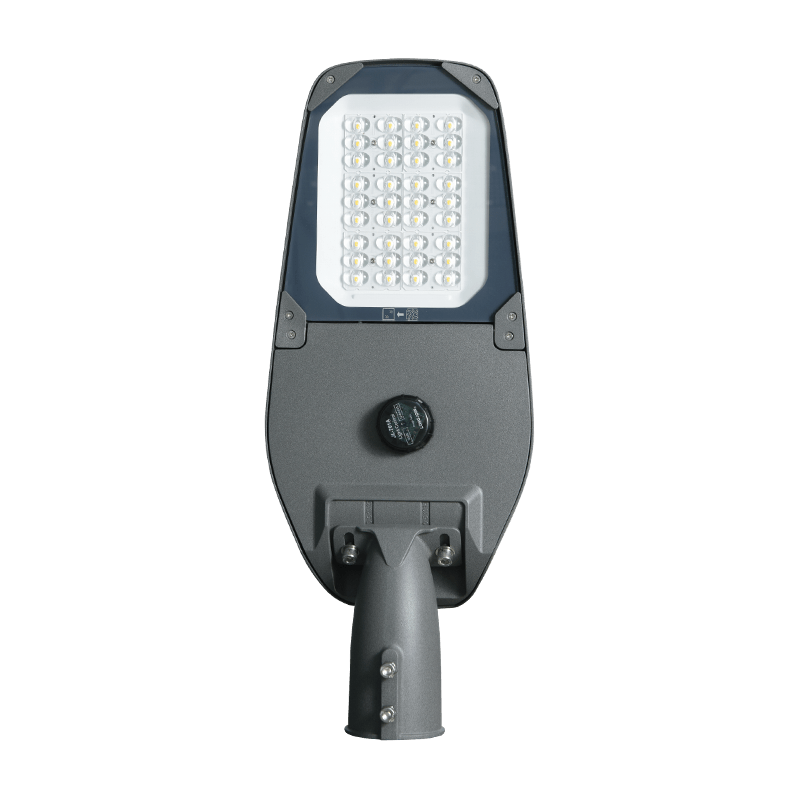
Issue Two: Thermal Management Failure and LED Lumen Depreciation
Even when the driver functions correctly, inadequate thermal management of the LED module itself is the primary cause of accelerated lumen depreciation — the gradual reduction in light output that occurs as LED chips age. The relationship between LED junction temperature and lumen maintenance is well-established: for every 10-degree Celsius increase in LED junction temperature above the rated operating point, the lumen depreciation rate approximately doubles. (Source: U.S. Department of Energy, IES TM-21-11, Projecting Long Term Lumen Maintenance of LED Light Sources, 2011)
The IES L70 standard — the widely used benchmark at which LED output has declined to 70% of its original value — is the rated life end-point for most LED street light specifications. A fixture operating at the LED manufacturer's rated junction temperature may reach L70 at 50,000 hours. The same fixture with thermal design that allows junction temperature to run 20 degrees Celsius above specification reaches L70 in approximately 12,500 hours — a fourfold reduction in useful service life from thermal management alone.
Root Causes of Poor Thermal Management in Street Lights
- Insufficient heat sink surface area: Budget street lights often use heat sink profiles that are adequate for the stated wattage under test conditions but insufficient during summer peak ambient temperatures of 35 to 45 degrees Celsius, when the temperature difference available to drive natural convection cooling is reduced
- Poor thermal interface material quality: The thermal paste or pad between the LED module and the heat sink is a critical heat transfer pathway. Low-quality thermal interface materials have thermal conductivities of 0.5 to 1.0 W/mK compared to 3.0 to 8.0 W/mK for premium materials — a 3 to 8 times difference in heat transfer efficiency that directly determines junction temperature
- Dust and contamination accumulation: Heat sink fins that accumulate road dust and biological growth over years of operation progressively lose their convective heat transfer effectiveness. A study of LED street lights in service for 5 years found that heat sink contamination increased operating junction temperature by 8 to 15 degrees Celsius on uncleaned fixtures compared to periodically cleaned ones. (Source: IEEE Transactions on Electron Devices, Thermal Effects of Dust Contamination on LED Street Light Heat Sinks, Vol. 64, Issue 8, 2017)
- Mounting orientation: Street lights installed at angles other than the design position can alter the natural convection airflow pattern around the heat sink, reducing cooling effectiveness compared to the design intent
Issue Three: Moisture Ingress and Corrosion
Outdoor LED street lights are exposed to rain, condensation, coastal salt air, and cleaning water across their entire service life. Moisture ingress is the second most common cause of LED street light failure after driver failure, and the two failure modes often interact: moisture that enters the driver compartment accelerates capacitor corrosion, while moisture reaching the LED module degrades the phosphor and causes metal contact corrosion at the LED package.
Street light housings are rated for ingress protection to the IEC 60529 IP standard, with IP65 being the most common specification for road lighting applications (protected against dust and water jets from all directions) and IP66 or IP67 specified for locations subject to heavy rain, splash, or cleaning. (Source: IEC 60529:2013, Degrees of Protection Provided by Enclosures, International Electrotechnical Commission)
Why IP Ratings Do Not Always Prevent Moisture Problems
The IP rating of a street light is verified under test conditions at the time of manufacture. Real-world installation introduces several factors that can reduce effective ingress protection over time:
- Thermal cycling breaches: Daily heating and cooling cycles create a "breathing" effect in the housing — warm air expands outward through small gaps as the fixture heats during the day, and cooler humid outside air is drawn inward as the fixture cools at night. Over thousands of cycles, this pumping action draws moisture past initially adequate seals that have not degraded. Breathable moisture-resistant membranes (Gore-Tex type) in drain/vent positions are the standard solution to this breathing mechanism in quality fixtures
- Seal compression set: The silicone or EPDM gaskets that provide the IP-rated seal compress permanently over years of thermal cycling, reducing their contact pressure against the mating housing surfaces and eventually allowing moisture infiltration through what was originally an adequate seal
- Cable entry seal degradation: The cable glands or seals where the mains cable enters the housing are a common leak point — UV degradation and mechanical stress from cable movement during wind loading can crack the gland seal, creating a moisture entry path bypassing the main housing seal
- Coastal salt air corrosion: Salt spray accelerates corrosion of uncoated aluminum housings and can attack cable gland metals, die-cast hardware, and circuit board surface finishes. Street lights in coastal or industrial environments require housings with salt-resistant surface treatment — typically anodized aluminum, epoxy powder coat, or marine-grade conversion coatings
Issue Four: Glare and Light Pollution
LED street lights produce a point-source light intensity significantly higher than the distributed-source sodium vapor lamps they replace, because the LED light output is concentrated from a much smaller physical area. This high luminance — the intensity of light per unit area of the source — creates glare for drivers, pedestrians, and nearby residents that traditional lamp types produced at lower levels for the same total light output.
The Unified Glare Rating (UGR) system quantifies discomfort glare on a scale where values above 19 are considered unacceptable for road lighting environments. Poorly designed LED street lights — particularly those without adequate secondary optics or diffusion panels — can produce UGR values of 22 to 28 in typical road lighting geometries, well above the acceptable threshold. (Source: CIE 115:2010, Lighting of Roads for Motor and Pedestrian Traffic, Commission Internationale de l'Eclairage)
Specific Glare and Light Distribution Problems
- Upward light spill: LED street lights without precisely controlled optics direct significant light upward and sideways, contributing to sky glow that affects astronomical observations and disrupts nocturnal wildlife. The International Dark-Sky Association's Fixture Seal of Approval requires that less than 1% of total luminaire output is directed above the horizontal plane. Many standard LED street lights exceed this limit
- Neighbor light intrusion: Excessive light spill to the side and backward from street lights illuminates adjacent properties, causing complaints from residents whose bedrooms are disturbed by light intrusion from poorly directed fixtures
- Hot spots and uneven road illumination: LED street lights with poorly designed secondary optics can create highly illuminated spots directly beneath each pole with inadequate illuminance between poles, rather than the smooth, even distribution that road safety requires. The EN 13201 road lighting standard specifies minimum uniformity ratios — the ratio of minimum to average illuminance — that poorly designed fixtures fail to achieve
- High color temperature blue light hazard: LED street lights with high color temperatures (above 4,000 K) contain a larger proportion of short-wavelength blue light that contributes to melatonin suppression in nearby residents and has been associated in epidemiological studies with increased risk of sleep disruption. The American Medical Association recommends street lighting at 3,000 K or below for residential and mixed-use areas. (Source: AMA Council on Science and Public Health, Human and Environmental Effects of Light Emitting Diode Community Lighting, 2016)
Issue Five: Flickering and Power Quality Problems
Flickering in LED street lights occurs when the light output varies at a frequency below the human visual fusion threshold — approximately 50 to 80 Hz for most people under typical lighting conditions — producing a perceptible strobe effect that causes eye strain, headaches, and in sensitive individuals, photosensitive epilepsy risks. LED street lights are more susceptible to visible flicker than traditional HPS lamps because the LED's response time to current changes is measured in nanoseconds rather than the milliseconds that characterize thermal light sources, meaning any current ripple from the driver is immediately visible as light output variation.
Sources of Flickering in LED Street Lights
- Insufficient driver output filtering: Drivers with inadequate capacitor bank size produce high ripple current at twice the mains frequency (100 Hz in 50 Hz countries, 120 Hz in 60 Hz countries). The IEEE 1789-2015 standard recommends that street lighting drivers limit current ripple to produce a percent flicker below 8% to avoid adverse biological effects. (Source: IEEE 1789-2015, Recommended Practices for Modulating Current in High-Brightness LEDs)
- Voltage fluctuations in the distribution grid: Street lighting circuits in older distribution networks experience voltage sags, swells, and harmonic distortion from nearby variable loads that can exceed the driver's input voltage tolerance range, causing the driver to momentarily drop out and restart — producing visible flickering events rather than continuous steady operation
- Dimming system incompatibility: Many street lighting networks now use centralized dimming systems — either 0 to 10 V analog dimming or DALI protocol digital dimming — to reduce energy consumption during low-traffic hours. LED drivers that are incompatible with the installed dimming system can flicker throughout the dimmed operating range rather than producing smooth continuous dimming. This is a particularly common issue when LED luminaires from one manufacturer are installed on infrastructure with a dimming system from a different generation or specification
- Aging driver components: As driver electrolytic capacitors age, their capacitance decreases and their equivalent series resistance (ESR) increases, producing more current ripple from the same driver circuit that produced acceptable ripple when new. A fixture that passes flicker measurements at commissioning may develop visible flicker as the driver ages — a particularly insidious failure mode because the fixture does not "fail" in the conventional sense
Issue Six: Color Temperature Inconsistency and Color Rendering Problems
Color temperature inconsistency — visible differences in the color of light produced by different street lights on the same road — is an aesthetic and functional problem that occurs when luminaires from different production batches use LED chips that fall outside a narrow color tolerance bin, or when LED chips in the same fixture age at different rates producing color shift over time.
The ANSI/ANSLG C78.377 standard defines seven-step MacAdam ellipses as the acceptable color tolerance range for LED lighting products. Products that specify 3-step MacAdam ellipse tolerance (SDCM 3 or less) produce color consistency that is invisible to the unaided eye under normal conditions. Products that specify 5-step or 7-step tolerance — or that do not specify color binning at all — may produce visibly different light colors between adjacent poles from the same installation batch. (Source: ANSI/ANSLG C78.377-2017, Specifications for the Chromaticity of Solid State Lighting Products)
Color Rendering Index Considerations
The Color Rendering Index (CRI) of LED street lights affects how accurately human observers perceive the colors of objects — vehicles, pedestrian clothing, road markings, and facial features — under the street light. High-pressure sodium (HPS) lamps that LED street lights replace typically had CRI values of 20 to 25 — extremely poor color rendering that made color recognition difficult. LED street lights typically achieve CRI values of 70 to 90, significantly improving color recognition for road users and CCTV cameras.
However, some cost-reduced LED street lights achieve apparent high lumen output by using phosphor formulations that sacrifice CRI to maximize lumens per watt, producing high-lumen output at CRI values of 65 to 70 rather than the 80 to 90 achievable with higher-quality phosphors. Street lights with CRI below 70 are associated with reduced hazard perception distances for drivers — particularly under wet road conditions where color contrast aids early hazard detection.
Issue Seven: Surge Protection Inadequacy
Street lighting infrastructure is particularly vulnerable to electrical surge damage because the distribution cables run for long distances through environments where lightning strikes, switching surges from the utility grid, and inductive coupling from nearby high-voltage equipment generate transient voltage spikes that propagate through the street lighting circuit to every connected fixture.
A lightning strike within 1 km of a street lighting cable can induce transient voltages of 4,000 to 10,000 volts in the circuit — far exceeding the 800 to 1,000 V breakdown voltage of standard LED driver output-stage components. (Source: IEC 61547:2009, Equipment for General Lighting Purposes — EMC Immunity Requirements)
Why LED Street Lights Are More Surge-Vulnerable Than HPS
High-pressure sodium and metal halide lamps were relatively tolerant of surge events because their power conversion used magnetic ballasts that had inherent surge absorption characteristics from their inductor windings. LED drivers use semiconductor switching circuits with transient voltage sensitivities orders of magnitude lower than the electromagnetic tolerance of a magnetic ballast. LED drivers without adequate surge protection devices (SPDs) fail from a single large surge event or accumulate progressive damage from repeated moderate surges that accelerates all the other failure modes described in this article.
Street lights specified for regions with high lightning strike density or known grid switching surge environments should include SPDs rated to IEC 61643-11 Category C2 (10 kA, 8/20 microsecond waveform) at minimum. Fixtures without SPDs or with SPDs rated below Category C2 in high-surge environments will experience significantly higher failure rates from surge-induced driver damage than their nominal specification would suggest.
Issue Eight: Communication and Smart Control System Failures
Modern LED street lights increasingly include integrated wireless communications — GPRS, NB-IoT, Zigbee, or LoRa — for centralized monitoring, dimming control, fault reporting, and energy metering. These smart control systems add functionality but also add failure modes that do not exist in conventional passive street lights:
- Communication module failure: The wireless communication module shares the thermal environment of the driver and experiences the same capacitor and component degradation. Communication failures — where the fixture operates but cannot be monitored or controlled remotely — can occur before any optical failure, creating management system "blind spots" that undermine the value of the smart control investment
- Network protocol obsolescence: Smart street light systems deployed on 2G GPRS networks in the 2010s faced network sunset when mobile operators decommissioned 2G infrastructure — leaving fixtures with communication modules that could no longer connect to the management platform despite the LED and driver being fully functional. Protocol selection should consider the expected network support lifetime against the fixture's expected service life
- Cybersecurity vulnerabilities: Networked street lights with inadequate firmware security represent potential intrusion points in public infrastructure networks. This is increasingly a procurement consideration for municipal authorities, who specify minimum cybersecurity standards for network-connected lighting assets
- Dimming command conflicts: In systems with multiple control layers — astronomical clock dimming plus occupancy sensor override plus manual override — conflicting commands from different layers can produce unexpected lighting behavior that is misinterpreted as hardware failure, consuming maintenance resources on investigation of a software configuration issue
Common Issues at a Glance: Causes and Solutions
| Issue | Primary Cause | Typical Timeframe | Prevention / Solution |
|---|---|---|---|
| Driver failure (complete light-out) | Electrolytic capacitor degradation from heat | 3 to 8 years (budget products) | Specify 105 degree-rated capacitors; cooled driver compartment |
| Lumen depreciation | Elevated LED junction temperature | Progressive from year 1 | Adequate heat sink sizing; quality thermal interface material |
| Moisture ingress | Seal degradation from thermal cycling | 3 to 10 years depending on seal quality | IP66 rated housing; breather membranes; EPDM seals |
| Glare and light pollution | Inadequate optical control | From commissioning | Specify IK-rated full cut-off optics; UGR below 19 |
| Visible flickering | Insufficient driver filtering; aging capacitors | Immediately (poor filter); 5 to 8 years (aging) | Specify below 8% flicker; IEEE 1789 compliant driver |
| Color inconsistency | Wide LED color binning tolerance | From commissioning | Specify 3-step MacAdam ellipse (SDCM 3) |
| Surge damage | Inadequate or absent SPD | After first major surge event | Specify IEC 61643-11 Category C2 SPD, 10 kA minimum |
| Smart control failure | Communication module failure; protocol obsolescence | 5 to 10 years depending on technology | Specify open protocol systems; select current-generation networks |
How to Avoid These Issues When Specifying LED Street Lights
The issues described above are not inherent to LED technology — they are consequences of specific design and component choices that separate quality products from cost-reduced alternatives. A procurement specification that addresses the key design parameters for each issue category effectively filters out products likely to exhibit premature failure:
- Specify driver operating temperature and capacitor grade. Request confirmation that the driver compartment temperature under maximum ambient conditions (typically 45 to 50 degrees Celsius) stays below the rated capacitor temperature limit with a 10-degree margin. Specify 105-degree Celsius rated capacitors as a minimum
- Specify IES LM-80 LED lumen maintenance data. Request the LM-80 test report for the LED module used in the fixture and confirm that the L70 lumen maintenance life projected by TM-21 methodology meets the specified service life requirement at the fixture's operating junction temperature
- Specify IP66 minimum ingress protection with independent certification. Do not accept manufacturer IP rating declarations without third-party test certification from an accredited laboratory. Specify breather membranes in the housing design for thermal breathing protection
- Specify optics that meet EN 13201 uniformity requirements and UGR below 19. Request the luminaire's photometric data file (IES or LDT format) and run a road lighting calculation to confirm that the proposed installation meets the specified road lighting class uniformity and average illuminance requirements
- Specify IEC 61643-11 Category C2 surge protection. This is non-negotiable for street lighting in any location subject to lightning or grid switching surges. Request the SPD test certificate with the product submission
- Specify 3-step MacAdam ellipse color tolerance (SDCM 3) and CRI 80 minimum. These specifications ensure visible color consistency between fixtures and adequate color rendering for road safety and CCTV performance
The PODA LED Street Lights are engineered to address the common failure modes described throughout this article — with 105-degree driver capacitors, thermally separated driver compartments, IP66-rated housings with breather membrane protection, precision secondary optics for controlled light distribution, IEC 61643-11 surge protection, and 3-step MacAdam color binning. They are designed for municipalities and road authorities who need street lighting that delivers the 15 to 20 year service life that LED technology is capable of, rather than the 3 to 5 year failure cycle that budget products produce.
Maintenance Practices That Extend LED Street Light Service Life
Even the highest quality LED street lights benefit from a structured maintenance program that addresses the progressive degradation mechanisms described above:
- Annual luminaire cleaning: Cleaning the outer lens surface and heat sink fins annually removes the contamination accumulation that reduces both light transmission through the lens and convective heat transfer from the heat sink. Studies have shown that cleaning alone can restore 5 to 15% of lost light output on fixtures in service for 3 or more years in typical road environments. (Source: LRC Lighting Research Center, Light Loss Factors for LED Luminaires, Journal of the Illuminating Engineering Society, Vol. 14, 2018)
- Periodic seal inspection: Inspect housing gaskets and cable gland seals at 5-year intervals for compression set and cracking, replacing seals before moisture ingress is detected rather than after damage has occurred
- Surge protection device inspection: Many SPDs include a status indicator window that changes color when the device has been consumed by a surge event. Inspect SPD condition after any known lightning event or grid disturbance and replace consumed SPDs before the next event removes the protection from the driver
- Illuminance monitoring: Smart street lighting systems that include power monitoring can track the lumen output trend of each fixture over time. A fixture showing faster than expected lumen depreciation has a thermal management problem that, if identified early, can be addressed (cleaning, repositioning) before the LED reaches L70 prematurely
- Proactive driver replacement: For fixtures installed in high-value locations where light-out failure is unacceptable — major intersections, tunnels, pedestrian underpasses — proactive driver replacement at the 8 to 10 year mark, before the statistical peak of driver failure rates, is more cost-effective than the emergency callout response and safety risk associated with unexpected light-out failures
Previous Post
Which type of solar light is best for home use?
Next Post
How long can solar lights stay lit?
Related Products

Our Products
Keep In Touch
export@polaryang.cn
+86-574-65167530
Xue'ao Qiangjiao Town, Ninghai County, Ningbo, Zhejiang, China
Contact Us
Copyright © Ninghai Poda Electrical Appliance Co., Ltd. Rights Reserved.
Wholesale LED Lighting Manufacturer
OEM Solar Lighting Factory
