 English
 Español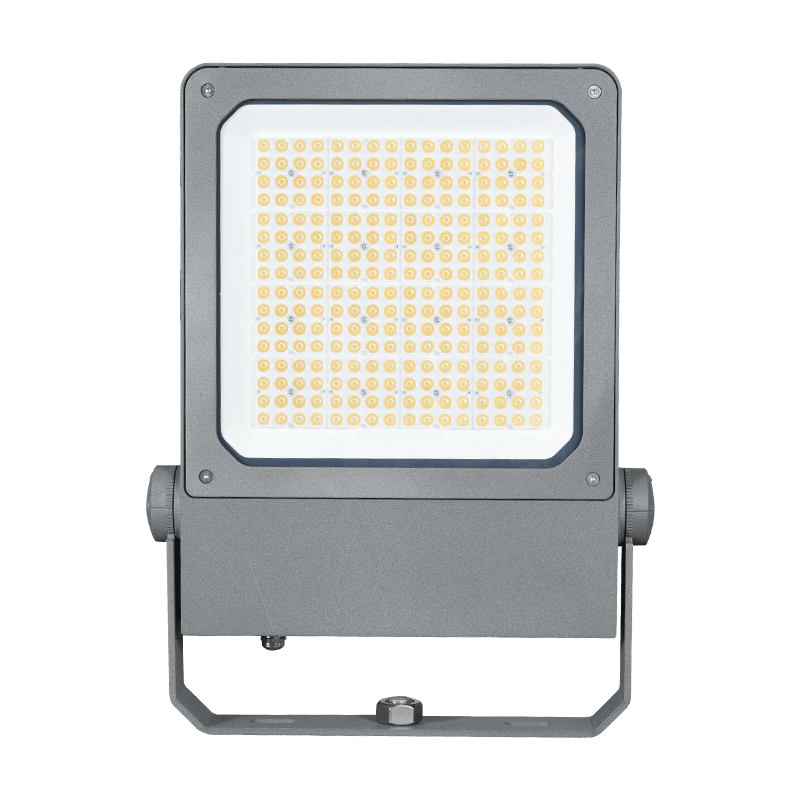
+86-13777012108
(WhatsApp/WeChat)
How long is the lifespan of an LED Flood Light?
A quality LED flood light has a rated lifespan of 50,000 hours or more — equivalent to over 17 years of operation at 8 hours per day, or more than 11 years running continuously around the clock. This far exceeds the 1,000–2,000 hours of a traditional incandescent flood light and the 8,000–15,000 hours of a metal halide or high-pressure sodium equivalent. In practice, the actual service life of an LED flood light depends on the quality of its LED chips, thermal management design, driver electronics, ingress protection rating, and the environmental conditions in which it operates.
Content
- 1 How LED Flood Light Lifespan Is Measured: The L70 Standard
- 2 LED Flood Light vs Traditional Flood Light: Lifespan Comparison
- 3 The Four Factors That Determine Real-World LED Flood Light Lifespan
- 4 How Environmental Conditions Affect LED Flood Light Lifespan
- 5 Practical Tips to Maximize LED Flood Light Lifespan
- 6 Signs That an LED Flood Light Is Approaching End of Service Life
How LED Flood Light Lifespan Is Measured: The L70 Standard
Unlike traditional light sources that burn out abruptly, LED flood lights do not fail suddenly — instead, their light output gradually decreases over time as the LED chips age. This gradual dimming is called lumen depreciation, and the industry standard for defining LED lifespan is the L70 rating.
L70 defines the point at which the flood light's lumen output has dropped to 70% of its original level. At this point, the light is considered to have reached its rated lifespan — not because it has stopped working, but because the reduction in light output is noticeable and affects the intended lighting performance of the installation. A flood light rated at L70 = 50,000 hours will still be operational at 50,000 hours, but at 70% of its original brightness.
Some premium LED flood lights use the more demanding L80 rating — where lifespan is defined as the point where output falls to 80% of initial lumens — which represents a higher quality standard since the light must maintain higher output for longer to reach the rated hours.
LED Flood Light vs Traditional Flood Light: Lifespan Comparison
| Light Source Type | Rated Lifespan (hours) | Years at 12 hrs/day | Typical Failure Mode |
|---|---|---|---|
| Incandescent flood light | 1,000–2,000 | 0.2–0.5 years | Sudden filament burnout |
| Halogen flood light | 2,000–4,000 | 0.5–1 year | Sudden burnout, high heat |
| Metal halide flood light | 8,000–15,000 | 1.8–3.4 years | Lumen depreciation + arc tube failure |
| High-pressure sodium (HPS) | 12,000–24,000 | 2.7–5.5 years | Color shift, cycling, burnout |
| LED flood light (standard) | 30,000–50,000 | 6.8–11.4 years | Gradual lumen depreciation |
| LED flood light (premium) | 50,000–100,000+ | 11.4–22.8 years | Gradual lumen depreciation |
The Four Factors That Determine Real-World LED Flood Light Lifespan
The rated lifespan is a laboratory benchmark. The actual service life of any specific LED flood light installation depends on four interacting factors that either preserve or accelerate LED chip degradation.
1. Thermal Management: The Single Most Important Factor
Heat is the primary enemy of LED longevity. Although LEDs generate far less heat than incandescent sources, the heat they do produce is concentrated at the LED junction — the semiconductor interface where light is generated. If this junction temperature is not effectively managed, lumen depreciation accelerates dramatically.
The relationship is precisely quantified in semiconductor physics: every 10°C increase in junction temperature approximately halves the expected LED lifespan. An LED rated for 50,000 hours at a junction temperature of 85°C may only achieve 25,000 hours if poor thermal design allows the junction to run at 95°C, and just 12,500 hours at 105°C.
Quality LED flood lights address this through precision-engineered aluminum heat sinks with optimized fin geometry, direct thermal bonding between the LED chip substrate and the heat sink body, and housing designs that promote natural convective airflow. The thermal resistance from LED junction to ambient air — measured in °C/W — is the key specification that separates high-quality flood lights from budget alternatives.
2. LED Chip Quality and Drive Current
The quality and specification of the LED chips are the foundational determinant of lifespan. Latest-generation LED chips produced with advanced manufacturing processes achieve higher luminous efficacy and more stable lumen maintenance over time than older or lower-grade chip designs. Key chip quality indicators include:
- Forward voltage consistency across the chip array — uneven voltage distribution causes some chips to run hotter than others, accelerating localized degradation
- Color consistency (binning) — tight color binning indicates a more controlled manufacturing process, which correlates with more consistent electrical and thermal performance
- Drive current level — LEDs driven at below their maximum rated current (called underdriving) run cooler and demonstrate significantly longer lifespan. A chip rated for 700mA driven at 500mA will last measurably longer than the same chip driven at 700mA
3. Driver Electronics Quality
The LED driver — the electronic power supply that converts mains AC power to regulated DC current for the LEDs — is often the component that fails first in an LED flood light, even when the LED chips themselves are still functional. Driver failure is a common cause of LED flood light failures that are reported as premature lamp failures but are actually driver failures.
Quality drivers use high-grade capacitors rated for the operating temperature range of the fixture, incorporate over-voltage, over-current, and over-temperature protection circuits, and are sized to operate well below their maximum rated output to reduce thermal stress on driver components. A quality LED driver in a well-designed flood light should achieve a service life of 50,000 hours or more — matching the LED chip lifespan rather than becoming the limiting component.
4. Ingress Protection (IP) Rating and Sealing Quality
Outdoor LED flood lights are exposed to rain, humidity, dust, insects, and temperature cycling — all of which can cause premature failure if moisture or contaminants penetrate the fixture housing. The IP (Ingress Protection) rating quantifies how well the fixture resists this ingress.
For outdoor flood lights, a minimum rating of IP65 is the standard — providing complete dust exclusion and protection against water jets from any direction. Flood lights in exposed coastal, industrial, or high-humidity environments should be specified at IP66 or IP67 for additional water resistance. Advanced sealing technology and materials — including silicone gaskets, pressure-equalization membranes that prevent internal condensation, and UV-stabilized housing materials — ensure that this ingress protection is maintained throughout the fixture's service life, not just when it is new.
How Environmental Conditions Affect LED Flood Light Lifespan
The environment in which an LED flood light operates can significantly extend or shorten its practical service life relative to the laboratory-tested rated lifespan.
| Environment | Key Challenge | Effect on Lifespan | Recommended Specification |
|---|---|---|---|
| Hot climate / direct sun exposure | Elevated ambient temperature increases junction temp | Can reduce lifespan by 20–50% vs. rated | Oversized heat sink; underdriven LEDs; shaded mounting if possible |
| Coastal / high-salt environments | Salt corrosion on housing and connectors | Accelerated housing degradation without corrosion protection | IP66+; marine-grade aluminum or stainless hardware; anti-corrosion coatings |
| Industrial / high-dust environments | Dust accumulation reduces heat dissipation | Dust-blocked fins raise junction temp; accelerates LED aging | IP65+; smooth housing design; scheduled cleaning maintenance |
| Cold climate | Thermal cycling stress on seals and electronics | Minimal effect on LED chips; potential seal and driver stress | Cold-rated driver; silicone seals rated to -40°C |
| Humid / wet outdoor environment | Moisture ingress causes corrosion and short circuits | Severe if IP rating is insufficient; driver failure common | IP66 or IP67; pressure-equalization vents; conformal-coated driver PCB |
Practical Tips to Maximize LED Flood Light Lifespan
Achieving the full rated lifespan of an LED flood light — and in many cases exceeding it — requires both correct product selection and appropriate installation and maintenance practices.
- Do not over-specify wattage: A flood light running at or near its maximum rated wattage generates more heat than one operating at moderate wattage. Selecting a light that meets your lumen requirement without being significantly over-specified in power helps keep operating temperatures lower and extends LED life
- Ensure adequate ventilation around the fixture: Avoid installing flood lights in confined spaces or flush against heat-retaining walls where heat cannot dissipate from the housing. Mounting with the heat sink fins oriented vertically (rather than horizontally) improves natural convective cooling by 10–20% in still air conditions
- Clean the heat sink fins periodically: In dusty environments, accumulated dust on heat sink fins can increase junction temperature by 5–15°C — enough to measurably shorten lifespan. A compressed air blow-out or soft brush cleaning every 6–12 months in dusty environments prevents this buildup
- Verify supply voltage stability: Voltage fluctuations outside the driver's rated input range — particularly over-voltage events — accelerate driver and LED degradation. In locations with unstable power supply, use flood lights with drivers rated for a wider input voltage range (e.g., 85–305V AC) that can absorb voltage variations without stress
- Use surge protection in lightning-prone areas: Nearby lightning strikes can induce voltage surges that destroy LED drivers instantly, even if the flood light appears undamaged externally. Installing a surge protection device (SPD) on outdoor lighting circuits in storm-prone areas prevents this common cause of early LED driver failure
- Inspect seals and gaskets annually: Check housing seals at annual maintenance intervals and replace any that show cracking, hardening, or compression set — maintaining ingress protection throughout the fixture's service life prevents the moisture-related failures that cut many outdoor flood light installations short of their rated lifespan
Signs That an LED Flood Light Is Approaching End of Service Life
Unlike traditional flood lights that fail suddenly, LED flood lights give advance warning of approaching end-of-life through observable changes in their performance. Recognizing these signs allows timely replacement before the installed lighting level drops below the minimum required for the application.
- Noticeable reduction in light output: When the flood light is visibly dimmer than when first installed — particularly if it is now dimmer than adjacent flood lights of the same type — lumen depreciation has reached a level where replacement should be planned
- Color shift: A change in the color appearance of the light — typically a shift toward yellow or green from the original white — indicates LED chip degradation and is a sign that the light is nearing end of useful life
- Flickering or unstable output: Flickering that is not caused by a loose connection indicates driver component degradation — typically failing capacitors — and usually precedes complete driver failure within weeks to months
- Failure to restart after being switched off: An LED flood light that illuminates during extended continuous operation but fails to restart after being switched off is exhibiting a driver failure symptom — the driver capacitors have discharged and can no longer support startup surge current
- Partial array failure: Individual sections of the LED array going dark while others continue to illuminate indicates localized LED failures — typically caused by moisture ingress, solder joint cracking from thermal cycling, or localized overheating
Previous Post
What are the advantages of LED garden lights?
Next Post
What are the advantages of LED Street Light?
Related Products

Our Products
Keep In Touch
export@polaryang.cn
+86-574-65167530
Xue'ao Qiangjiao Town, Ninghai County, Ningbo, Zhejiang, China
Contact Us
Copyright © Ninghai Poda Electrical Appliance Co., Ltd. Rights Reserved.
Wholesale LED Lighting Manufacturer
OEM Solar Lighting Factory
