 English
 Español
+86-13777012108
(WhatsApp/WeChat)
How long is the lifespan of a Solar Street Light?
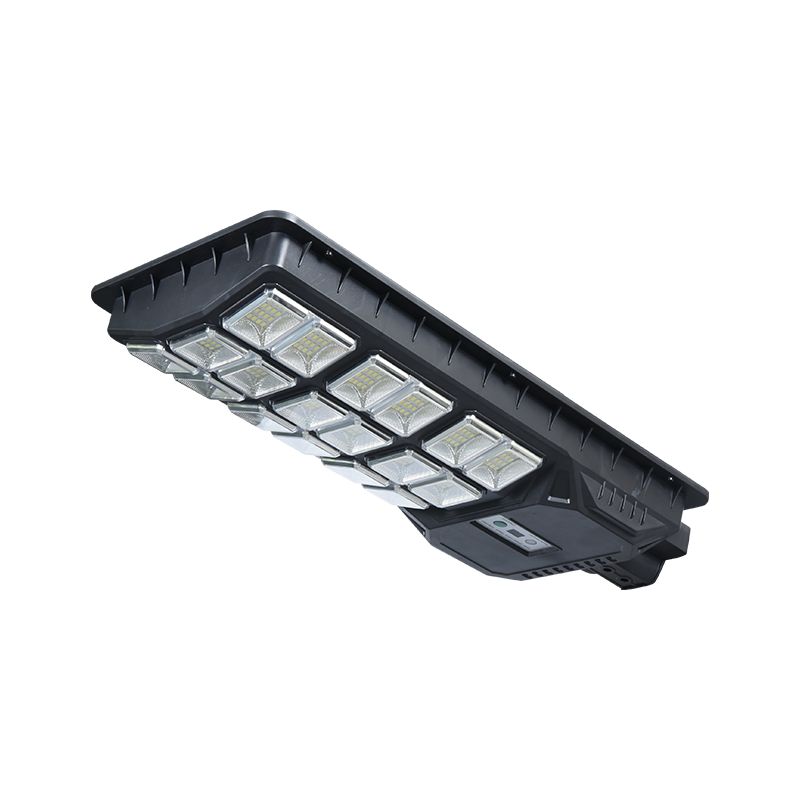
A solar street light has a total system lifespan of 8 to 15 years under normal operating conditions, with the specific limiting component being the battery. The LED light source itself lasts 50,000 hours or more, while the solar panel retains at least 80% of its rated output for 10–25 years. The battery — typically lithium iron phosphate (LiFePO4) in modern quality units — determines the effective service life, cycling once per day and retaining adequate capacity for 5–10 years before replacement is needed. With a battery replacement at that point, the rest of the system can continue operating for many years beyond.
Content
Component-by-Component Lifespan Breakdown
Understanding each component's individual service life reveals why the battery is the system's limiting factor and helps set realistic maintenance expectations:
| Component | Typical Lifespan | Main Failure Mode |
|---|---|---|
| Solar panel (monocrystalline) | 20–25 years (to 80% output) | Gradual power degradation (~0.5%/year) |
| LED light source | 50,000+ hours (L70 rated) | Gradual lumen depreciation |
| LiFePO4 battery | 5–10 years (2,000+ cycles) | Capacity fade from charge cycling |
| Charge controller / PCB | 8–12 years | Moisture ingress, voltage surge |
| Pole and housing | 15–25 years | Corrosion, physical impact |
Why Battery Chemistry Is the Key Lifespan Factor
A solar street light battery completes one full charge-discharge cycle every 24 hours — approximately 365 cycles per year. The battery's cycle life rating directly determines how many years it will function before capacity drops to the point where the light cannot maintain adequate illumination through the night.
Lithium Iron Phosphate (LiFePO4) — Best for Longevity
LiFePO4 batteries are rated for 2,000 or more cycles at 80% depth of discharge while retaining 80% of original capacity — equivalent to approximately 5–6 years of daily cycling. Premium LiFePO4 cells rated at 3,000 cycles extend this to over 8 years. They also operate reliably across a wide temperature range (-20°C to +60°C), making them suitable for both cold-climate and tropical installations. Their inherent thermal stability eliminates the risk of thermal runaway, which is a significant safety advantage for sealed outdoor enclosures.
Standard Lithium-Ion — Shorter But Still Practical
Standard lithium-ion cells offer 500–1,000 cycles — approximately 1.5 to 3 years of daily use. At this lower cycle life, battery replacement costs become significant over a 10-year system life, making LiFePO4 the more economical long-term choice despite its higher initial cost.
Lead-Acid — Avoid for Long Lifespan Applications
Lead-acid batteries found in budget solar lights are rated for only 300–500 deep cycles — under 18 months of daily use. They also lose capacity rapidly in high-temperature environments and are significantly heavier, increasing structural loading on the pole. Lead-acid batteries are not recommended for any installation where a service life beyond 2 years is expected.
Solar Panel Lifespan and Its Effect on System Performance
Monocrystalline silicon solar panels — used in high-performance solar street lights — degrade at an average rate of approximately 0.5% per year in power output. After 20 years, a panel rated at 100W would still produce approximately 90W — still more than adequate for the system's charging requirements. This means the solar panel is rarely the component that determines the end of the system's useful life.
Panel performance can be maintained throughout its rated life by keeping the surface clean — dust, bird droppings, and organic growth reduce the panel's output, but simple periodic cleaning restores full output with no permanent degradation. In dusty environments, quarterly cleaning is recommended.
Environmental Factors That Reduce Lifespan
Several installation and environmental conditions can shorten the system's effective lifespan below its rated potential:
- Shading of the solar panel: even partial shading from trees, buildings, or nearby structures dramatically reduces daily charging — a battery that is chronically under-charged degrades to unusable capacity much faster than one that completes full cycles
- Extreme ambient temperatures: batteries stored at high temperatures (above 40°C) degrade significantly faster; in tropical climates, heat-managed enclosures or elevated mounting positions that receive airflow extend battery life
- Low IP rating of the enclosure: moisture entering the battery and controller compartment through inadequate IP seals causes premature corrosion and PCB failure — IP65 or IP66 minimum is recommended for all solar street light electrical enclosures
- Physical impact: vehicle collisions or vandalism can damage the pole, housing, or panel — corrosion-resistant high-quality materials reduce the consequential damage from minor impacts
How to Maximize Solar Street Light Lifespan
The following practices consistently extend operational life toward and beyond the upper end of the rated range:
- Specify LiFePO4 batteries from the outset — the premium over standard lithium-ion is recovered within 3–4 years through avoided replacement costs
- Install in unobstructed locations — confirm that the solar panel receives full sun for at least 6 hours per day throughout the year, accounting for seasonal sun angle changes and vegetation growth
- Clean the solar panel quarterly to maintain charging efficiency, particularly in dusty, industrial, or high-pollution environments
- Use motion sensing and dimming modes — operating the LED at 30–50% output during low-traffic periods reduces daily battery drain, effectively increasing cycle life by running shallower discharge cycles
- Select corrosion-resistant materials for pole and housing in coastal or humid environments — aluminum poles with anodized finish or hot-dip galvanized steel provide structural integrity for 20+ years
- Plan proactive battery replacement at 5–7 years rather than waiting for complete failure — replacing the battery at 80% capacity retention extends the system's total useful life to 15 years or beyond
Previous Post
What Are Waterproof Lights Used For?
Next Post
What are the uses of Solar Street Lights?
Related Products

Our Products
Keep In Touch
export@polaryang.cn
+86-574-65167530
Xue'ao Qiangjiao Town, Ninghai County, Ningbo, Zhejiang, China
Contact Us
Copyright © Ninghai Poda Electrical Appliance Co., Ltd. Rights Reserved.
Wholesale LED Lighting Manufacturer
OEM Solar Lighting Factory
