 English
 Español
+86-13777012108
(WhatsApp/WeChat)
Are outdoor LED lights really more energy-efficient?
Under the same lighting brightness conditions, outdoor LED lights can achieve about 50%–70% energy savings compared with traditional outdoor lighting equipment, making them one of the lighting solutions with the best overall energy efficiency performance in the outdoor lighting field. Whether for road lighting, landscape lighting, or public facility lighting, outdoor LED lights have gradually replaced traditional light sources and become the mainstream choice due to their advantages of high luminous efficiency, low energy consumption, and long service life.
Content
- 1 High luminous efficiency output is the core foundation of energy saving
- 2 Actual electricity consumption comparison reflects the energy-saving advantage
- 3 Intelligent control further amplifies energy-saving performance
- 4 Full life-cycle energy saving advantage
- 5 Typical energy-saving application scenarios of outdoor LED lights
- 6 Comparison with traditional outdoor lighting equipment
- 7 Practical suggestions for selecting energy-saving outdoor LED lights
High luminous efficiency output is the core foundation of energy saving
The essence of energy saving comes from photoelectric conversion efficiency (luminous efficacy):
Incandescent lamp: 10–15 lm/W
Traditional energy-saving lamp: 50–70 lm/W
High-pressure sodium lamp: 80–120 lm/W
Outdoor LED lights: generally reach 130–180 lm/W, high-end products can exceed 200 lm/W
This means that, under the premise of outputting the same brightness, outdoor LED lights require significantly less electrical energy, which is the physical basis for achieving energy saving.
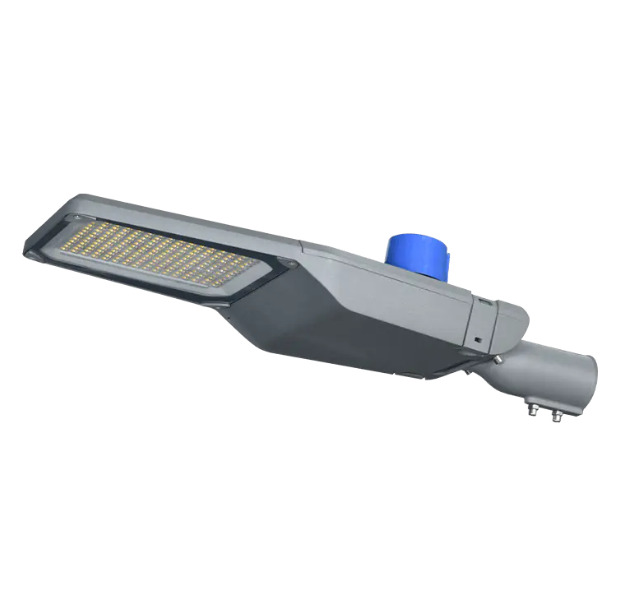
Actual electricity consumption comparison reflects the energy-saving advantage
Taking common road lighting as an example:
| Lamp type | Power | Brightness effect | Annual power consumption (10 hours/day) |
| High-pressure sodium lamp | 250W | Medium | ≈ 912 kWh |
| Metal halide lamp | 200W | Medium | ≈ 730 kWh |
| Outdoor LED light | 100W | Same brightness | ≈ 365 kWh |
Traditional lamps are mostly omnidirectional light-emitting and have reflection losses, while outdoor LED lights have obvious structural advantages: directional light emission, precise light distribution systems, high-reflectivity structures, low thermal energy loss, efficient heat dissipation design, and higher light utilization efficiency, enabling each watt of electricity to be converted into more effective lighting.
Intelligent control further amplifies energy-saving performance
Modern outdoor LED lights are widely connected to intelligent control systems: light-controlled automatic switches, timing control systems, intelligent dimming, human/radar sensing, smart street lighting platforms. Through intelligent dimming and intelligent management, energy consumption can be reduced by 20%–40% on the original energy-saving basis, forming a system-level energy-saving solution.
Full life-cycle energy saving advantage
Energy saving is not only reflected in electricity consumption, but also in the full life-cycle cost:
Traditional lamp lifespan: 5,000–10,000 hours
Outdoor LED light lifespan: 50,000–100,000 hours
Resulting effects: fewer replacement frequencies, lower maintenance costs, lower construction energy consumption, lower material consumption, and lower operating energy consumption, achieving comprehensive benefits of “equipment energy saving + operation and maintenance energy saving + management energy saving”.
Typical energy-saving application scenarios of outdoor LED lights
Urban road lighting, park and square lighting, landscape lighting projects, parking lot lighting, industrial park lighting, port and dock lighting, campus outdoor lighting. These scenarios generally have the characteristics of “long-time operation + large-scale deployment”, and the energy-saving advantages of outdoor LED lights are more obvious.
Comparison with traditional outdoor lighting equipment
| Comparison dimension | Outdoor LED lights | Traditional outdoor lamps |
| Energy consumption level | Low | High |
| Luminous efficiency | High | Medium |
| Lifespan | Long | Short |
| Maintenance cost | Low | High |
| Intelligence level | High | Low |
| Environmental friendliness | High | Medium |
Practical suggestions for selecting energy-saving outdoor LED lights
Pay attention to luminous efficiency parameters (lm/W), choose high-quality LED chips, focus on driver power efficiency, check heat dissipation structure design, choose models that support intelligent control, and verify energy efficiency certification standards.
Outdoor LED lights are not only “truly more energy-efficient”, but are also the lighting solution with the best overall energy efficiency performance in the outdoor lighting field at present. Their energy-saving advantages come from the systematic synergy of high luminous efficiency output, precise light distribution structures, intelligent control systems, and ultra-long service life.
Previous Post
Are LED High Bay Light Suitable for High-Temperature Environments?
Next Post
How to Choose Outdoor Floodlights?
Related Products

Our Products
Keep In Touch
export@polaryang.cn
+86-574-65167530
Xue'ao Qiangjiao Town, Ninghai County, Ningbo, Zhejiang, China
Contact Us
Copyright © Ninghai Poda Electrical Appliance Co., Ltd. Rights Reserved.
Wholesale LED Lighting Manufacturer
OEM Solar Lighting Factory
