 English
 Español
+86-13777012108
(WhatsApp/WeChat)
Why are LED Street Lights better?
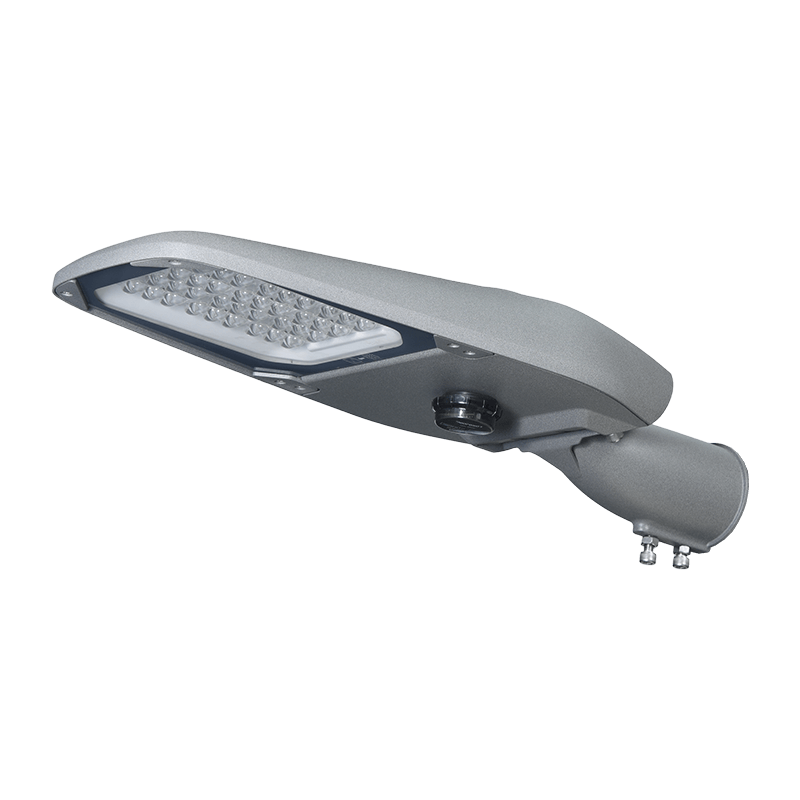
LED street lights are better than traditional street lights because they consume 50–70% less electricity, last 3–5 times longer, produce higher-quality light, and require significantly less maintenance — all while reducing carbon emissions and light pollution. These advantages apply across every installation context, from busy urban arterials and highways to residential neighborhoods, industrial parks, and rural roads. The sections below quantify each benefit and explain the technology behind it.
Content
- 1 Superior Energy Efficiency Compared to Conventional Technologies
- 2 Exceptionally Long Service Life and Low Maintenance Costs
- 3 Higher-Quality Light for Safer Roads and Better Visibility
- 4 LED vs. Traditional Street Lighting: A Direct Performance Comparison
- 5 Significant Reduction in Carbon Emissions and Environmental Impact
- 6 Smart Lighting Compatibility and Intelligent Control
- 7 Durability and Resilience in Outdoor Environments
- 8 Wide Range of Applications Across Urban and Rural Settings
- 9 Return on Investment and Whole-Life Cost Analysis
- 10 Key Features to Look for When Selecting LED Street Lights
Superior Energy Efficiency Compared to Conventional Technologies
The most compelling reason cities switch to LED street lighting is the dramatic reduction in electricity consumption. LED technology converts electrical energy into light far more efficiently than high-pressure sodium (HPS), metal halide (MH), or fluorescent sources, which waste a large proportion of input energy as heat.
Modern LED street lights achieve a luminous efficacy of 130–180 lm/W, compared with approximately 70–100 lm/W for HPS lamps and 50–80 lm/W for metal halide. This means that an LED fixture producing the same quantity of light on the road surface draws roughly half the wattage of its HPS equivalent. For a city operating 10,000 street lights, replacing 150 W HPS units with 70 W LED luminaires reduces annual electricity consumption by approximately 2.9 million kWh per year — enough to power hundreds of average homes.
LED street lights also benefit from directional light emission. A conventional lamp emits light in all directions, requiring a reflector to redirect a proportion of the output toward the road — with unavoidable optical losses. An LED array can be engineered to direct 90–95% of its output into the target area from the outset, eliminating the efficiency penalty of redirection optics.
Exceptionally Long Service Life and Low Maintenance Costs
Street light maintenance is expensive. It requires specialist vehicles, traffic management, and skilled technicians — costs that accumulate rapidly across a large network. LED technology addresses this directly through its extended operational lifespan.
A quality LED street light has a rated service life of 50,000–100,000 hours before output falls to 70% of initial value (the industry-standard L70 metric). An HPS lamp, by contrast, typically requires replacement after 12,000–20,000 hours, and often sooner in practice due to color shift and lumen depreciation. At an operating schedule of 4,000 hours per year (approximately 11 hours per night), an LED luminaire can serve for 12–25 years before needing a source replacement, versus 3–5 years for HPS.
LEDs also degrade gradually rather than failing suddenly. Conventional HPS and metal halide lamps fail abruptly, leaving sections of road unlit until a maintenance crew responds — a safety hazard. LED's gradual lumen depreciation allows predictive maintenance scheduling rather than reactive emergency callouts, further reducing the total cost of ownership.
Additional maintenance savings come from the elimination of ballasts and ignitors — the components most prone to failure in conventional luminaires. LED drivers have mean times between failure (MTBF) of over 100,000 hours for quality units, far exceeding the reliability of electromagnetic ballasts.
Higher-Quality Light for Safer Roads and Better Visibility
The quality of light matters as much as its quantity, particularly for road safety. LED street lights deliver measurable improvements in both the color accuracy and the uniformity of illumination compared with traditional sources.
High Color Rendering Index (CRI)
LED street lights typically have a Color Rendering Index of CRI ≥ 70, with premium products reaching CRI 80–90. High-pressure sodium lamps, the most widely deployed legacy technology, have a CRI of only 20–25. Under HPS lighting, colors appear monochromatic and orange-tinted, making it difficult for drivers to distinguish the color of vehicles, road markings, or pedestrian clothing. Under LED lighting with a CRI above 70, colors appear natural, significantly improving hazard recognition.
Research published in transportation safety literature consistently shows that improved CRI in road lighting correlates with faster hazard detection, particularly for older drivers and in adverse weather conditions such as rain or fog, where color contrast provides critical visual cues.
Controlled Light Distribution and Reduced Glare
LED optics can be engineered to produce precise beam patterns that illuminate the road surface uniformly while controlling upward light emission and glare. The illuminance uniformity ratio (minimum to average) achievable with a well-designed LED luminaire is typically 0.4 or higher, meeting or exceeding the requirements of international road lighting standards such as EN 13201 and ANSI/IES RP-8.
Glare from conventional street lights causes temporary visual impairment — particularly for oncoming drivers — by producing high-intensity light outside the target area. LED luminaires with correctly designed secondary optics significantly reduce this discomfort glare, improving driver comfort and safety during nighttime operation.
No Flicker and Instant Full Brightness
Fluorescent and some HID lamps exhibit perceptible flicker at 100–120 Hz, which can cause eye strain and headaches during prolonged exposure. Quality LED drivers eliminate flicker entirely, with flicker percentages below 1% at frequencies above 3,000 Hz — imperceptible to the human visual system. Additionally, LED street lights reach full output immediately at switch-on, whereas HPS lamps require a warm-up period of 3–5 minutes before reaching full brightness — a safety disadvantage during power restoration events.
LED vs. Traditional Street Lighting: A Direct Performance Comparison
The table below compares LED street lights against the two most common legacy technologies across the performance metrics that matter most to urban lighting managers.
| Performance Metric | LED Street Light | High-Pressure Sodium (HPS) | Metal Halide (MH) |
|---|---|---|---|
| Luminous Efficacy | 130–180 lm/W | 70–100 lm/W | 50–80 lm/W |
| Rated Service Life | 50,000–100,000 hrs | 12,000–20,000 hrs | 10,000–15,000 hrs |
| Color Rendering Index (CRI) | 70–90 | 20–25 | 60–75 |
| Warm-Up Time | Instant (0 seconds) | 3–5 minutes | 2–5 minutes |
| Dimming Capability | 0–100% (stepless) | Very limited | Limited |
| Hazardous Materials | None | Mercury, sodium | Mercury |
| Energy Saving vs. HPS | 50–70% | Baseline | — |
Significant Reduction in Carbon Emissions and Environmental Impact
Street lighting accounts for a substantial share of municipal electricity consumption — in many cities, it represents 10–38% of the total public electricity bill. Reducing street lighting energy use through LED adoption therefore translates directly into lower carbon dioxide emissions, supporting national and municipal climate commitments.
Using a carbon intensity figure of 0.5 kg CO₂ per kWh (a representative average for mixed-generation grids), replacing 10,000 units of 150 W HPS with 70 W LED luminaires prevents the emission of approximately 1,460 tonnes of CO₂ per year. Over a 20-year LED service life, this amounts to a carbon saving equivalent to planting several hundred thousand trees.
LED street lights also eliminate the hazardous materials present in legacy sources. HPS and metal halide lamps contain mercury — a potent neurotoxin — requiring special disposal procedures and creating environmental risk if lamps are broken during handling or landfilled. LED luminaires contain no mercury, no lead in their solder (where RoHS-compliant), and no sodium, simplifying end-of-life management.
Light pollution is another environmental dimension where LEDs outperform legacy technology. Correctly designed LED luminaires with full-cutoff optics dramatically reduce upward light emission (sky glow) and light trespass into residential properties and natural habitats. The ability to precisely control the beam means that only the intended target area — the road surface — is illuminated, not the surrounding environment.
Smart Lighting Compatibility and Intelligent Control
One of the most strategically important advantages of LED street lights over conventional technologies is their native compatibility with intelligent lighting control systems. Unlike HPS lamps, which cannot be dimmed below approximately 50% without damaging the arc tube, LED street lights accept 0–10 V, PWM, or DALI dimming signals allowing stepless output adjustment from 100% down to 5% or less without any reduction in driver or source lifespan.
Adaptive Dimming Schedules
Traffic volumes on most urban roads drop significantly after midnight. A smart LED street lighting system can reduce output to 30–50% after midnight and restore full brightness before peak morning traffic — automatically, based on pre-programmed schedules or real-time sensor data. This adaptive dimming strategy typically delivers an additional 20–30% energy saving on top of the base efficiency advantage over HPS, without compromising safety during high-traffic periods.
Remote Monitoring and Fault Detection
LED street lights equipped with wireless network controllers (using protocols such as NB-IoT, LoRaWAN, or Zigbee) report their operational status, energy consumption, and fault codes to a central management platform in real time. Maintenance teams receive automatic alerts when a luminaire fails, eliminating the need for manual night patrols. Municipalities that deploy networked LED systems typically report maintenance labor savings of 40–60% compared with conventional reactive-maintenance models.
Integration with Renewable Energy Sources
The low wattage of LED street lights makes them directly compatible with solar-powered lighting systems. A solar LED street light combining a photovoltaic panel, lithium battery storage, and an LED luminaire can operate entirely off-grid, eliminating both electricity costs and the need for underground cable infrastructure. This makes LED technology particularly impactful in rural areas, developing-country infrastructure projects, and locations where grid connection is costly — areas where solar LED street lights are now widely deployed.
Durability and Resilience in Outdoor Environments
Street lighting operates 365 days a year in all weather conditions — rain, humidity, dust, temperature extremes, and coastal salt spray. LED street lights are significantly more durable than conventional luminaires in these conditions for several structural reasons.
- No fragile glass envelope or arc tube — HPS and metal halide lamps use pressurized glass envelopes that crack under vibration or thermal shock. LED chips mounted on aluminum substrates are inherently more resistant to mechanical shock and vibration from traffic, wind, or maintenance vehicle contact.
- IP65 or IP66 ingress protection rating — quality LED street lights are sealed against dust ingress and powerful water jets, preventing moisture-related failures common in legacy luminaires with ventilated housings.
- Wide operating temperature range — LED street lights function reliably across a typical range of −40 °C to +50 °C, without the warm-up delays and reduced efficacy that affect HPS lamps in cold climates.
- IK08 or IK10 impact resistance — die-cast aluminum housings with toughened glass or polycarbonate covers resist vandalism and accidental impact far better than thin-walled HPS luminaires.
- Corrosion-resistant coatings — marine-grade powder coatings or anodized finishes on aluminum housings protect against salt-air corrosion in coastal installations, extending structural life well beyond the LED source life.
Wide Range of Applications Across Urban and Rural Settings
LED street lights are not a single product type but a versatile technology platform available in wattages from 20 W to 400 W or more, enabling appropriate specification for every road class and mounting height. The following application contexts each benefit from distinct LED luminaire configurations:
- Urban arterial roads and highways — high-wattage LED luminaires (150–400 W) mounted at 10–15 m provide the high illuminance levels required for fast-moving traffic, with asymmetric beam patterns optimized for wide carriageway coverage.
- Residential streets and neighborhood roads — medium-wattage units (40–100 W) with warm-white color temperatures (2700–3000 K) provide safe, comfortable illumination without the harsh blue-white appearance that some residents find intrusive.
- Industrial parks and logistics zones — robust, high-lumen LED luminaires withstand the vibration from heavy vehicle traffic and the chemical atmospheres present near manufacturing facilities.
- Schools, hospitals, and institutional campuses — high-CRI LED lighting improves the visual environment for students, patients, and staff moving between buildings at night, while smart controls reduce energy consumption during low-occupancy periods.
- Parks and pedestrian zones — decorative LED street light designs with warm color temperatures create an inviting nighttime environment while maintaining the energy and maintenance benefits of the technology.
- Rural roads — solar LED street lights bring safe, reliable lighting to locations without grid access, improving safety for rural commuters and reducing road accident rates in poorly lit areas.
Return on Investment and Whole-Life Cost Analysis
Although LED street lights typically have a higher initial purchase cost than comparable HPS luminaires, the whole-life cost — encompassing energy, maintenance, and lamp replacement over the full service period — is substantially lower. Most municipal LED retrofit projects achieve a simple payback period of 3–6 years, after which the ongoing savings flow directly to the operating budget.
The primary savings drivers are:
- Energy savings of 50–70% on the street lighting electricity bill, typically the largest single component of the whole-life cost.
- Lamp replacement cost elimination — no lamp replacements for 12–25 years versus every 3–5 years for HPS.
- Reduced maintenance labor and vehicle costs — fewer callouts and predictive scheduling versus reactive maintenance.
- Dimming-enabled additional savings — adaptive controls reduce energy consumption by a further 20–30% beyond the base LED efficiency advantage.
- Elimination of ballast and ignitor replacement costs — components that fail regularly in HPS systems and require expensive specialized labor.
Many municipalities have also accessed government grants, green bonds, or energy performance contracting (EPC) arrangements that finance the upfront investment from future energy savings, allowing LED conversion with zero net capital outlay in the first year.
Key Features to Look for When Selecting LED Street Lights
Not all LED street lights deliver equal performance. Specifying the following parameters ensures that the selected product will achieve the expected energy, quality, and durability outcomes over its full service life:
- Luminous efficacy ≥ 130 lm/W — the minimum threshold for meaningful energy savings over HPS; top-performing products now exceed 170 lm/W.
- L70 lifetime ≥ 50,000 hours — confirmed by LM-80 photometric test data for the LED chip and TM-21 lifetime projection calculations.
- CRI ≥ 70 (CRI ≥ 80 recommended for pedestrian-priority areas such as parks and school zones).
- IP65 or higher ingress protection rating for the optical compartment, ensuring dust-tight and waterproof sealing.
- Surge protection ≥ 10 kV — street lights are exposed to lightning-induced voltage surges on overhead lines; adequate surge protection prevents driver failure.
- Dimmable driver with 0–10 V or DALI interface — required for integration with smart city lighting management systems.
- Compliance with EN 13201, IES RP-8, or relevant national road lighting standards — confirms that photometric performance meets the requirements for the intended road class.
- Die-cast aluminum housing with corrosion-resistant coating — ensures structural integrity over the full outdoor service life, particularly in humid or coastal environments.
Previous Post
How long is the lifespan of LED garden lights?
Next Post
How long is the lifespan of LED Street Lights?
Related Products

Our Products
Keep In Touch
export@polaryang.cn
+86-574-65167530
Xue'ao Qiangjiao Town, Ninghai County, Ningbo, Zhejiang, China
Contact Us
Copyright © Ninghai Poda Electrical Appliance Co., Ltd. Rights Reserved.
Wholesale LED Lighting Manufacturer
OEM Solar Lighting Factory
